

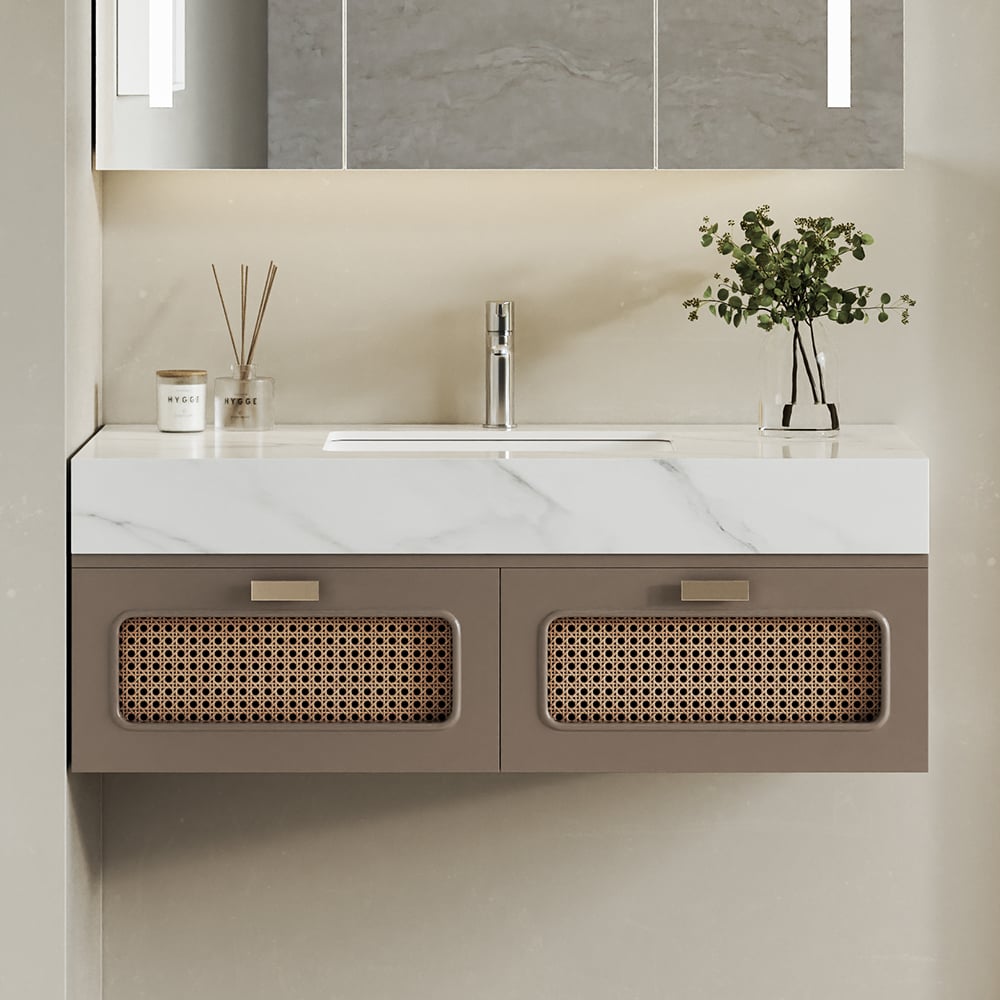
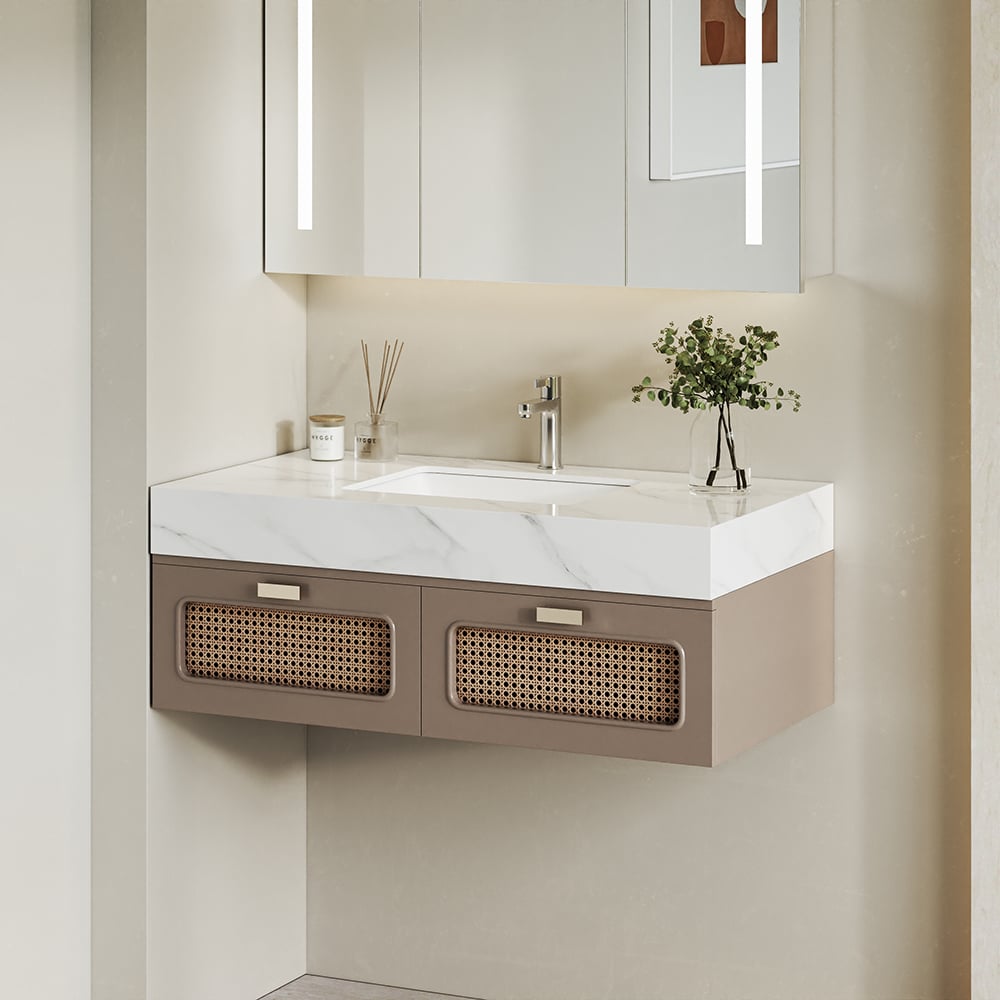
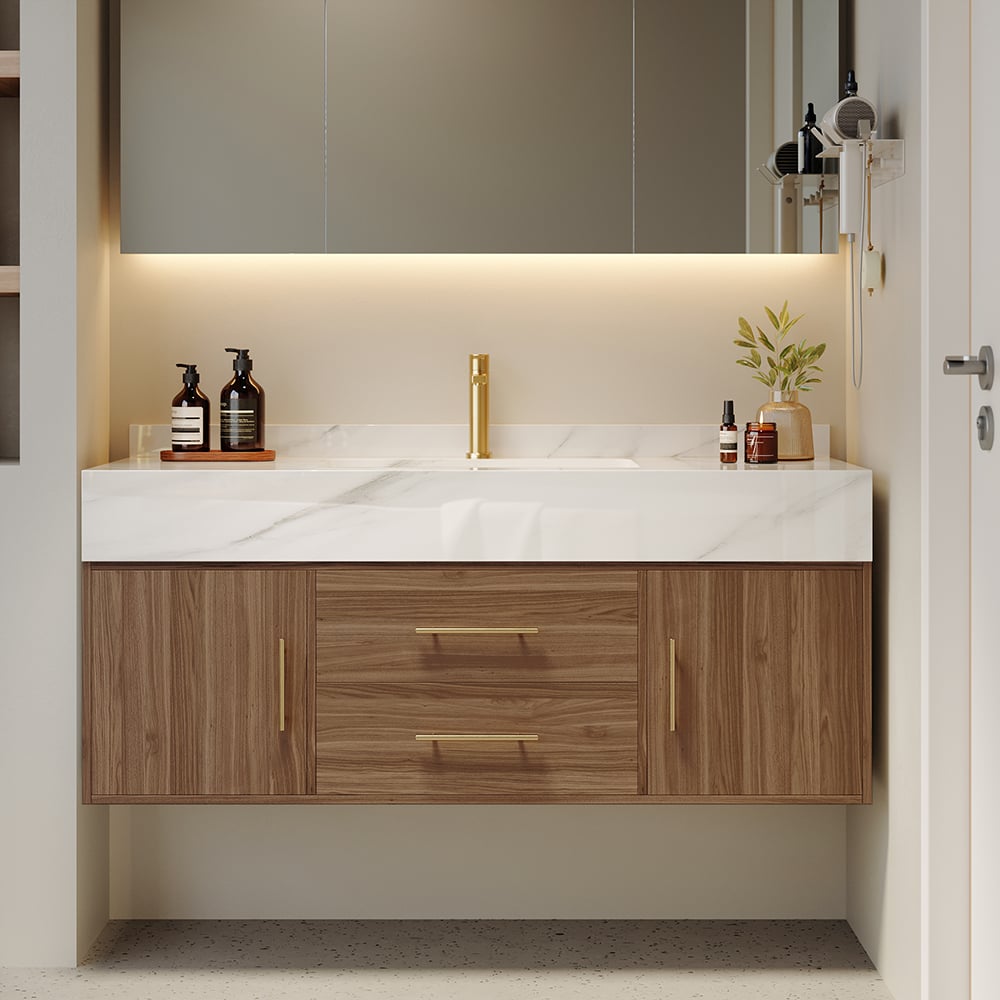
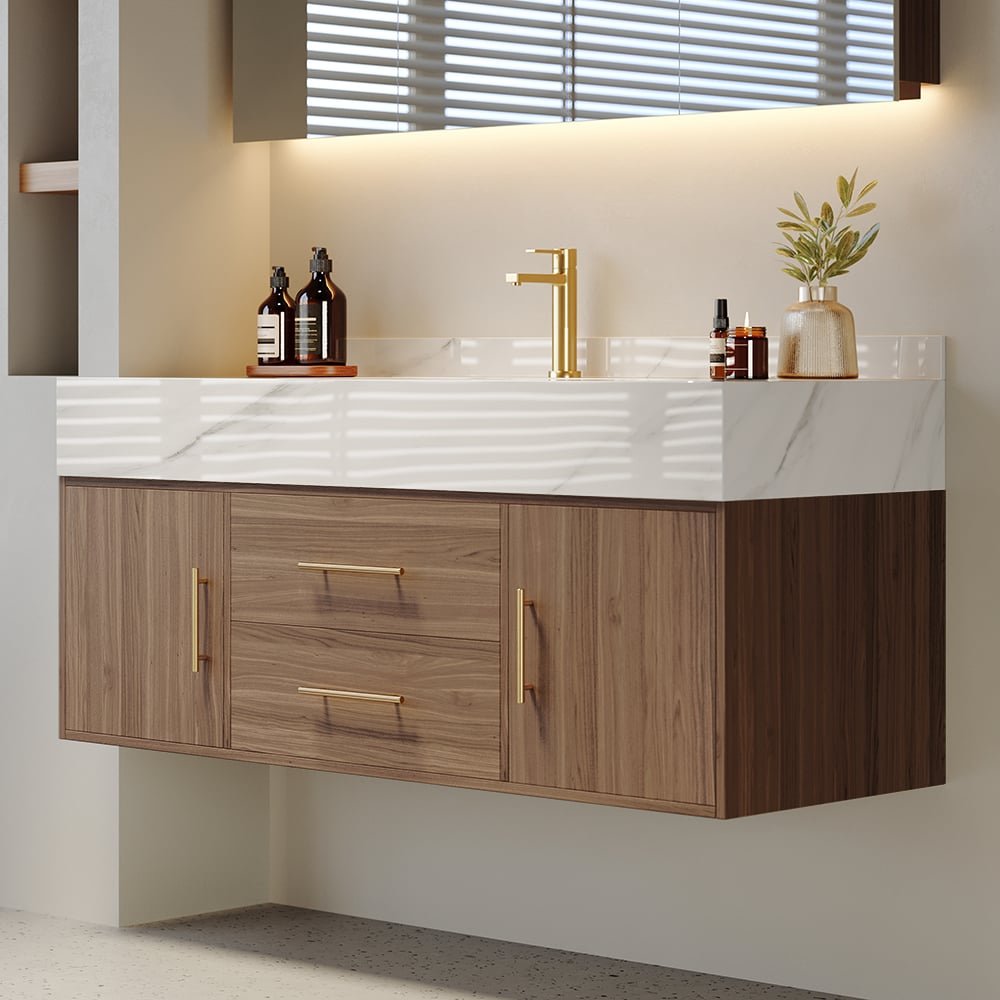
A Japandi bathroom vanity turns an everyday room into a calm, spa-like retreat. It suits anyone who wants a bathroom that feels warm and natural, not clinical. The vanities here are mostly floating designs that mount to the wall and leave the floor visible. Wood tones, including walnut, meet sintered stone, stone resin and ceramic surfaces. Storage stays hidden behind simple, flat fronts. Sizes run from a small vanity to a 40-inch model and an extendable set. Browse the collection below and compare widths and finishes.
Filters
3 products


What is a Japandi bathroom vanity?
A Japandi bathroom vanity is a sink cabinet designed in the Japandi style. That style blends Japanese bathing culture with Scandinavian warmth and function. You can recognize one by flat fronts, warm wood or wood-look finishes and a matte stone or ceramic top. Many are wall-mounted, which makes the room feel lighter and larger. Basins are simple rectangles or soft, rounded forms. Hardware is minimal or discreet, so surfaces stay calm. The overall look is quiet, natural and uncluttered.
Why buy a Japandi bathroom vanity?
In Japan, bathing has long been a daily ritual for unwinding, not just for getting clean. Scandinavian design adds bright, practical rooms built from natural, honest materials. A Japandi vanity brings both ideas into your daily routines. Warm wood softens tile and glass, while stone feels cool and grounded. Closed storage hides bottles, cables and clutter. The result is a bathroom you enjoy spending time in. Timeless lines also help keep a renovation from looking dated.
Styles and variations of Japandi bathroom vanities
Floating bathroom vanities
A floating bathroom vanity mounts to the wall and leaves open floor below. Cleaning gets easier and a small room feels larger. Several models here are single sink vanities, including a 40 inch floating vanity and an extendable set.
Walnut and wood vanities
A walnut bathroom vanity adds rich color and warmth to white or gray tile. Other options use solid wood or plywood cabinets. Plywood handles humidity better than particleboard. Look for a sealed finish and keep the room well ventilated.
Stone, sintered stone and ceramic tops
A wood vanity with stone top pairs warmth with a cool, durable surface. Sintered stone resists scratches, heat and most stains. Stone resin gives a smooth, matte look. For a small bathroom vanity, a one-piece ceramic top keeps lines simple.
How to choose your Japandi bathroom vanity?
Start by measuring the wall, the door swing and the space to the toilet. Many codes require at least 15 inches from the toilet's centerline to the vanity edge. Note where your supply and drain pipes sit. A floating vanity needs a solid wall, ideally anchored into studs or blocking. Common vanity heights run from about 32 to 36 inches, so check the listing. Then choose materials for humidity. Plywood and solid wood handle moisture better than MDF. Wipe splashes quickly and use gentle, non-acidic cleaners on stone. When in doubt, hire a licensed plumber for installation.
What to pair a Japandi bathroom vanity with?
Hang a soft-edged mirror above the vanity, about its width or a little narrower. Our Japandi mirrors in wood and organic shapes suit this well. Add warm light on each side with Japandi wall sconces. Finish with linen towels, a stone soap dish and one green plant. This mix suits spa-style, minimalist, Scandinavian and organic modern bathrooms.
A word from the store
Japandistore only lists Japandi-style pieces. Our bathroom vanities are hand-picked from Homary, an established partner store. Before listing, we compare materials, dimensions, real buyer reviews and the partner's warranty and return terms. Most vanities here range from about $560 to $1,200. Prices, stock, shipping, installation details and returns are set by the partner and shown on its site.
FAQ — Japandi bathroom vanities
Are floating vanities a good idea?
Yes, for many bathrooms. They make the floor easier to clean and the room look larger. The trade-off is installation. The wall needs solid support, and plumbing may need adjusting. They also hold a little less than full-height cabinets.
What wood is best for a bathroom vanity?
Plywood, solid hardwoods and well-sealed veneers handle bathroom humidity best. Plywood resists swelling better than MDF or particleboard. Whatever the wood, a good exhaust fan and quickly wiping splashes matter as much as the material itself.
How much space do you need around a bathroom vanity?
Plan at least 15 inches from the toilet's centerline to the side of the vanity. Leave about 21 to 30 inches of clear floor in front. Check door and drawer swing before ordering. Local codes can vary.