

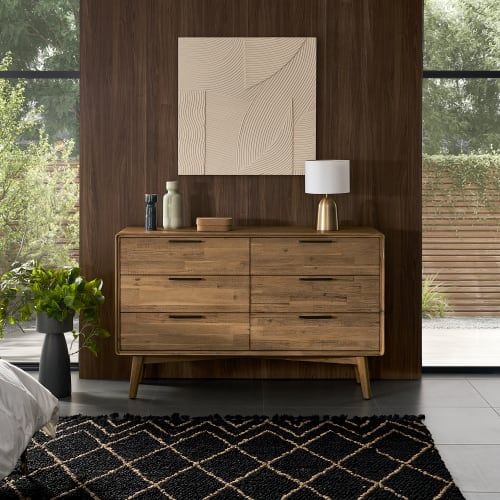
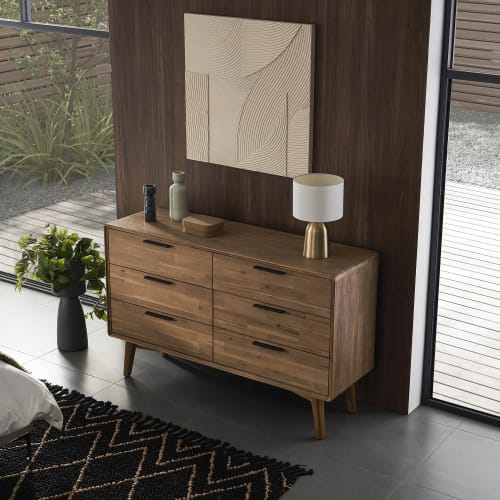
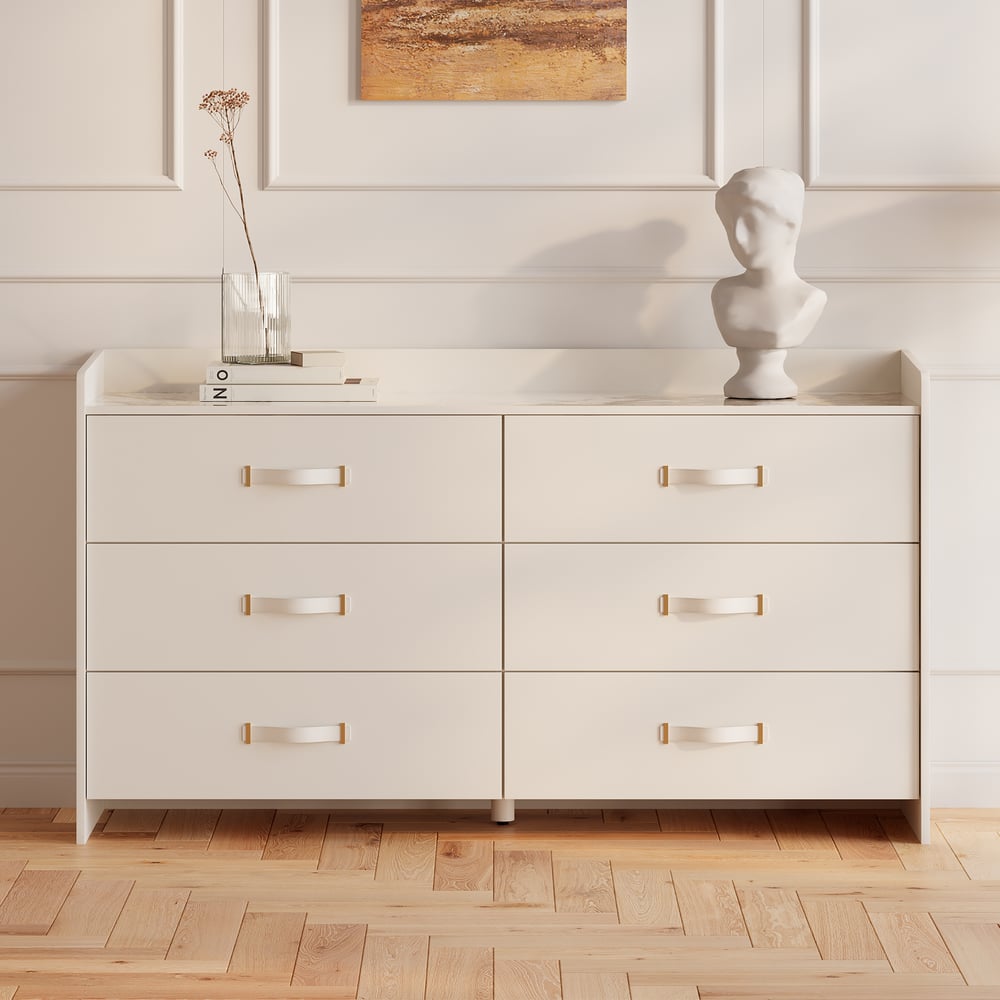
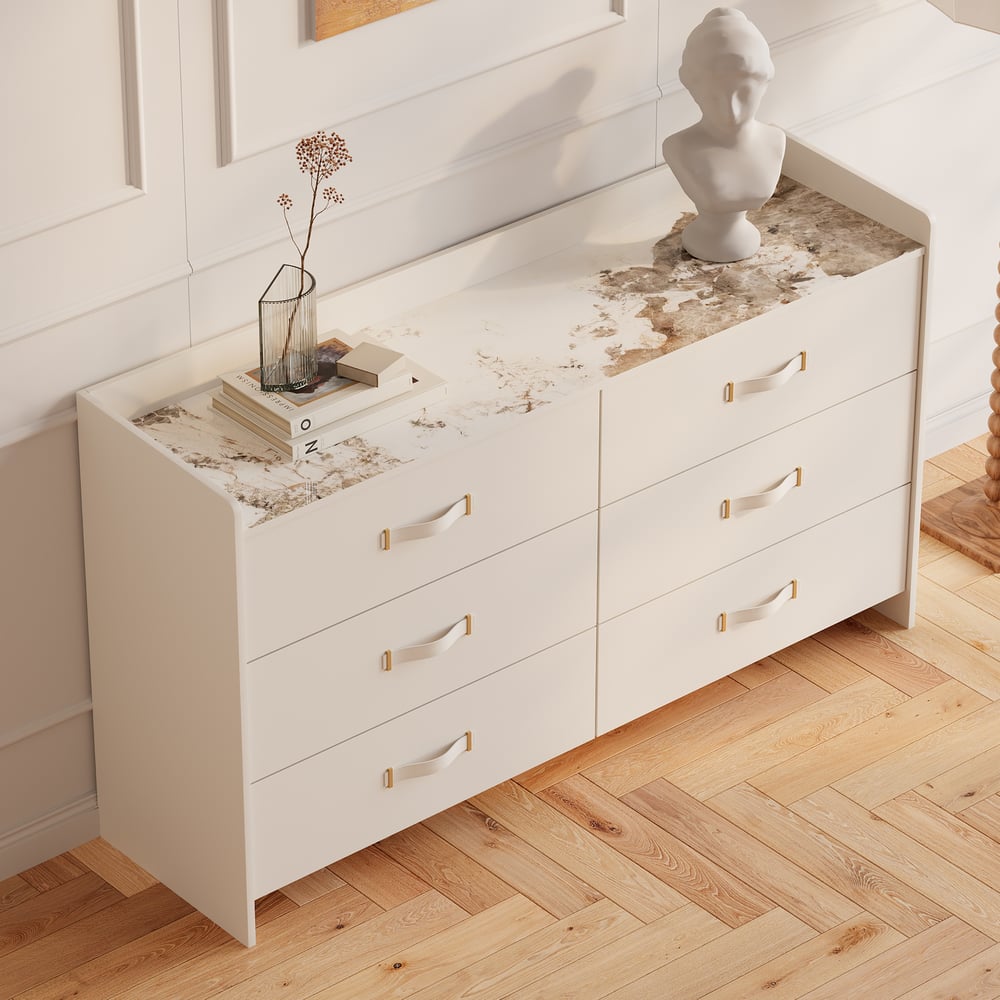
A Japandi dresser gives your bedroom calm, hidden storage with the warmth of real wood grain. It suits anyone who wants clothes put away and surfaces kept clear, without a heavy, ornate piece. Expect clean lines, low profiles and simple pulls or recessed grips. Finishes include warm acacia and mindi, whitewashed wood, dark walnut tones and woven rattan fronts. You will find wide 6-drawer models and more compact designs around 47 inches. Most pieces here range from about $350 to $1,700. Browse the collection below, then add a matching Japandi nightstand for a complete bedroom.
Filters
6 products
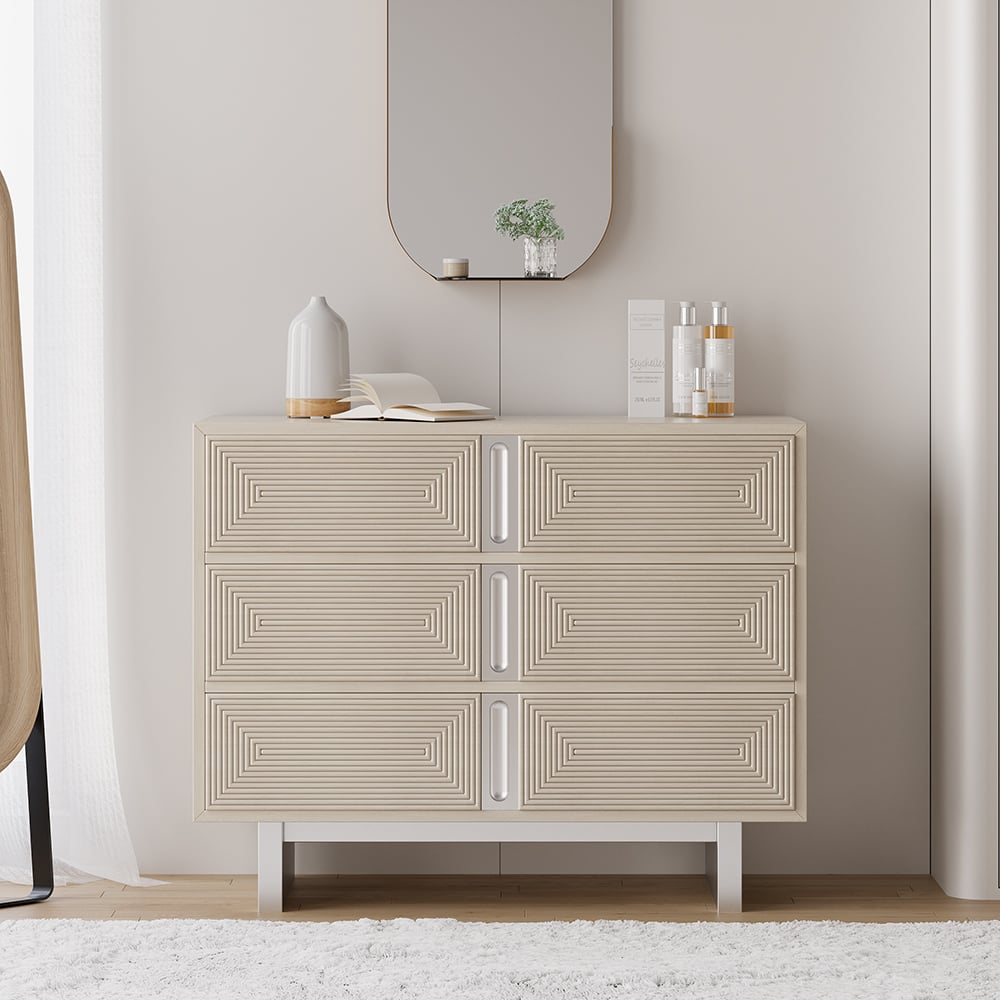
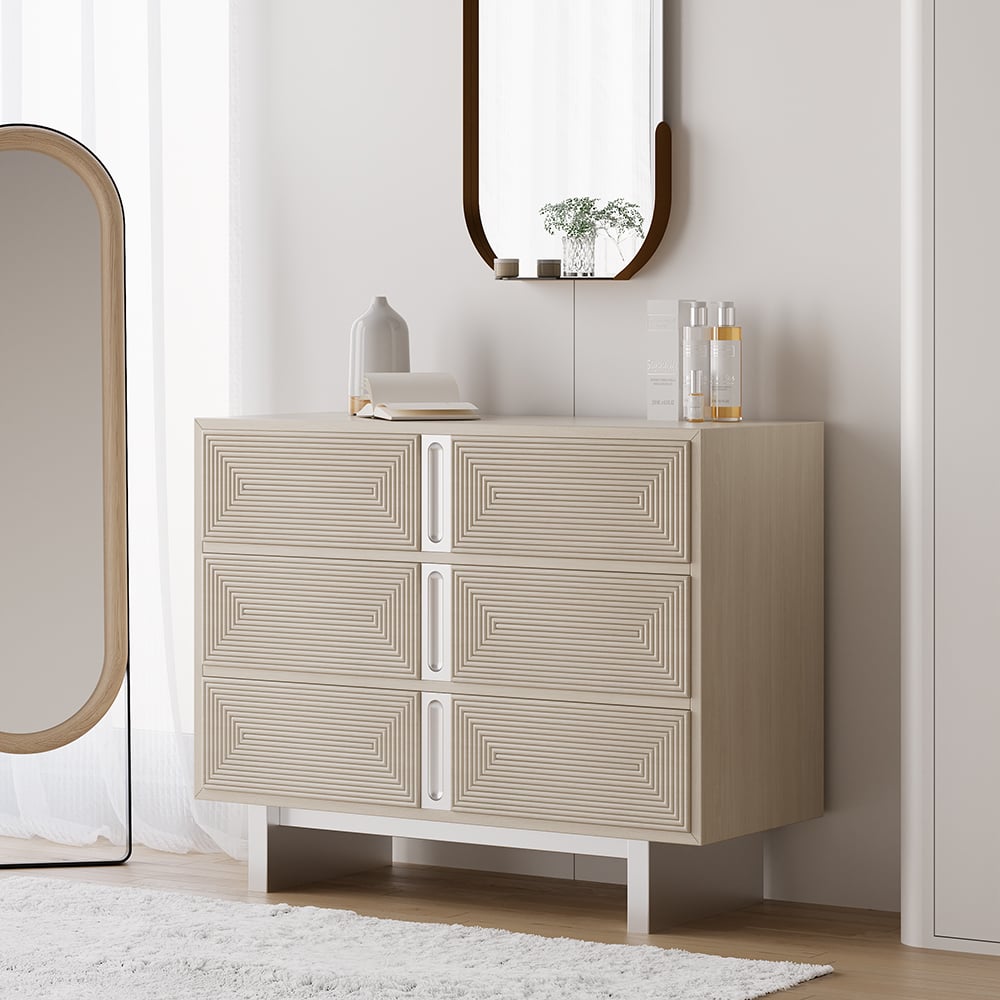
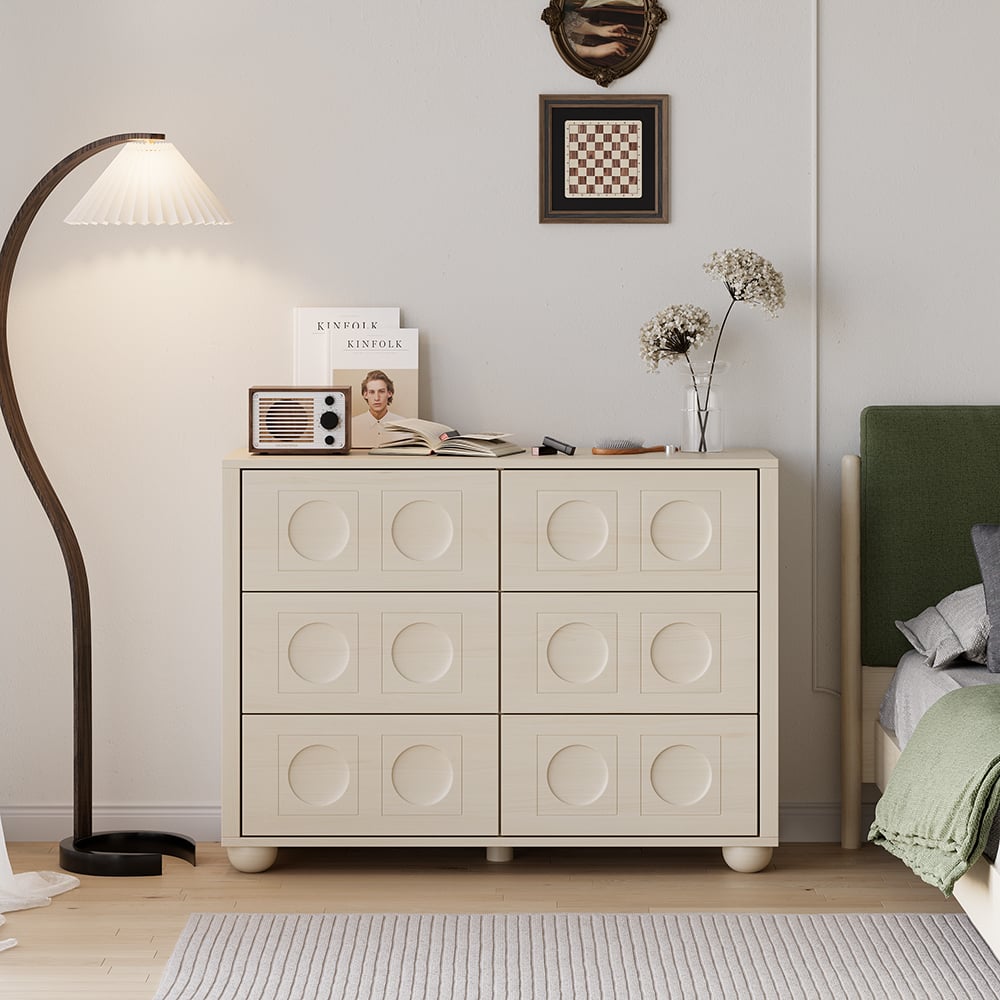
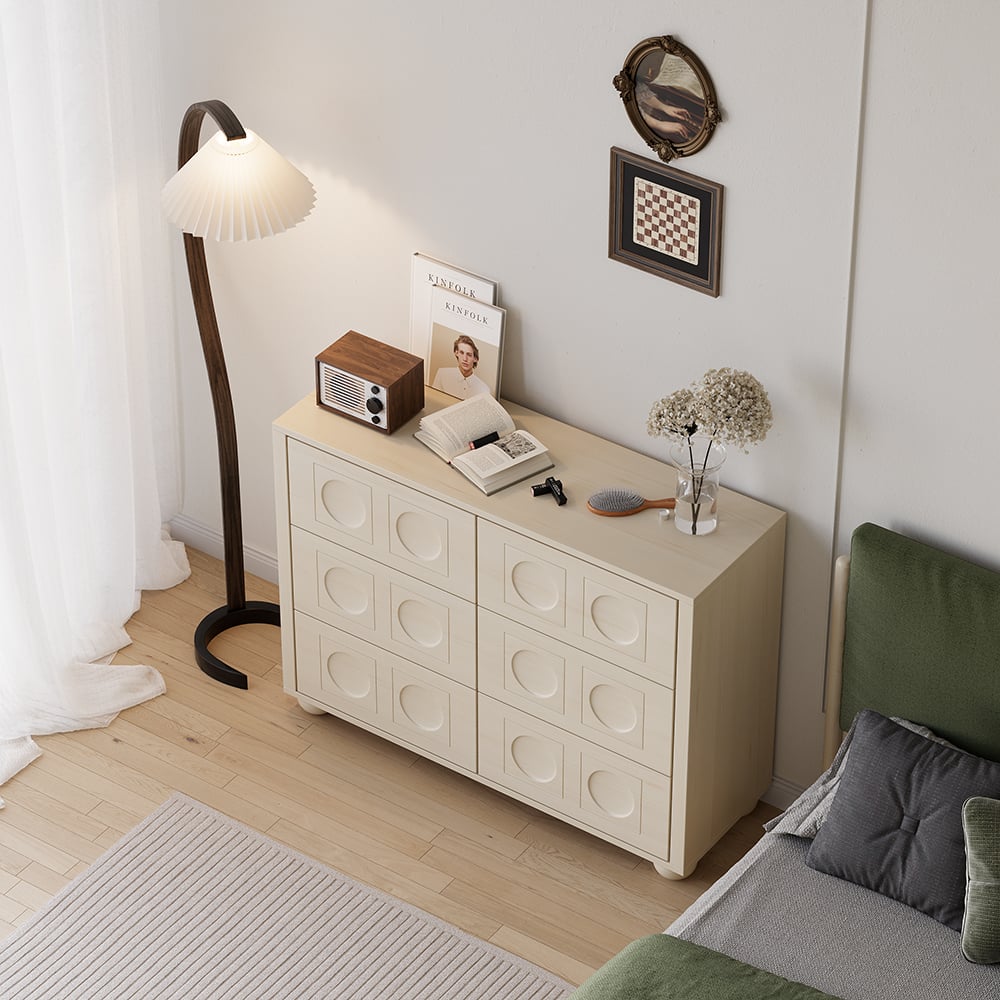
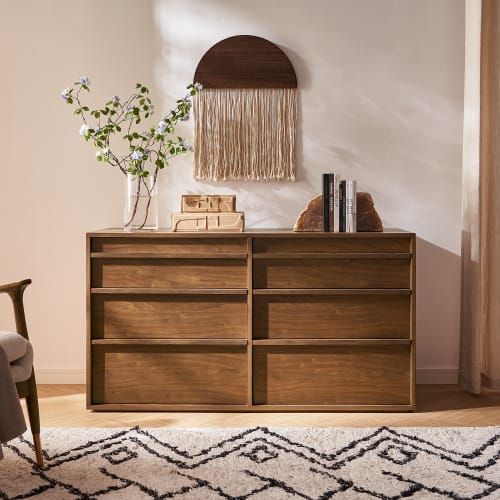
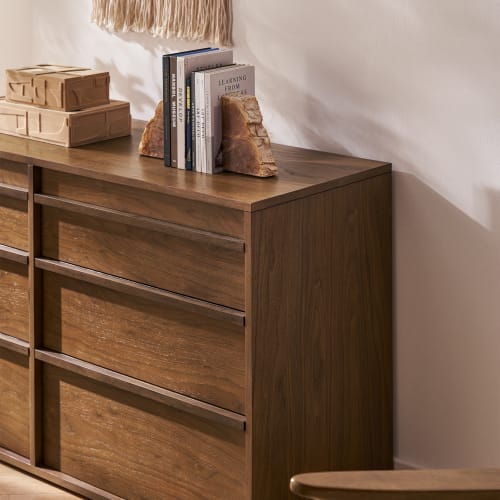
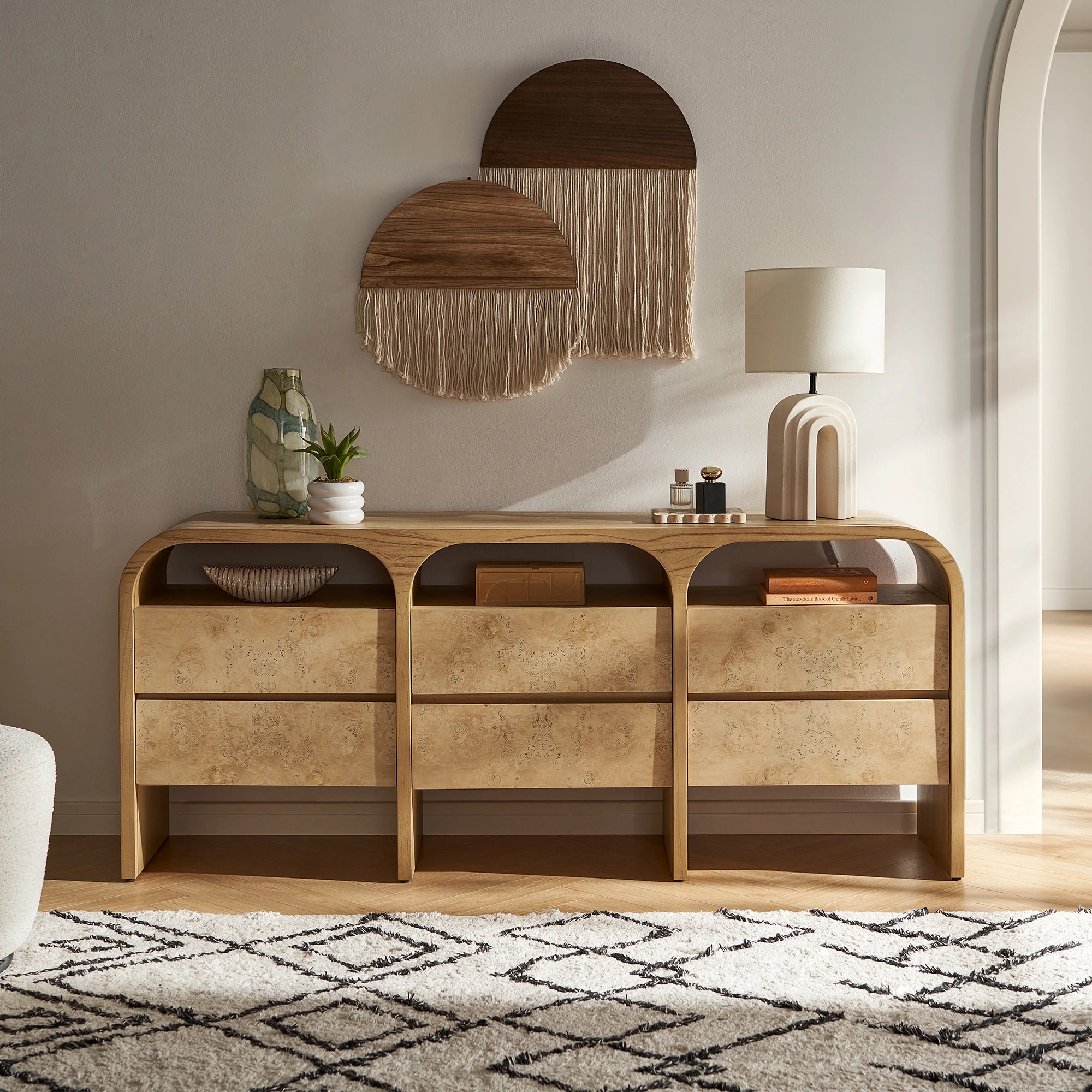
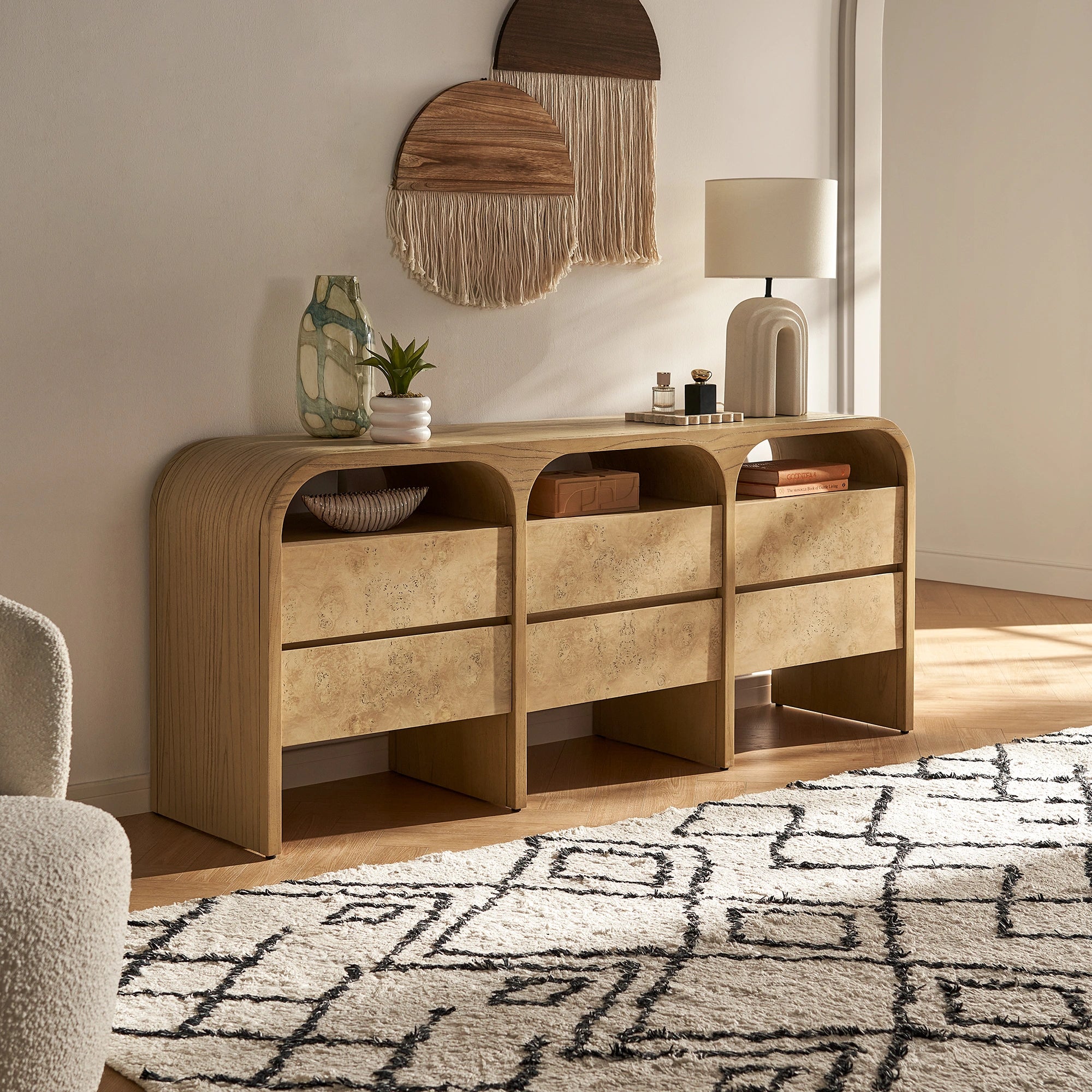
What is a Japandi dresser?
It is a chest of drawers that blends Japanese restraint with Scandinavian practicality. The goal is storage that looks quiet, not busy.
You can spot one by its low, wide stance and plain fronts. Hardware stays minimal: slim pulls, small knobs or cut-out grips. Wood grain does most of the decorative work. Legs are short and tapered, or the base sits close to the floor. Colors stay natural, from pale oak tones to deep walnut.
Why buy a Japandi dresser?
Japandi draws on two traditions. Japanese wabi-sabi values natural materials and quiet imperfection. Scandinavian design adds light woods and practical comfort.
A dresser built on those ideas helps a bedroom feel settled. Clothes disappear behind closed drawers, so the room reads calmer at night. Simple shapes also outlast trends.
Buying furniture online can feel risky. Each partner lists dimensions, materials and its own return terms, so you can check every detail first.
Styles and variations of Japandi dressers
Warm wood dressers
Acacia and mindi dressers show visible grain in honey or mid-brown tones. Many combine a solid wood frame with veneered panels, a stable build. A 6-drawer dresser in this finish anchors a bedroom without feeling heavy. It suits most bedrooms.
Whitewashed dressers
A whitewashed dresser keeps the grain visible under a soft, pale finish. It brightens small bedrooms and suits Scandinavian-leaning rooms. Pair it with linen bedding for an airy, minimalist look. The pale tone also hides dust well.
Dark wood and rattan dressers
A walnut dresser or dark wood dresser adds depth against white walls. Woven rattan fronts bring texture and a handmade feel. Both work best when the rest of the room stays pale. Brass pulls add a subtle accent.
How to choose your Japandi dresser
Start with size. Measure the wall, then leave about 30 inches in front for opening drawers. A 47-inch-wide dresser suits most bedrooms. Also check the depth, since deeper drawers hold bulky sweaters better.
Next, check materials. Solid wood can be sanded and refinished. Engineered wood with veneer is stable and usually more affordable. MDF and particle board keep prices down but dislike moisture.
Count drawers by need. Six drawers suit a couple, while three or four suit a guest room.
For care, dust with a soft, dry cloth. Wipe spills quickly, avoid harsh cleaners and use felt pads under lamps.
What to pair a Japandi dresser with
Match the wood tone of your Japandi bed frame, or pick one clear contrast. Light wood with dark accents works well. Keep the top sparse: a ceramic lamp, a small tray and one vase. A round mirror above softens the straight lines. Linen bedding finishes the room. The look also fits Scandinavian and warm modern rooms.
A word from the store
We only list Japandi-style pieces. Every dresser here is hand-picked from established partners: Castlery, Homary and Hernest.
Before listing, we compare materials, dimensions, real buyer reviews and each partner's warranty and return terms.
Prices, stock, shipping and returns are set by the partner and shown on their site. When you click through, you buy directly from them. We may earn a commission when you buy through our links.
FAQ — Japandi dressers
What is the difference between Japandi and mid-century modern dressers?
Both use wood and clean lines. Mid-century pieces often feature splayed legs, bolder hardware and warm teak tones. Japandi dressers feel calmer, with plainer fronts, lower profiles and a softer palette. Many homes mix the two successfully.
Is a solid wood dresser better than veneer?
Not always. Solid wood lasts and can be refinished. Quality veneer over engineered wood resists warping and costs less. Check the product details to see which parts are solid, such as frames and legs.
What color dresser goes with Japandi style?
Natural wood tones work best: light oak, warm acacia or deep walnut. Whitewashed finishes suit brighter rooms. Avoid high-gloss colors. Keep one or two wood tones per room so the space stays cohesive.