

A Japandi bookshelf gives your books and objects a calm, orderly home. It is the right choice when you want storage that looks like furniture, not clutter. The pieces here use warm wood tones, from pale ash and oak to deep walnut. Several mix open shelves with closed storage behind sliding doors, drawers or cabinets. Details stay quiet, such as fluting, rounded edges and slim frames. Browse the collection below and compare sizes, woods and storage layouts for your living room or office.
Filters
4 products
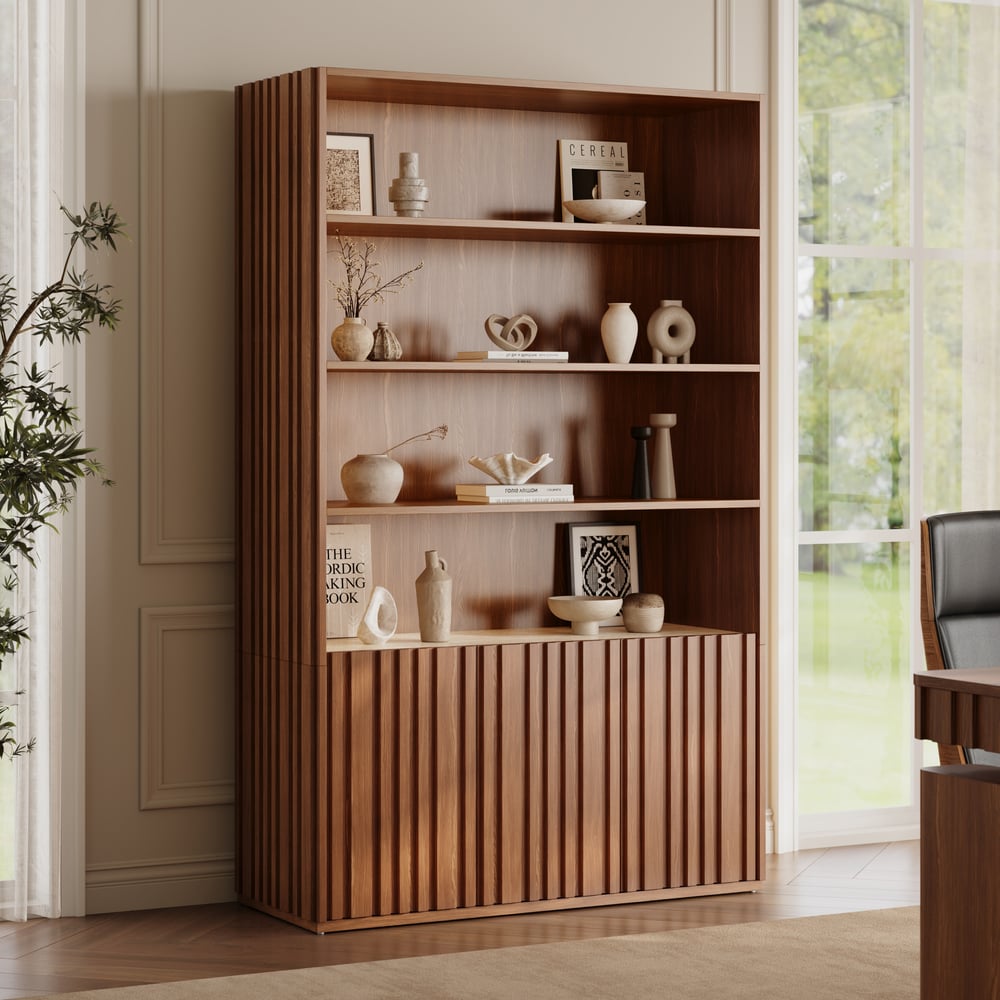
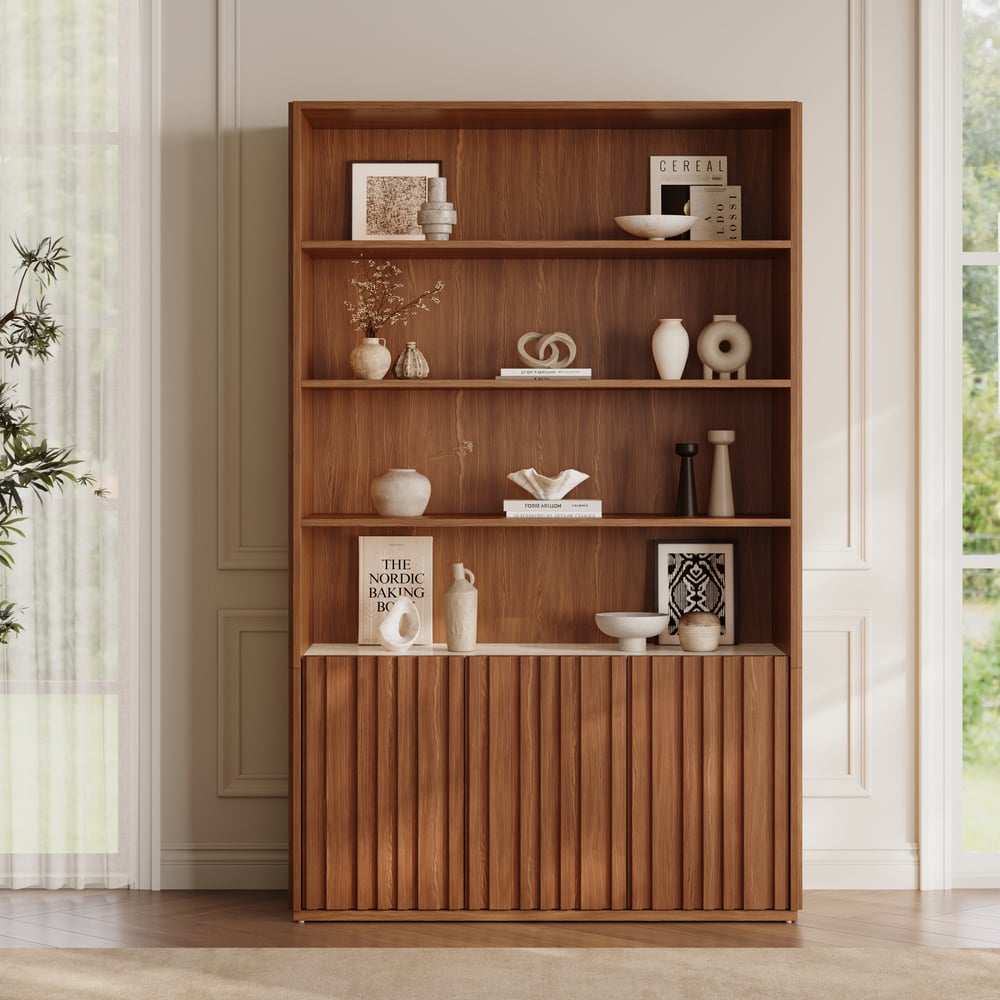
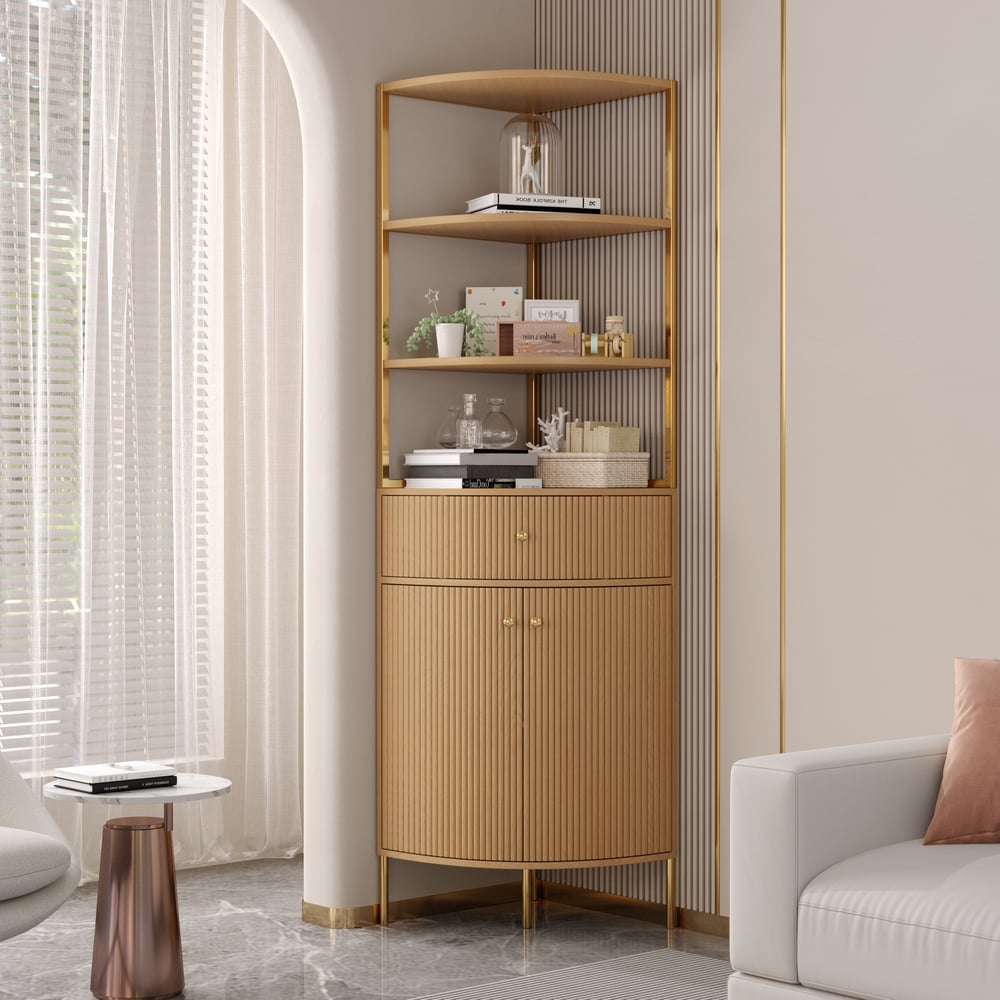
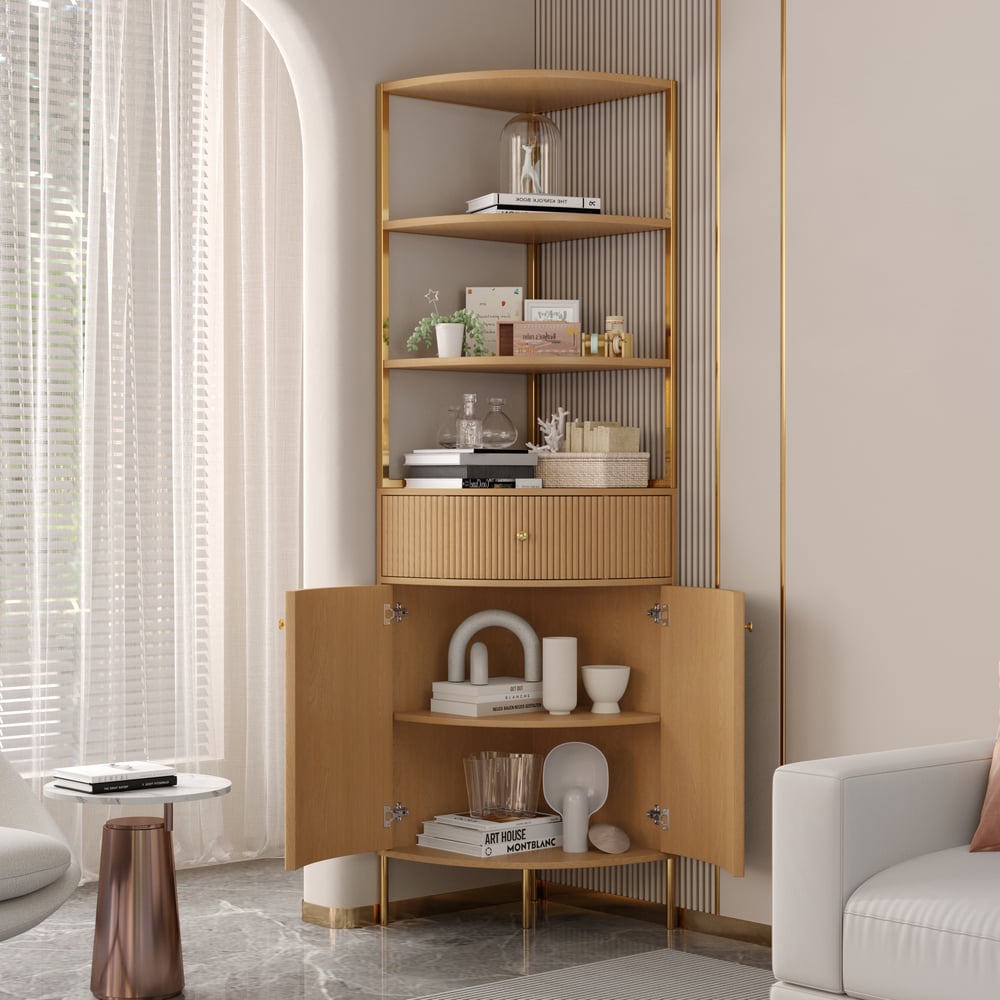

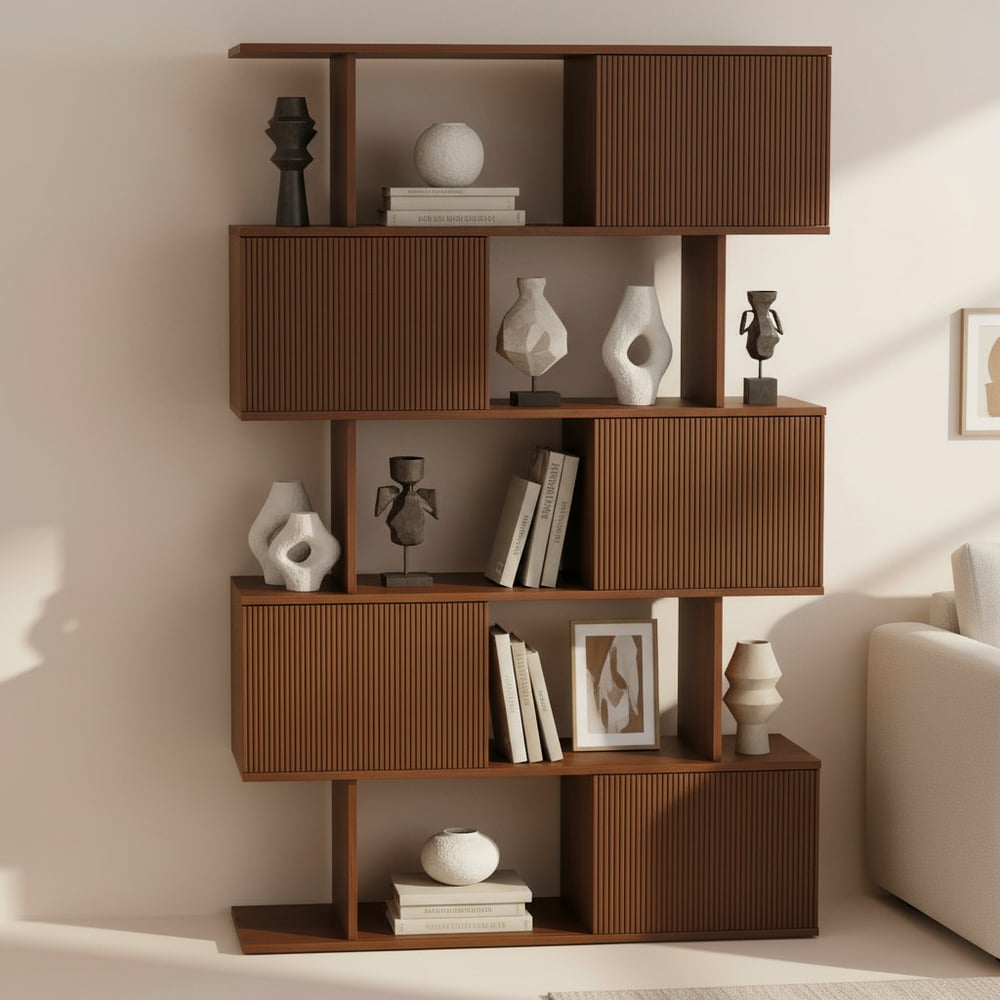
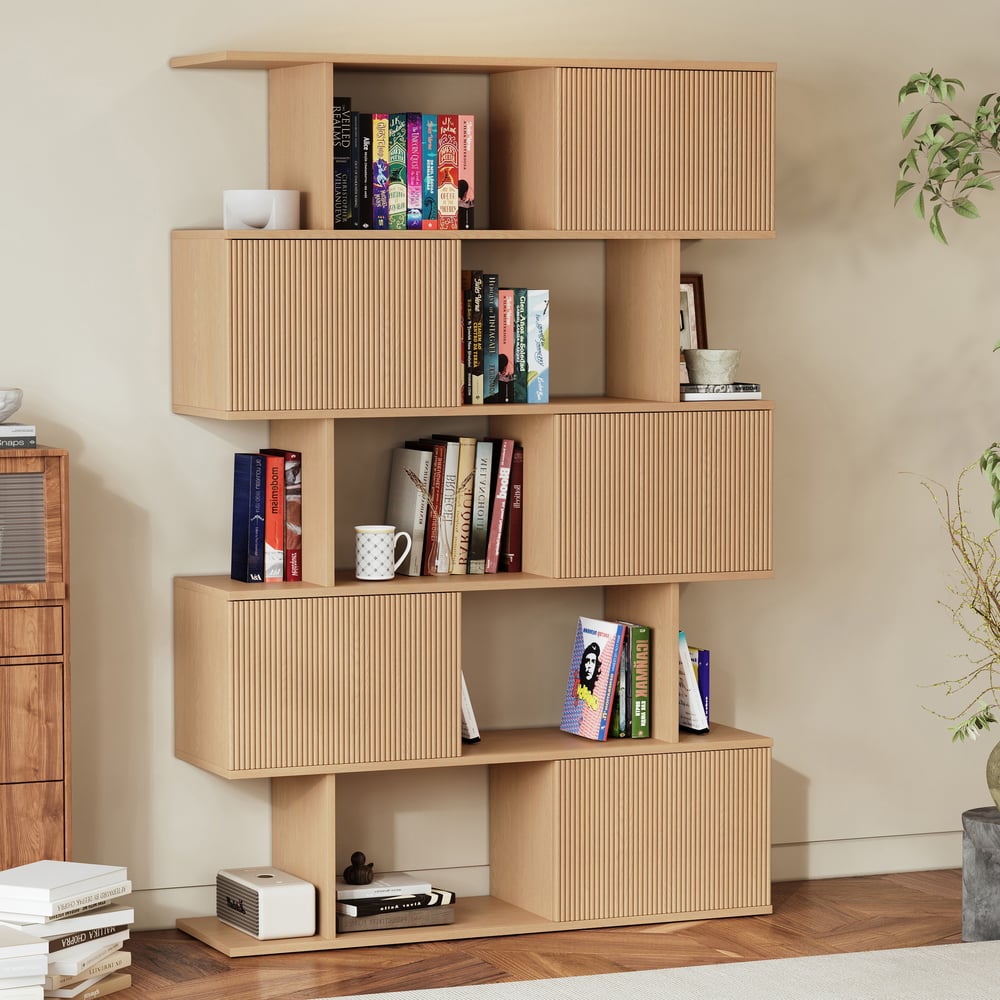
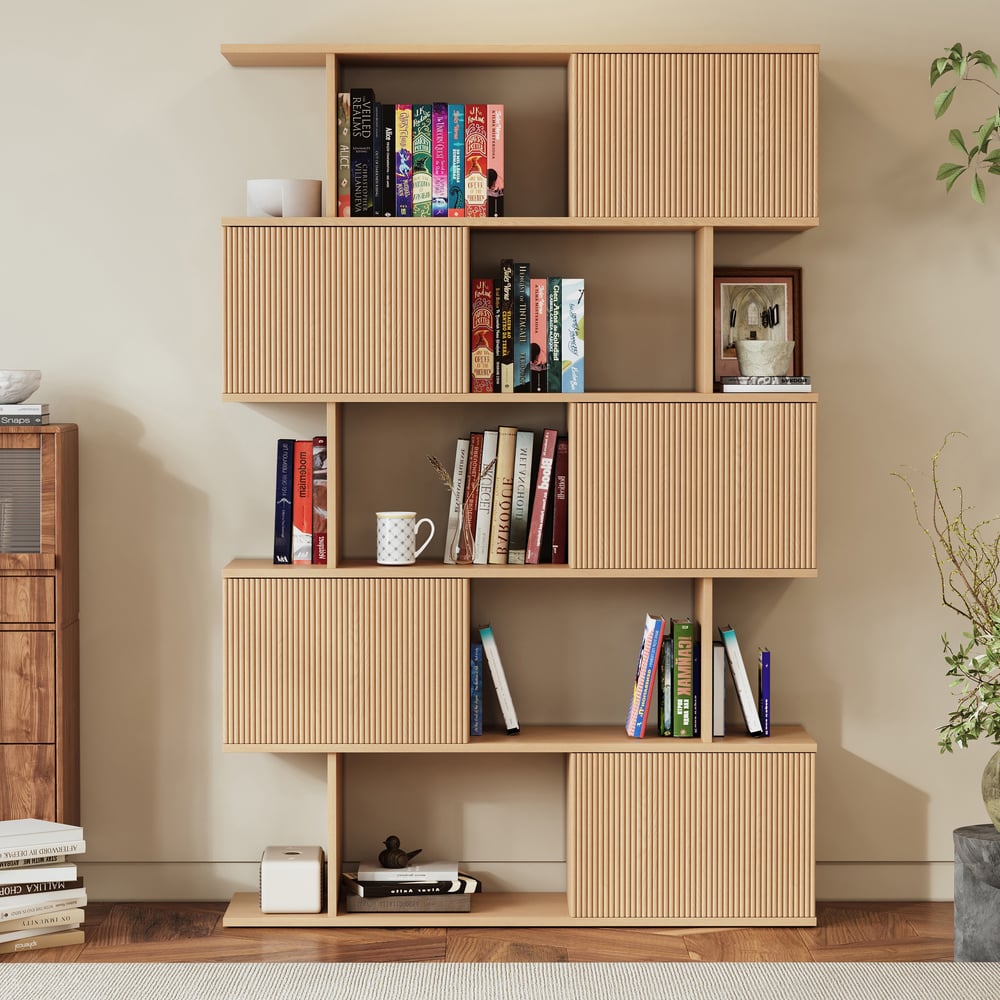
What is a Japandi bookshelf?
A Japandi bookshelf is a shelving unit designed in the Japandi style. That style blends Japanese simplicity with Scandinavian craft and function. You can recognize one by clean lines, visible wood grain and a balance of open and closed space. Hardware is minimal or neatly hidden. Colors stay natural, from light oak to walnut. Some designs add a soft detail, such as fluted doors or a sintered stone top. The result feels light and calm, even when tall.
Why buy a Japandi bookshelf?
Japanese interiors have long favored hidden storage that keeps rooms serene and uncluttered. Scandinavian design adds honest, natural wood and a focus on everyday use. A Japandi bookcase brings both traditions together. It lets you display a few treasured books and ceramics while hiding everything else. That balance makes a room feel lived-in but still calm. Well-made wood furniture also ages gracefully. Its grain often deepens with time, and it can follow you through several homes.
Styles and variations of Japandi bookshelves
Sliding door bookshelves
A sliding door bookshelf is the most Japanese option here. The panels recall shoji screens and need no swing space. Choose a walnut bookshelf for warmth, or a natural finish for lighter rooms. Leave some shelves open for display.
Fluted and stone-topped bookcases
A fluted bookcase adds gentle vertical rhythm that catches light softly. The ash model here pairs fluting with a sintered stone top. That surface resists heat, stains and scratches, so a lamp or plant can sit on it.
Open oak shelves and storage combos
Open shelving keeps a room airy. An oak bookshelf with a simple frame suits a reading corner or home office. Need more hidden space? Look for a bookshelf with drawers and a cabinet base, which also keeps weight low.
How to choose your Japandi bookshelf?
First, measure the wall, the ceiling height and any outlets or baseboards. Leave a little space around the unit so it does not feel squeezed. Then check depth. About 12 inches suits most books, while deeper shelves hold baskets and files. Next, look at the material. Solid wood can be sanded and refinished. Engineered wood with oak or walnut veneer is stable and often easier on the budget. Check the listed load per shelf before adding heavy books. Always anchor tall units to the wall with an anti-tip kit. Dust often and wipe with a slightly damp cloth.
What to pair a Japandi bookshelf with?
Style it with a light, edited touch. Fill about two-thirds of the space and leave room for a vase or small sculpture. Place a reading chair and a Japandi floor lamp nearby. For a coordinated wall, match the wood tone with Japandi cabinets or a low sideboard. The look suits minimalist, mid-century modern and organic modern homes.
A word from the store
Japandistore only lists Japandi-style pieces. We hand-pick our bookshelves from established partner stores: Homary, Kave Home and Castlery. Before listing, we compare materials, dimensions, real buyer reviews and the partner's warranty and return terms. Most pieces here range from about $730 to $1,400. Prices, stock, shipping and returns are set by each partner and shown on their site.
FAQ — Japandi bookshelves
Is solid wood or veneer better for a bookshelf?
Both can last for years. Solid wood is heavier, can be refinished and usually costs more. Engineered wood with real veneer is stable, resists warping and still shows natural grain. For heavy books, check shelf thickness and weight capacity.
How do you style a bookshelf Japandi style?
Keep it edited. Group books by color or lay a few flat. Add one or two ceramics or a small plant per shelf. Leave empty space so items can breathe. Hide the rest behind doors or in baskets.
Do I need to anchor a bookshelf to the wall?
Yes, for any tall unit, especially with children or pets at home. Tip-overs can happen when shelves are climbed or loaded unevenly. Use the supplied anti-tip hardware, fixed into a stud or with suitable wall anchors.