

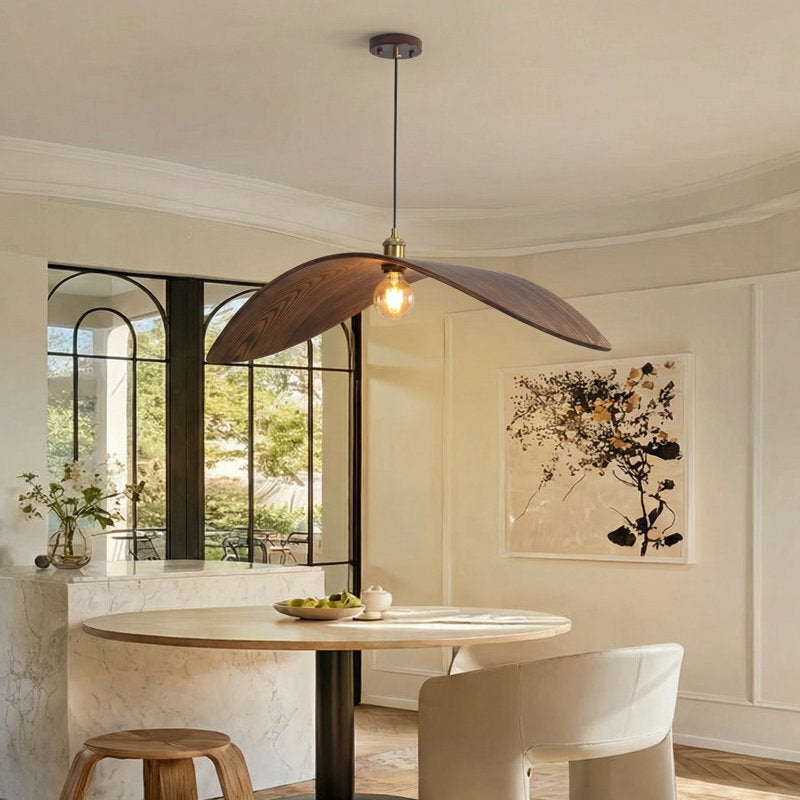
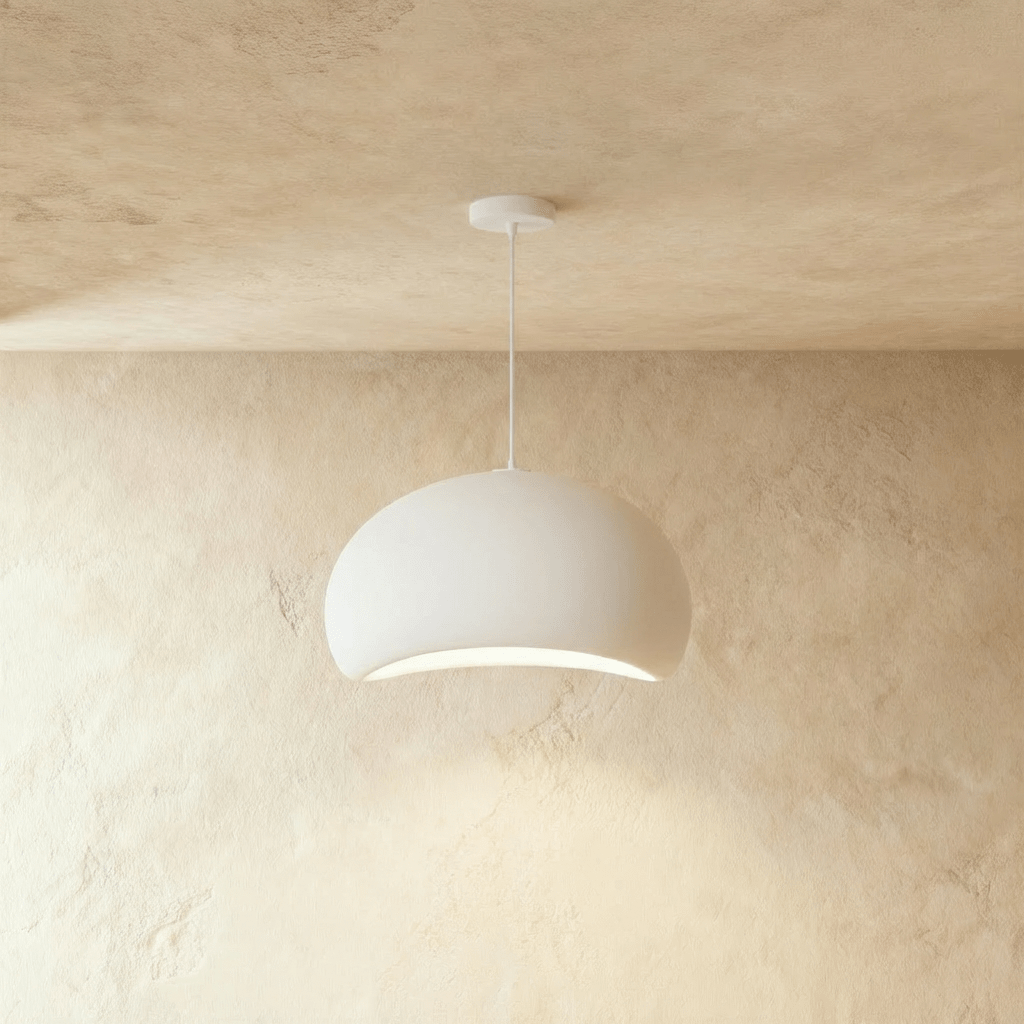
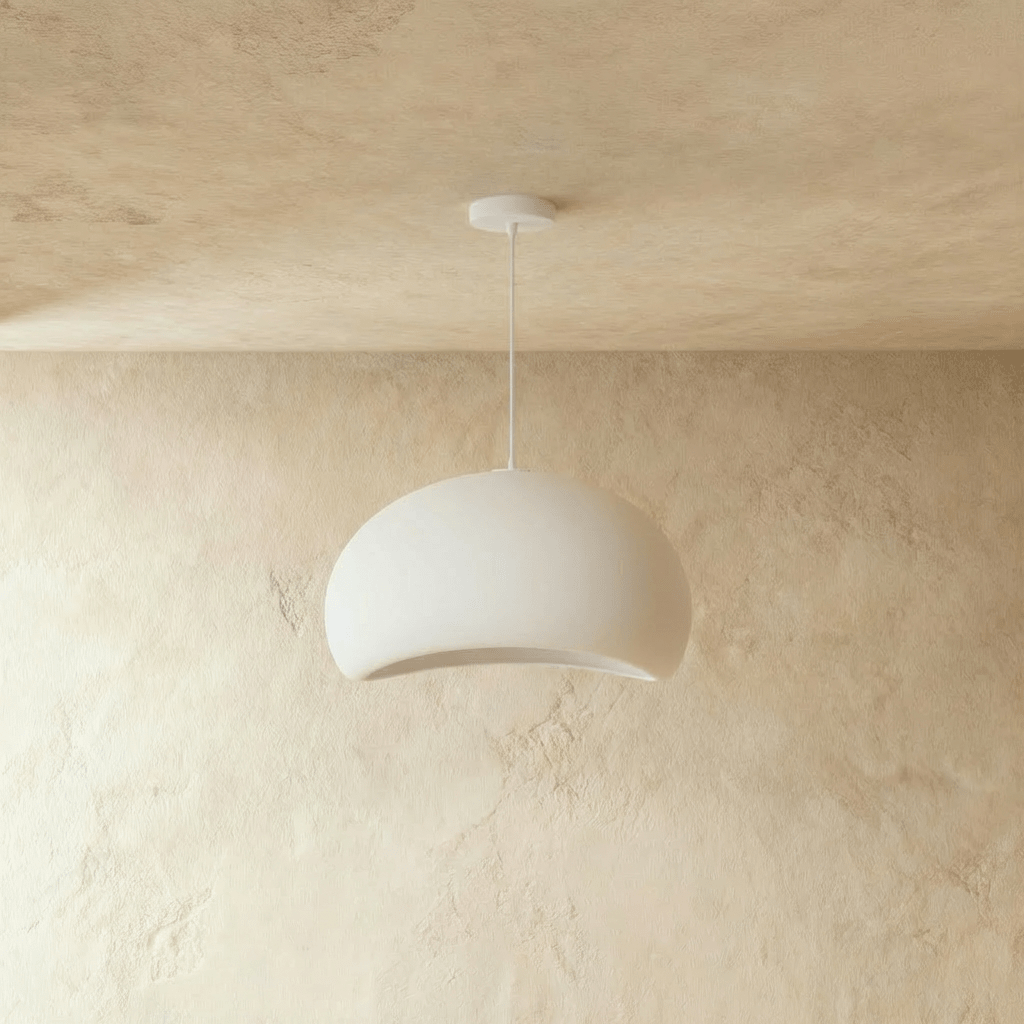
A Japandi pendant light gives a room a soft, warm glow and a quiet focal point overhead. It lets one sculptural piece light a dining table, kitchen island or reading corner without harsh glare. Shades lean on natural or natural-looking materials: wood, paper, rattan, straw, fabric and travertine. Shapes stay organic, from cones and lanterns to clouds and pebbles. Colors stay muted, with linen whites, warm woods and stone grays. This edit gathers designs from Residence Supply and Lassola. Browse the collection below to find the size and shape that suit your space.
Filters
61 products





What is a Japandi pendant light?
A Japandi pendant light is a suspended fixture that hangs from a cord or rod and diffuses light gently. You can recognize one by its simple, organic shade and natural or natural-looking material. Common choices include wood, paper, rattan, straw, fabric, glass and travertine. Some shades use resin or handmade painted polystyrene to mimic stone or plaster with less weight. The light usually glows through or downward rather than glaring sideways. Hardware stays discreet, often in black, white or brass.
Why buy a Japandi pendant light?
Lighting shapes how a home feels after dark. Japanese design has long valued soft, diffused light, as in traditional paper lanterns. Scandinavian homes, with their long winters, rely on warm, layered lighting to create hygge. These pendants bring both ideas together. They cast a calm glow that makes dinners slower and evenings cozier. One well-placed fixture can also define a dining or reading zone. Each light is sold by its partner store under its own terms.
Styles and variations of Japandi pendant lights
Paper, fabric and rattan pendants
A paper pendant light offers the softest glow, close to classic Japanese lanterns. Fabric shades diffuse light evenly in bedrooms and living rooms. A rattan pendant light or straw shade casts gentle patterned shadows.
Wooden and travertine pendants
A wooden pendant light brings warmth through visible grain or curved slats. A travertine pendant adds cool, mineral weight that suits oak and linen. Resin or polystyrene versions recreate stone textures with less weight.
Linear, multi-light and cloud pendants
A linear pendant light runs along a dining table or kitchen island in one clean line. Multi-light designs group several shades on one canopy. Cloud and dome shapes suit open-plan rooms that need wider light.
How to choose your Japandi pendant light?
Start with the space below. For a pendant light over a dining table, hang the shade bottom about 30 to 36 inches above the top. A common sizing rule is a shade one-half to two-thirds the table's width. In walkways, keep at least 7 feet of clearance from the floor. Next, consider material. Paper and fabric give the softest light but collect dust. Wood and rattan add warmth and gentle texture. Glass and stone shades are easier to wipe clean. Check the bulb type, maximum wattage and dimmer compatibility. Hardwired fixtures usually need a licensed electrician.
What to pair a Japandi pendant light with?
Hang one above a solid wood Japandi dining table to create a warm, defined eating area. Repeat its material elsewhere, such as a wooden shade with oak chairs. In larger rooms, a Japandi chandelier can light the main space while pendants mark smaller zones. For a fuller plan, explore our Japandi lighting collection. These pendants also suit Scandinavian and wabi-sabi interiors.
A word from the store
Japandistore lists only Japandi-style pieces. We hand-pick each pendant from established partner stores, mainly Residence Supply and Lassola. Before listing, we compare materials, dimensions, real buyer reviews and partner warranty and return terms. Most pendants here range from about $140 to $1,840. Prices, stock, shipping and returns are set by each partner and shown on its site when you click through.
FAQ — Japandi pendant light
How high to hang a pendant light over a dining table?
Most designers suggest 30 to 36 inches between the tabletop and the shade bottom. With higher ceilings, add about 3 inches per foot above 8 feet. Sit at the table to check that nobody's view is blocked.
Are paper pendant lights safe?
Yes, when used as designed. Follow the partner's maximum wattage and choose LED bulbs, which run much cooler than incandescent ones. Keep the bulb from touching the paper, and dust the shade gently with a soft brush.
What color temperature is best for Japandi lighting?
Warm white works best, usually 2700K to 3000K. It brings out wood grain and the creamy tones of linen and stone. Cooler daylight bulbs can feel clinical. A dimmer lets you shift from task light to a softer evening glow.