

A Japandi vase can change a shelf with one quiet gesture. It gives a single branch or dried stem a place to stand, and it looks complete even when empty. The pieces here favor matte ceramic, stone-like textures and sculptural shapes. You will find arches, twisted tubes, pitchers, bottle forms and slim bud vases. Colors stay soft, from cream white to warm brown, with a few gentle accents. Explore the collection and pick the shape that suits your shelf, table or wall.
Filters
1 product
What is a Japandi vase?
A Japandi vase is a decorative vessel shaped by the Japanese and Scandinavian taste for simple, natural objects.
You can recognize one by its matte surface and clean or organic outline. Glazes are muted, often cream, sand, gray or earth brown.
Some shapes are asymmetrical or slightly irregular, a nod to handmade pottery.
The vase is meant to be seen as an object, not only as a holder for flowers. Many look complete even without a single stem.
Why buy a Japandi vase?
In Japan, ikebana treats a few stems and their vessel as one composition. The mingei folk craft movement celebrated useful, handmade pottery.
Scandinavian design shares that love of honest, well-made objects for daily life.
A vase brings this thinking home at a modest price. It is one of the easiest ways to try the style, even in a rental.
It also works all year: branches in spring, dried grasses in fall, or nothing at all.
Styles and variations of Japandi vases
Ceramic and minimalist vases
A ceramic vase in a matte glaze is the classic choice. A minimalist vase in cream white or soft gray suits open shelves and dining tables. Pitcher and bottle shapes add a softer, traditional feel inspired by everyday pottery.
Sculptural and geometric vases
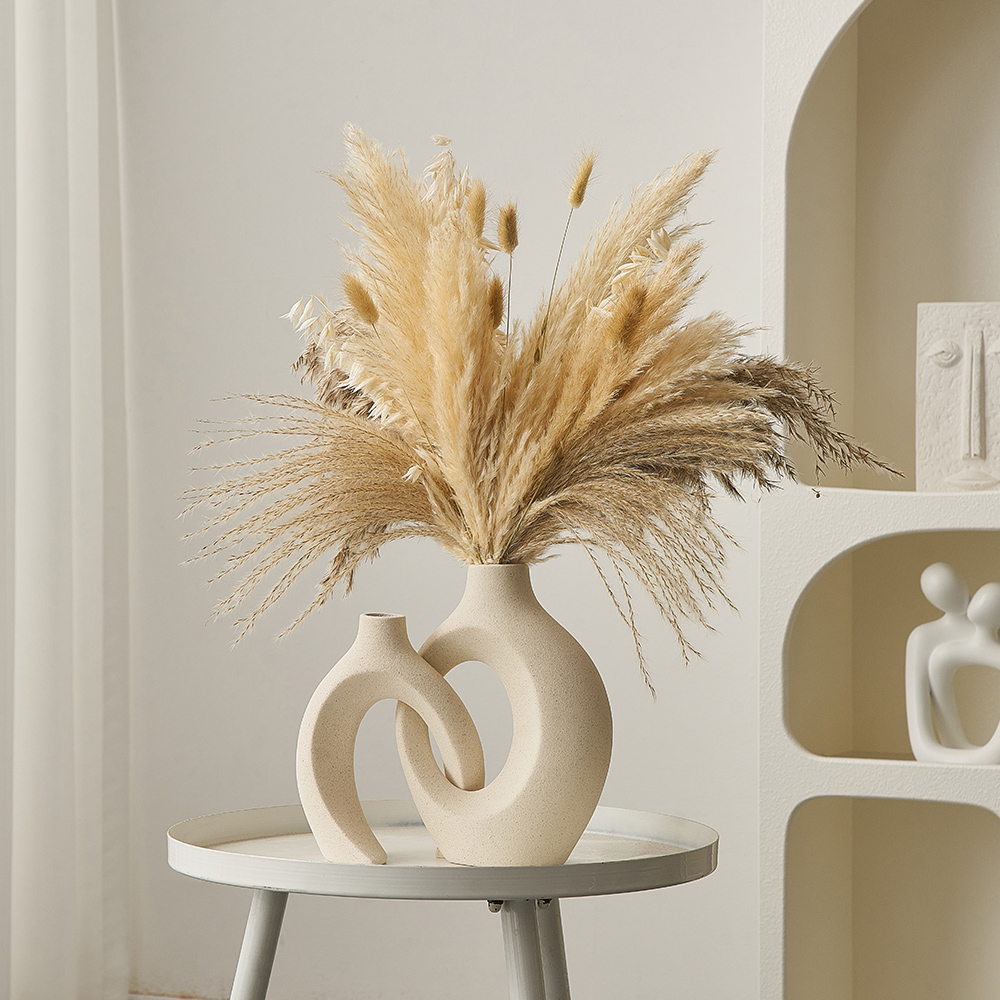
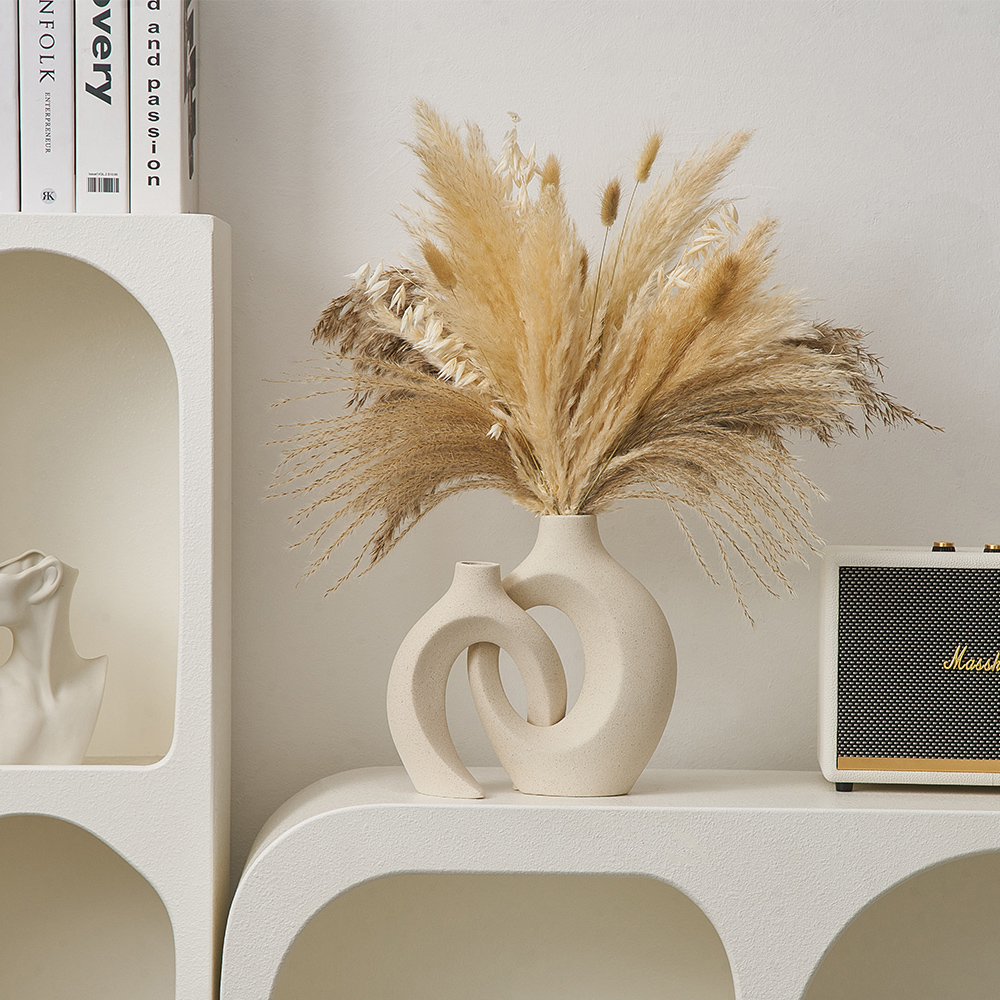
A sculptural vase, such as an arch, open or twisted tube shape, acts like a small artwork. It looks complete without flowers. Place one alone on a console or coffee table, with space around it so the outline stays clear.
Bud vases, tall vases and wall vases
A bud vase holds one stem and suits a nightstand or windowsill. A tall vase works on a sideboard with long branches. A wall vase frees up surfaces in small homes and adds a living detail to bare walls.
How to choose your Japandi vase?
Start with the spot. On a coffee table, keep the vase low so it does not block views. On a sideboard or floor, go taller.
A common rule is to choose stems about one and a half to two times the vase height.
Next, look at the material. Glazed ceramic can usually hold water. Some decorative vases are made of MDF or stone composites and suit only dried or faux stems.
Check the partner's listing before adding water.
For care, wipe the outside with a soft, dry cloth. Groups of one or three vases look most natural.
What to pair a Japandi vase with?
Fill your vase with Japandi plants such as faux olive or chestnut leaf branches for year-round greenery.
Group two or three shapes at different heights on a Japandi sideboard.
Add a book or small stone tray between them. Repeat one glaze color elsewhere, such as in a bowl. These vases also suit wabi-sabi, Scandinavian and organic modern rooms.
A word from the store
Japandistore lists only Japandi-style decor. We hand-pick these vases from established partner stores, including Homary and Wayfair.
Before listing, we compare materials, dimensions, real buyer reviews and partner return terms.
Most vases here range from about $30 to $130. Prices, stock, shipping and returns are set by each partner and shown on their site, where you buy directly.
FAQ — Japandi vase
What vases are popular for Japandi decor?
Matte ceramic vases in neutral tones are the most popular. Sculptural shapes, such as arches and bottle forms, come close behind. Handmade-looking textures fit the wabi-sabi side of the style. Glossy or bright patterns fit less well.
What do you put in a Japandi style vase?
Use one to three stems with a clear shape. Olive branches, eucalyptus, dried grasses and blossom branches all work. Sculptural vases can stay empty. The aim is a light, airy line, not a full, round bouquet.
Can you put water in a decorative vase?
Only if it is glazed inside and sold as watertight. Many decorative vases, especially MDF or stone composites, are meant for dried or faux stems. Check the partner's listing first. When unsure, place a glass liner inside.