

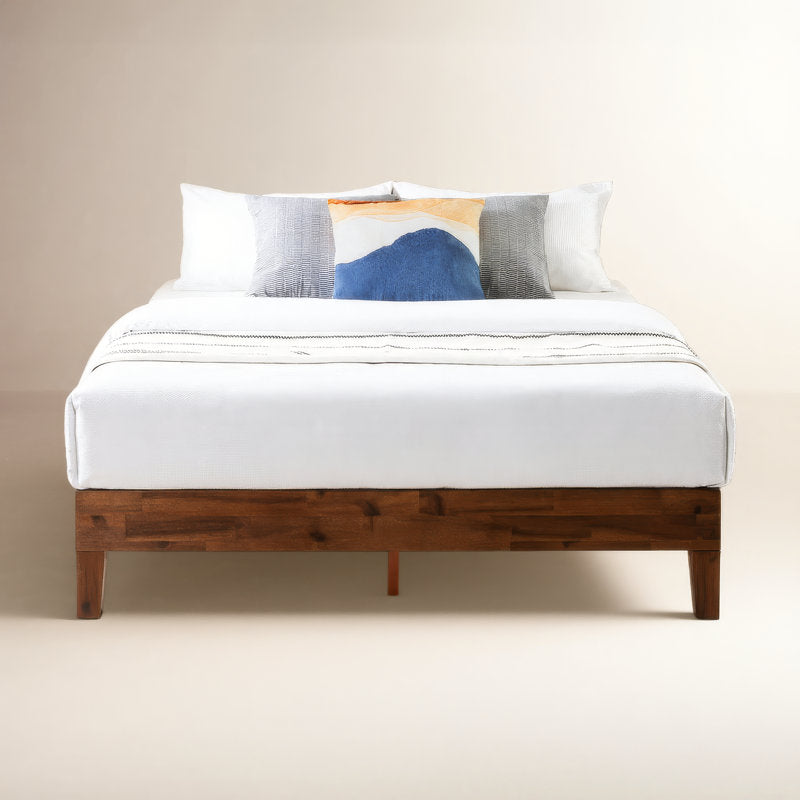
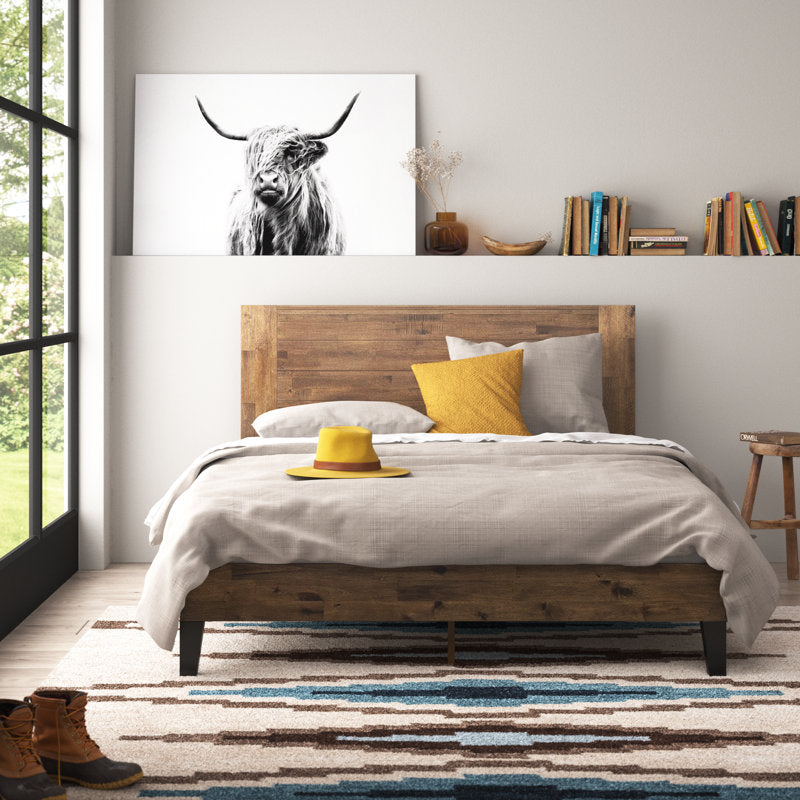
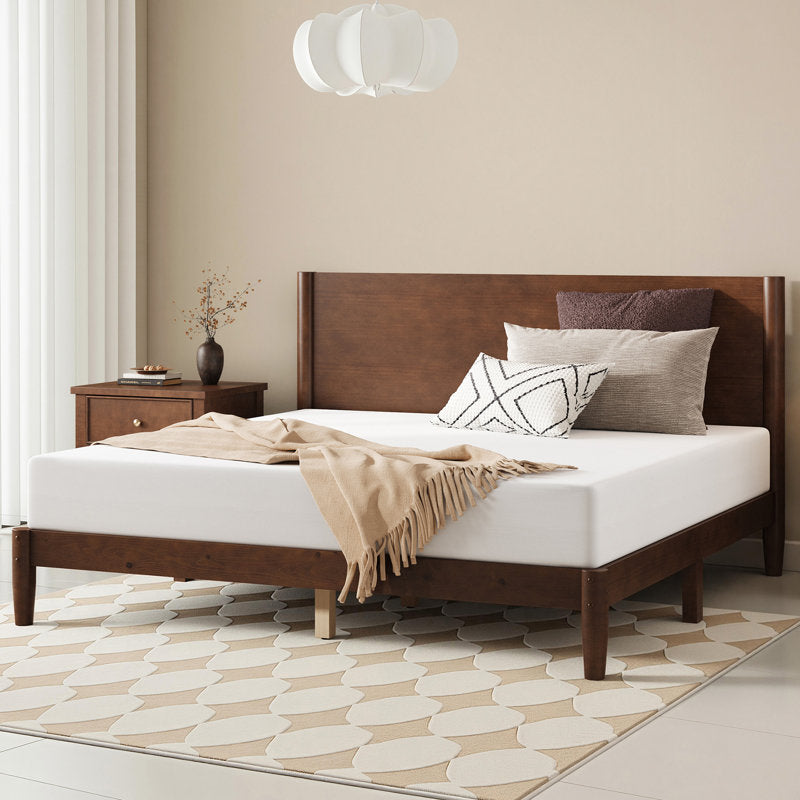
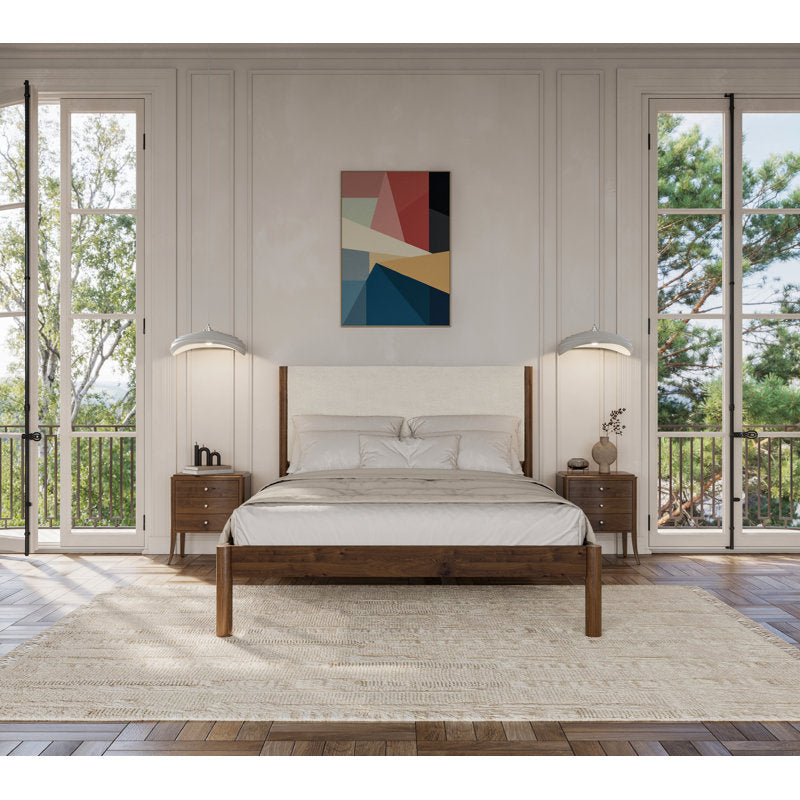
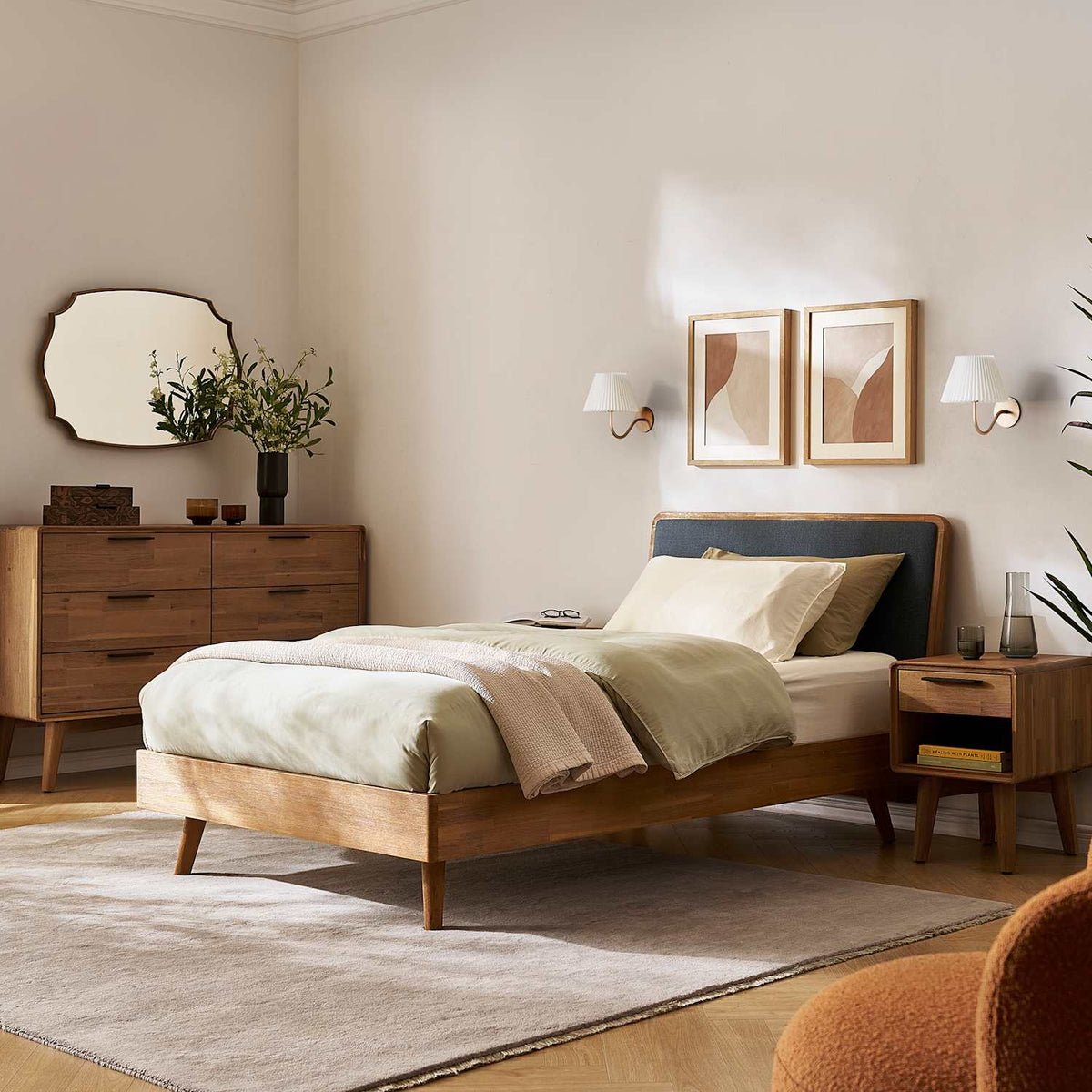
A Japandi bed brings the calm, grounded feel of a minimalist bedroom into your nightly routine. It offers a low, restful frame that makes the room feel larger and the end of the day slower. Most designs sit close to the floor on a slatted platform, so a box spring is usually not needed. Upholstery stays soft and natural, in linen, cotton blends and bouclé. Wooden frames and walnut or oak legs add warmth. You'll also find tatami-style, floor and storage beds here. Browse the collection below and compare heights, sizes and headboard shapes.
Filters
20 products




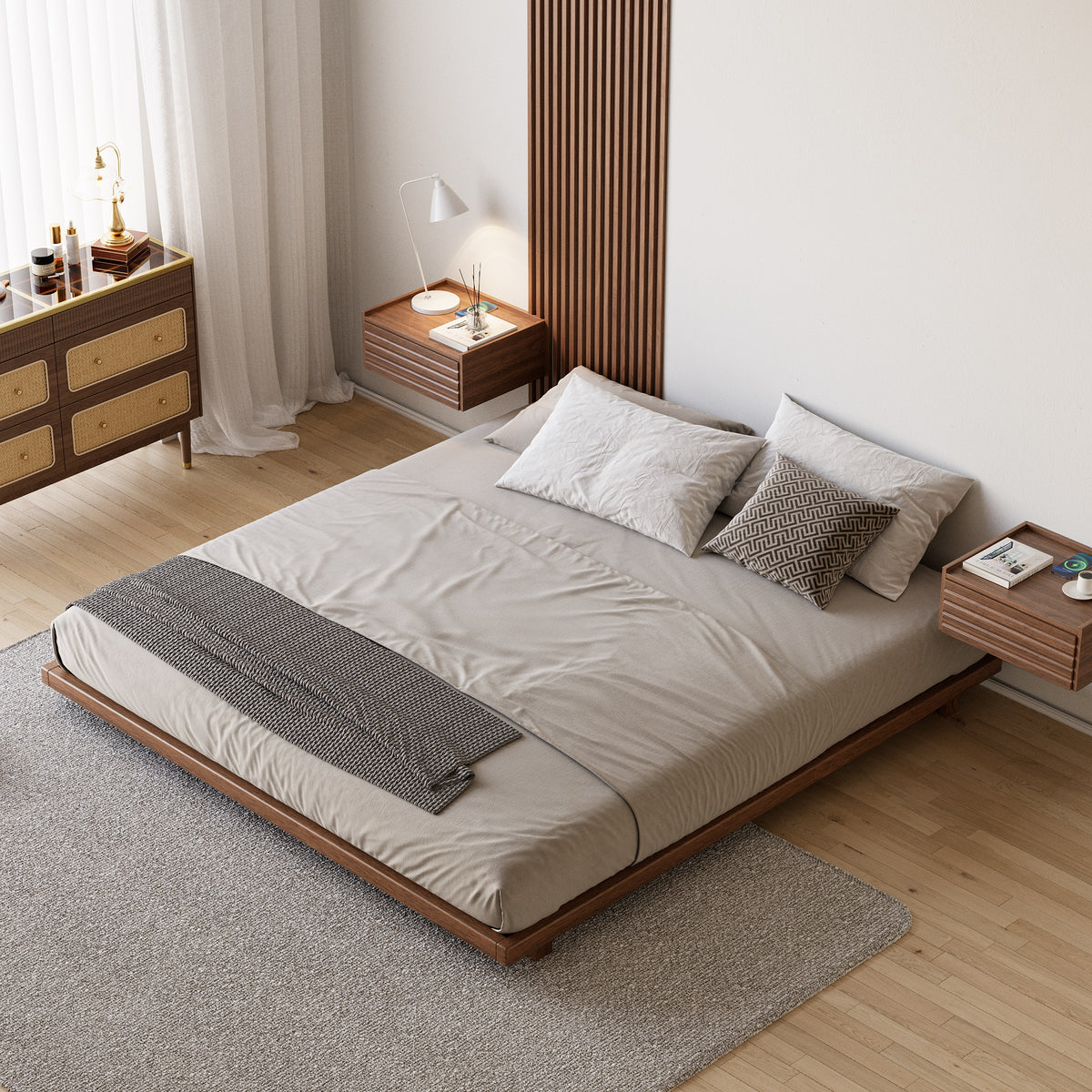
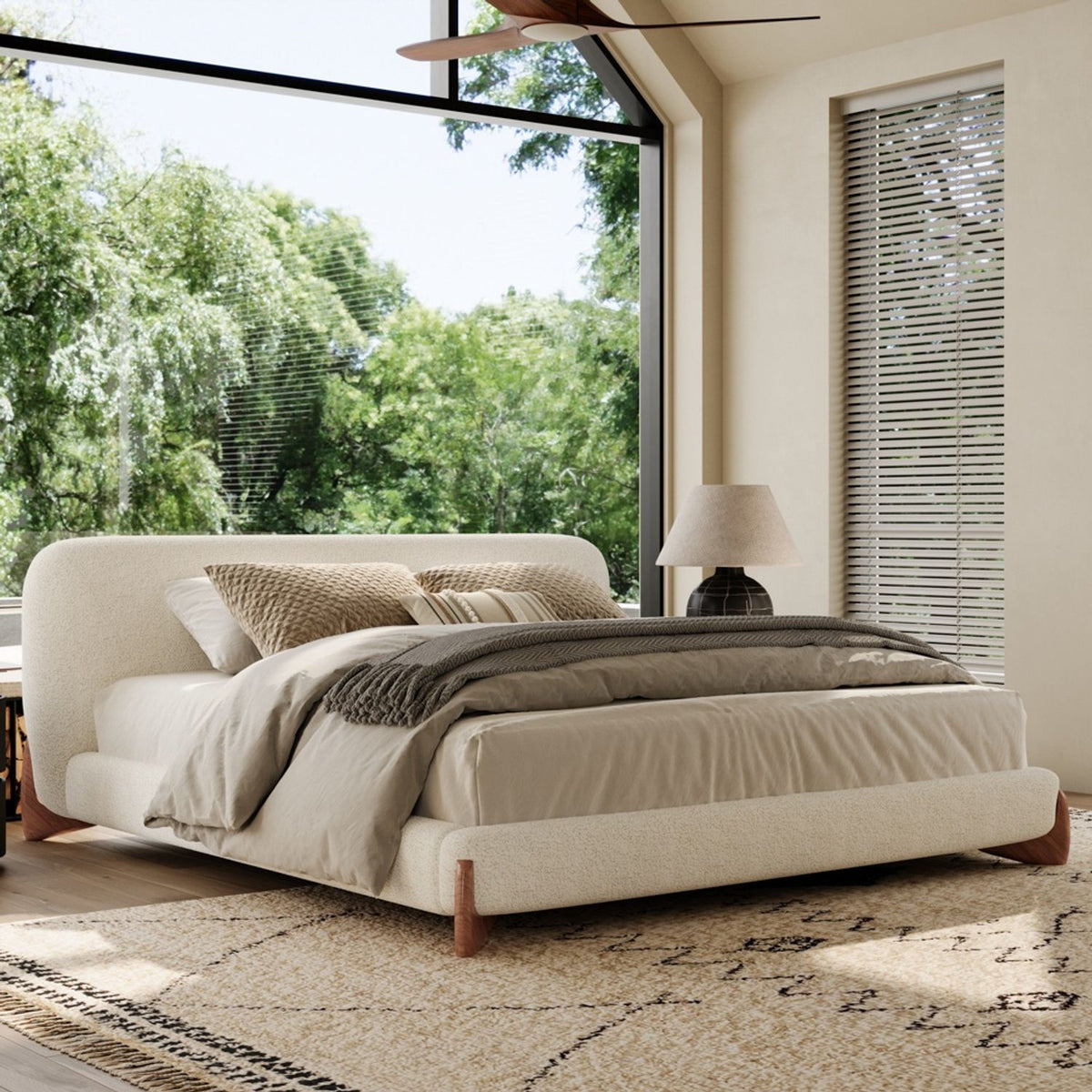
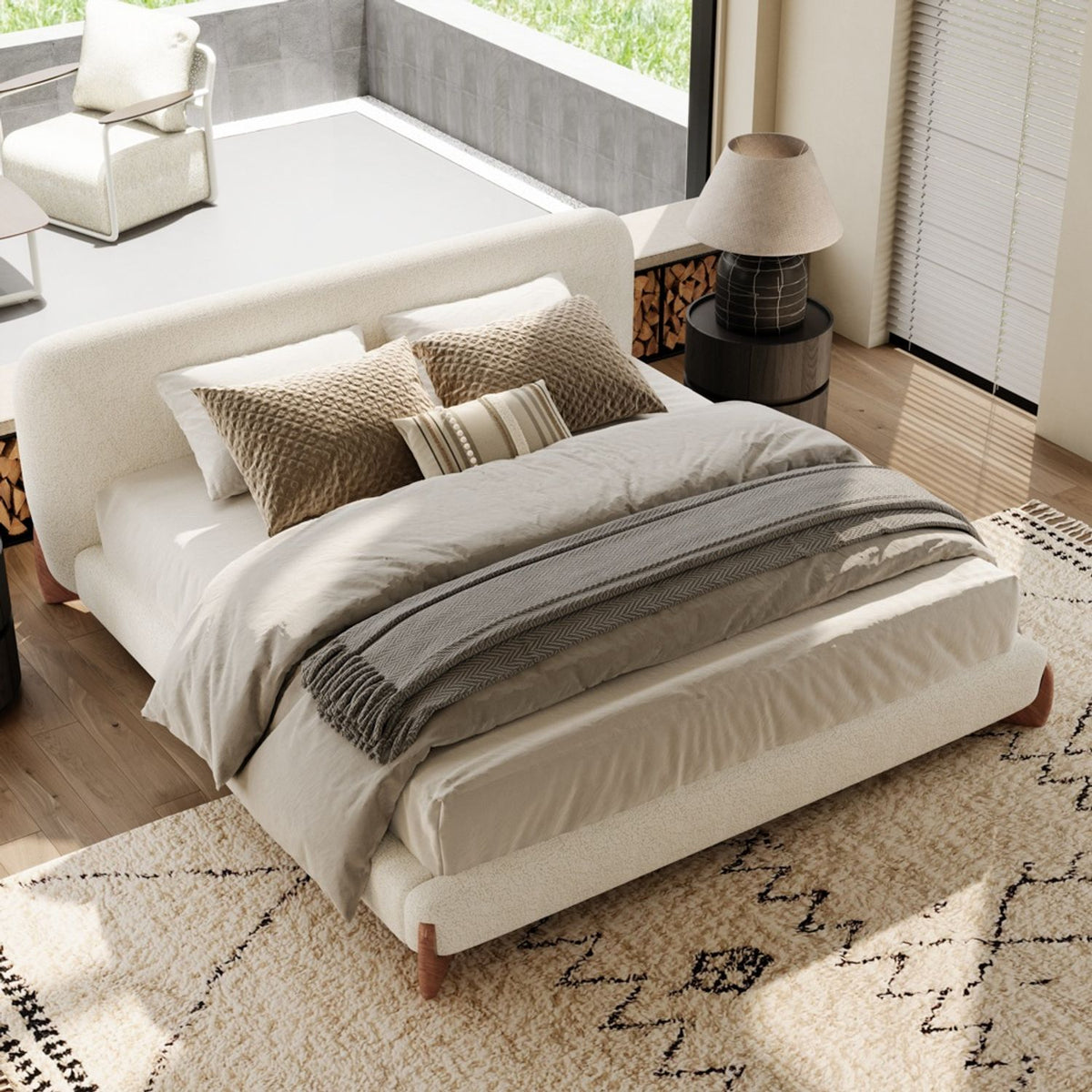
What is a Japandi bed?
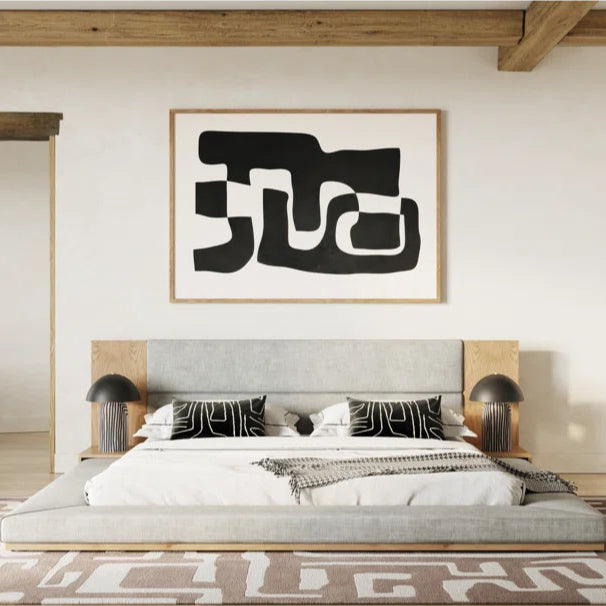
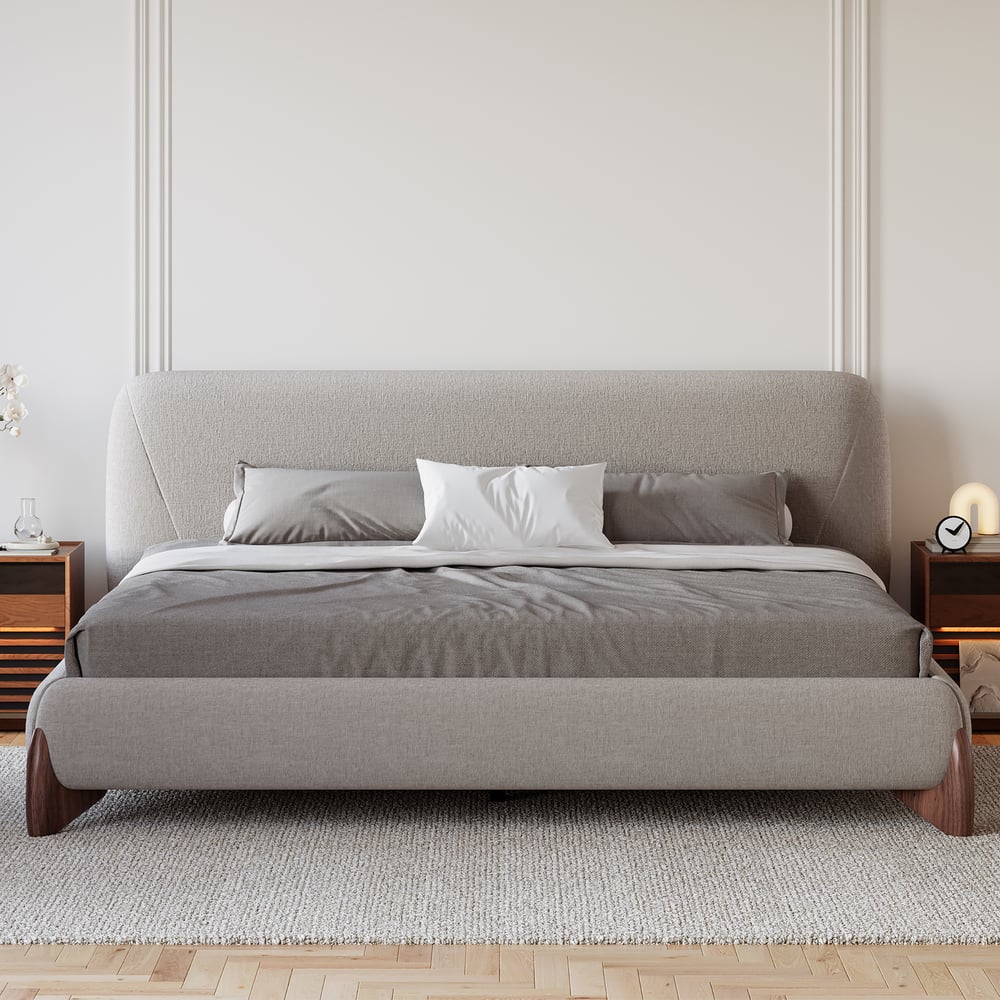
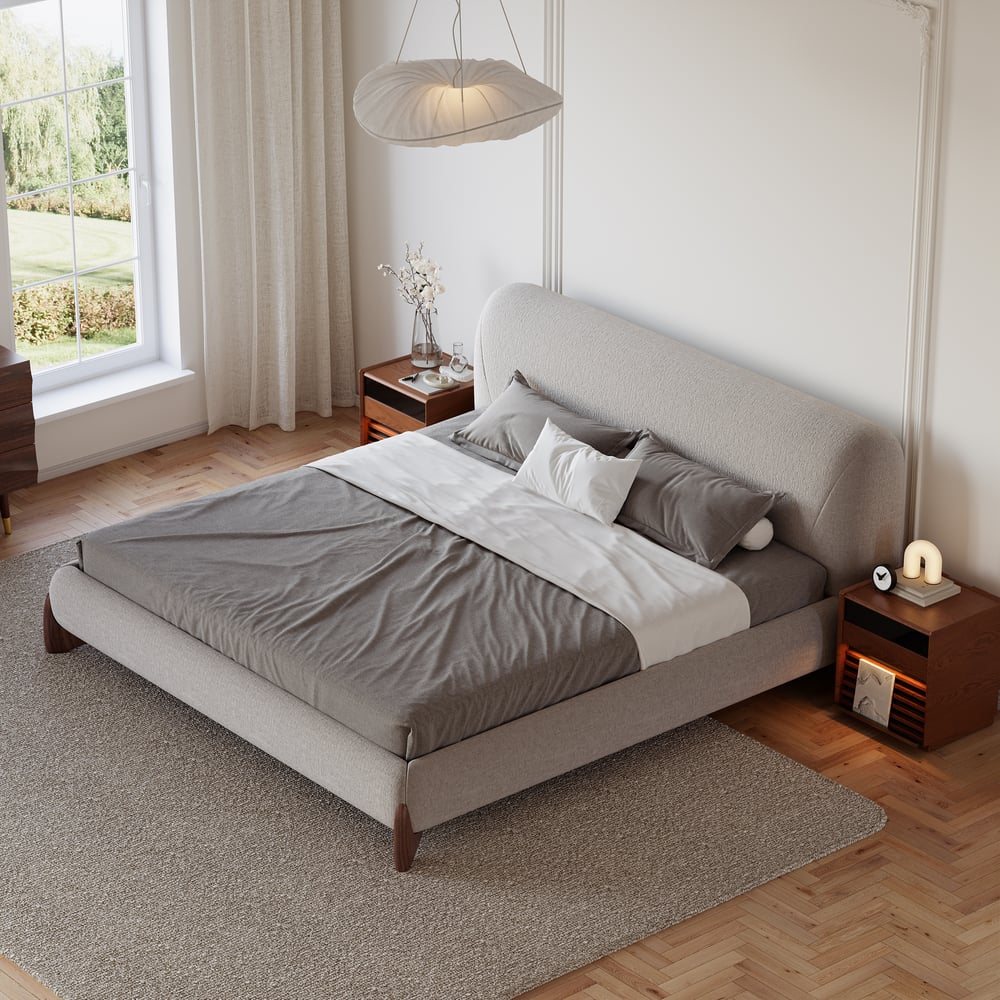
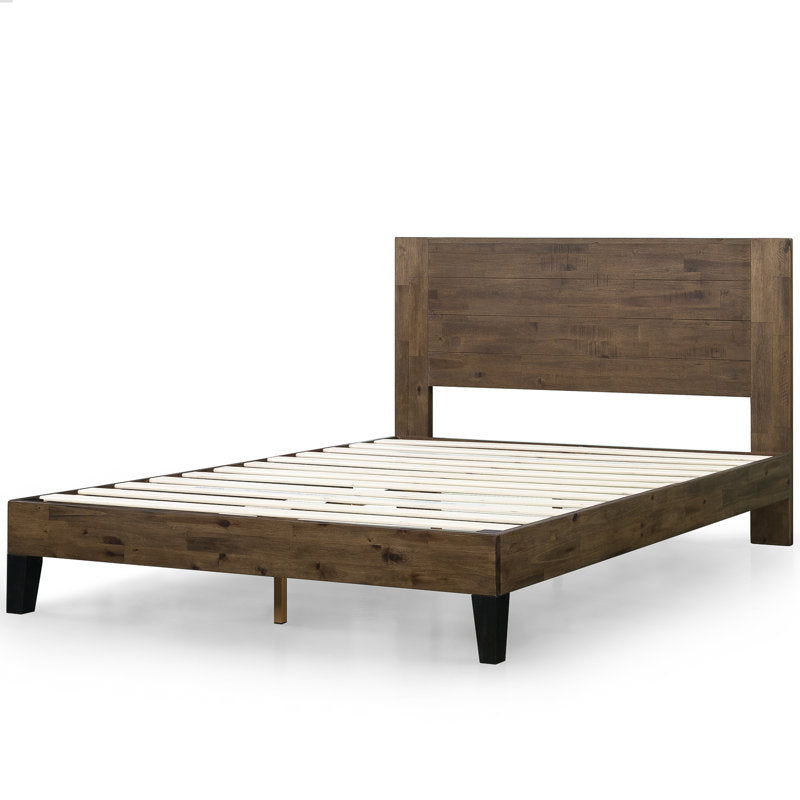
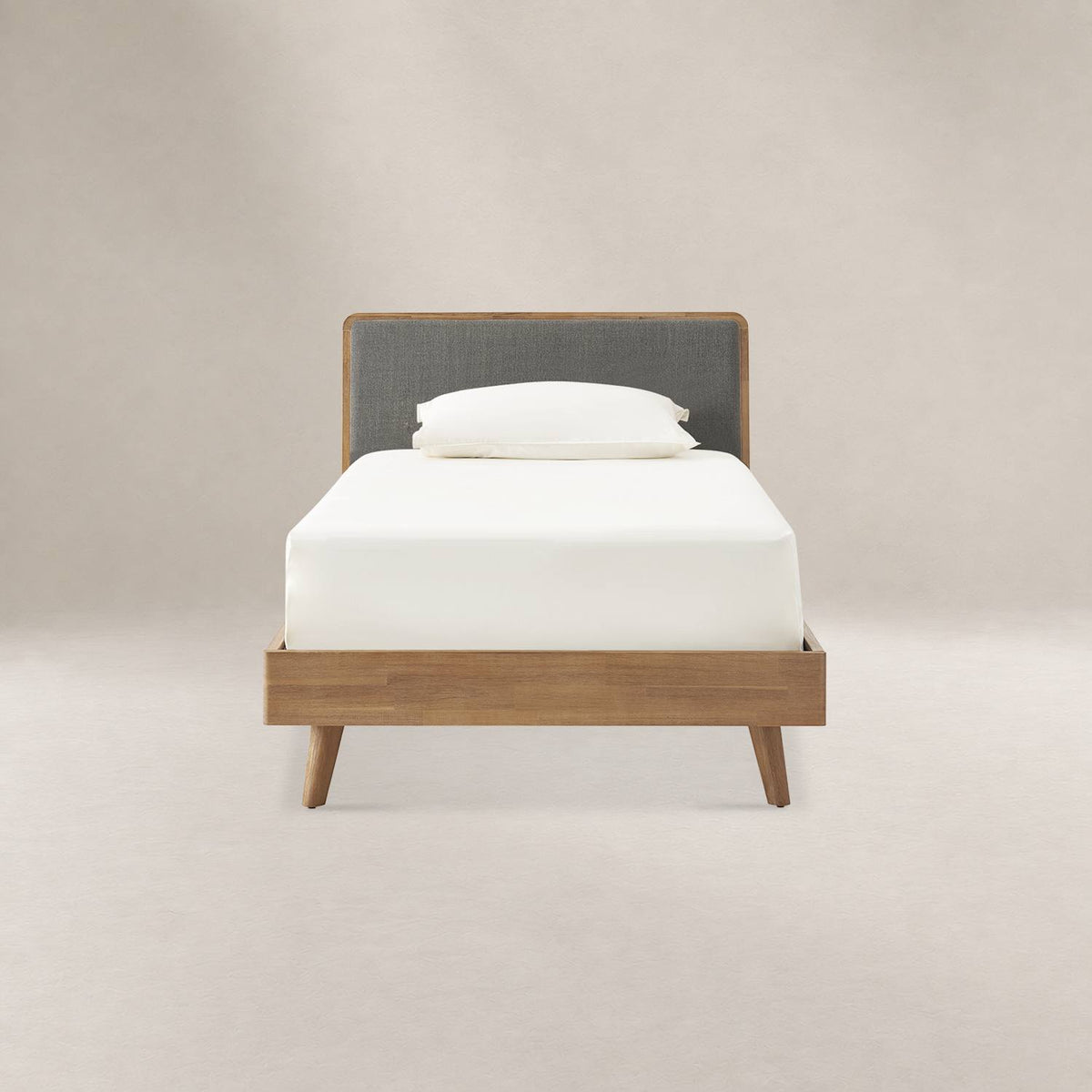
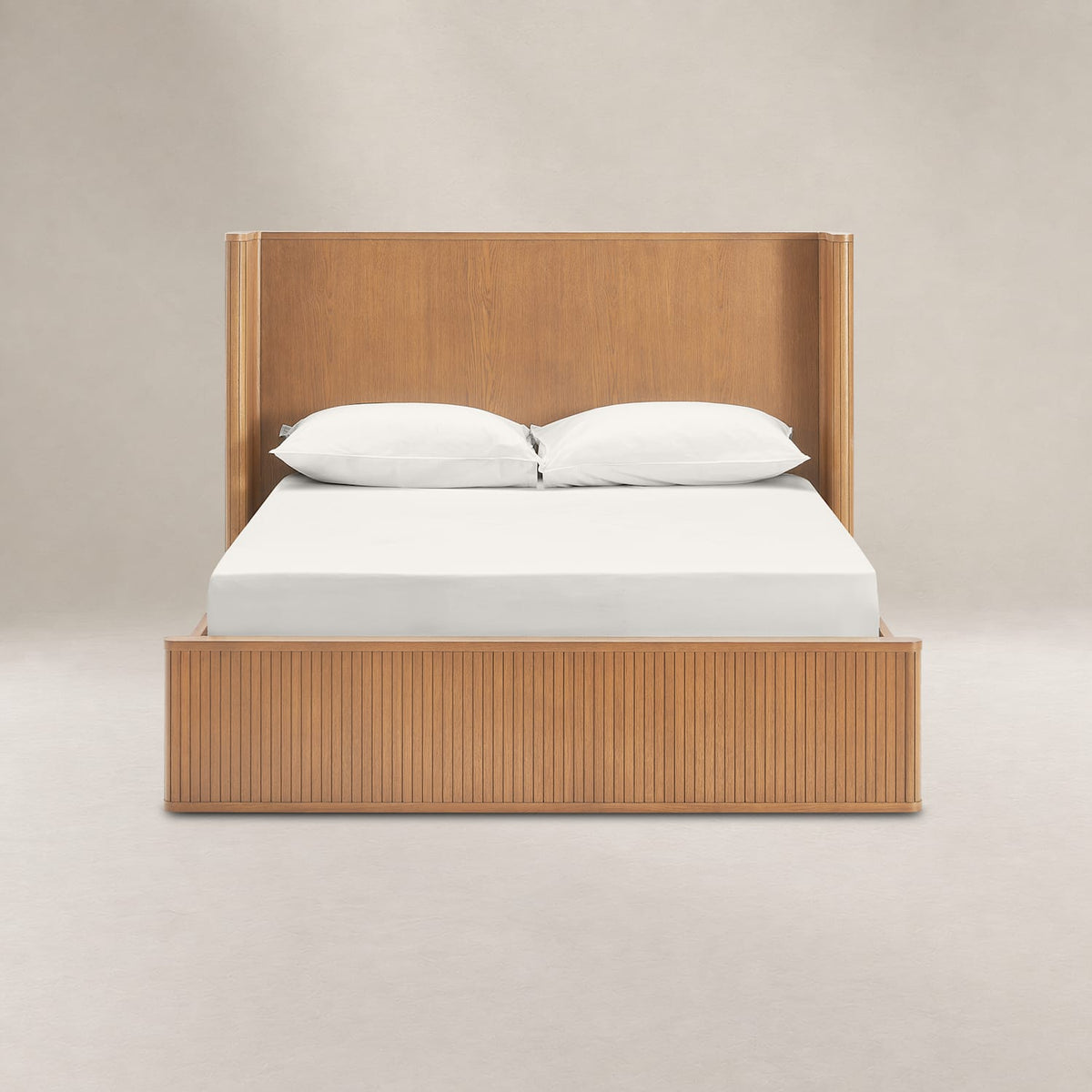
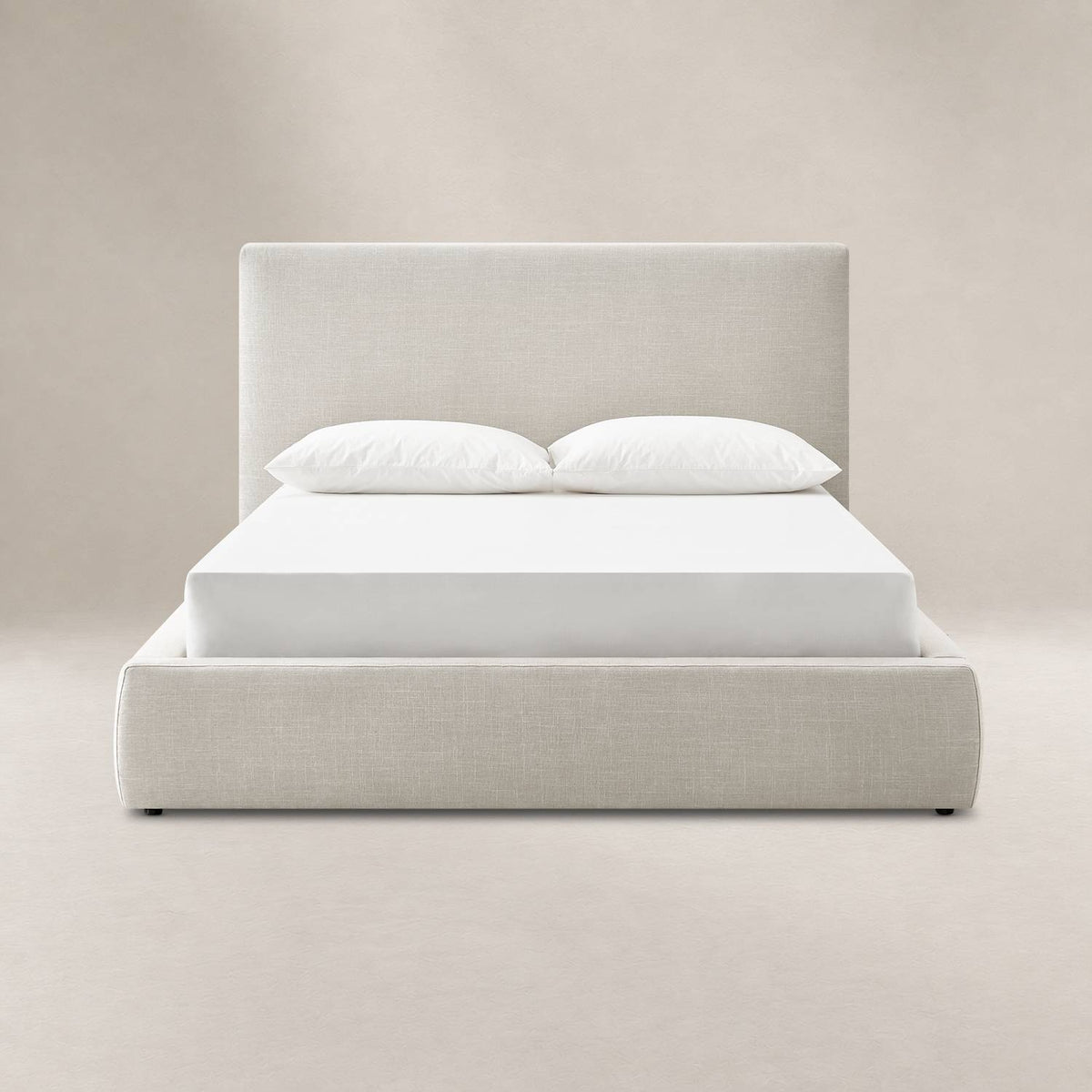
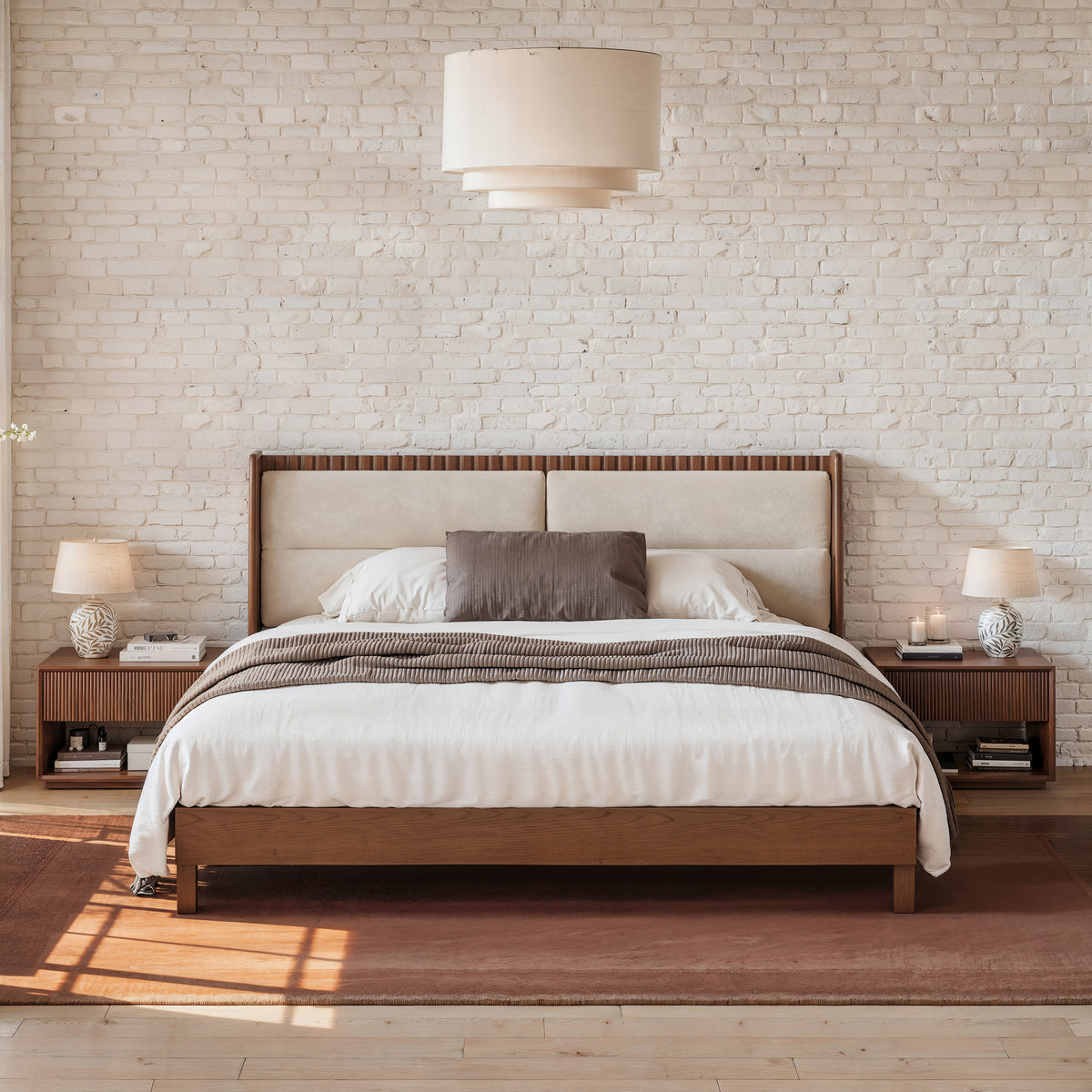
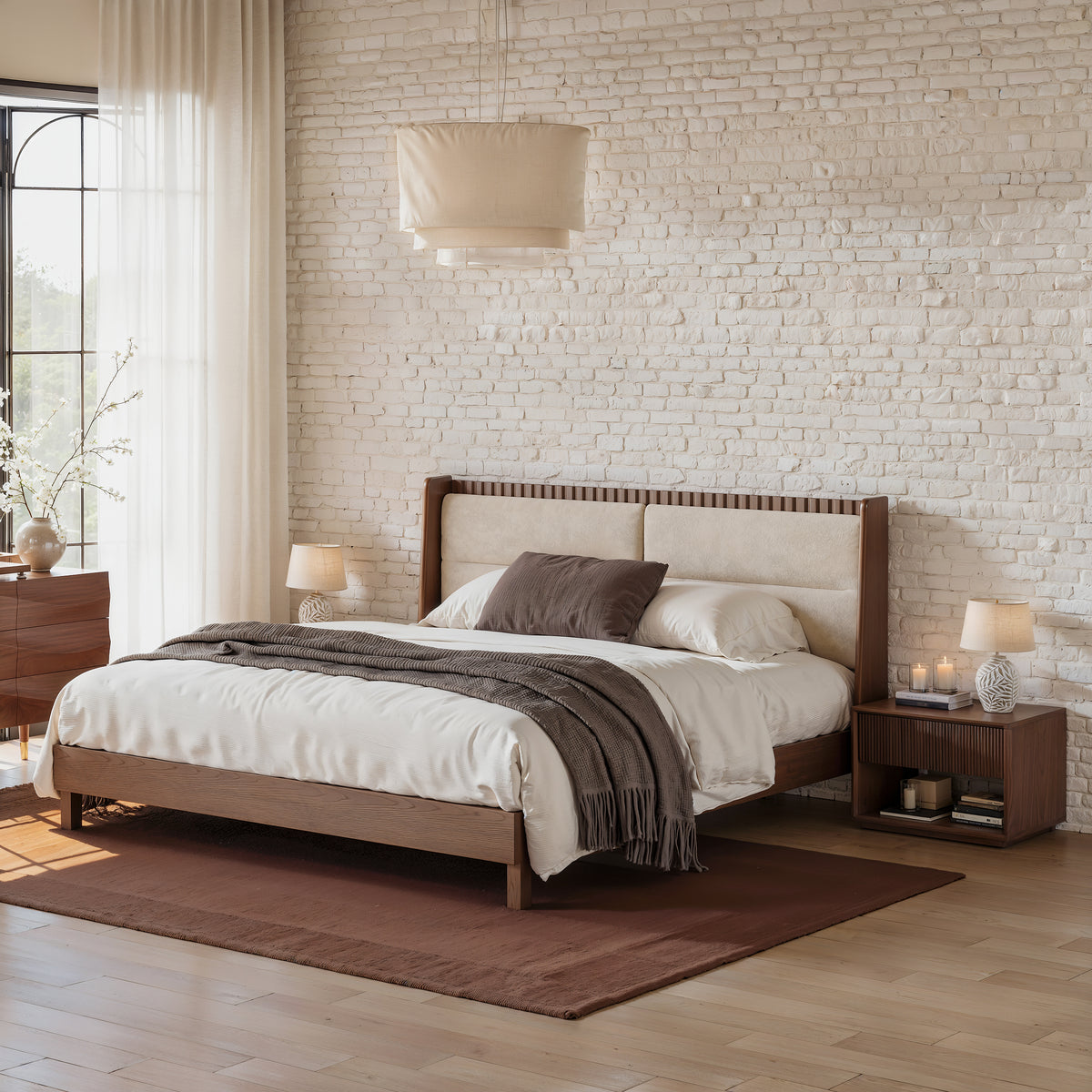
A Japandi bed frame is low and simple, blending Japanese floor-level living with Scandinavian comfort. You can recognize one by its low profile, clean lines and natural materials. Frames use solid or engineered wood, or upholstery in linen, cotton or bouclé. Headboards are low and plain, sometimes extended or gently curved. Most models are platform beds with built-in slats. Colors stay soft: oatmeal, ivory, sage, warm wood and walnut. You won't find carving, tufting or shiny metal trim.
Why buy a Japandi bed?
Traditional Japanese bedrooms placed sleep close to the ground, on futons laid over tatami mats. Scandinavian homes added the warmth of soft textiles and natural wood. This style blends both ideas into a frame that suits modern mattresses. The low height creates a sense of space and calm, which suits a room meant for rest. Natural materials also feel quieter than glossy or ornate frames. Each bed is sold and shipped by a partner under its own warranty and return terms.
Styles and variations of Japandi beds
Low wooden and tatami-style beds
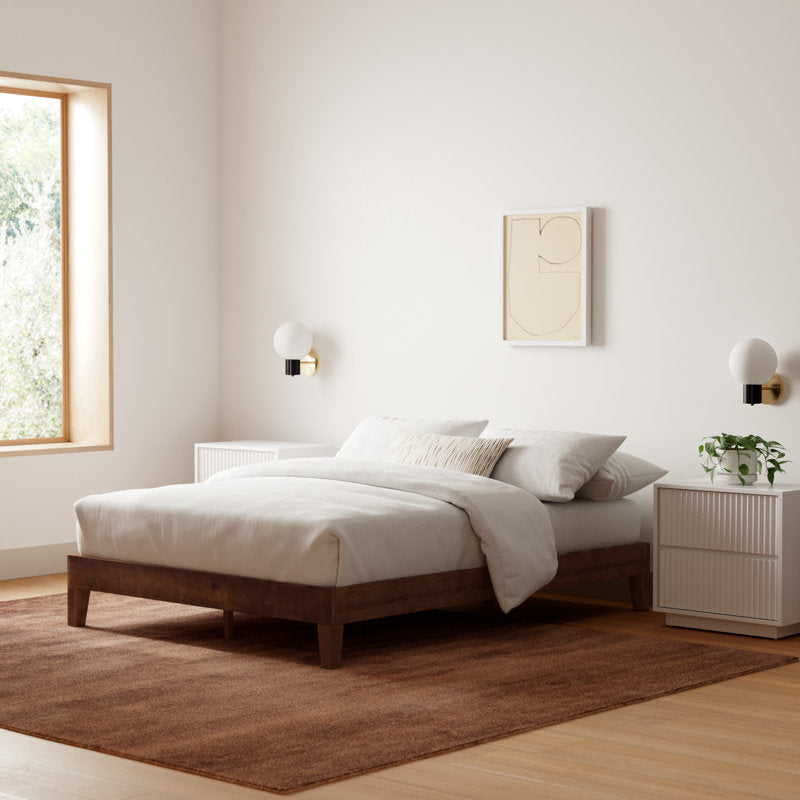
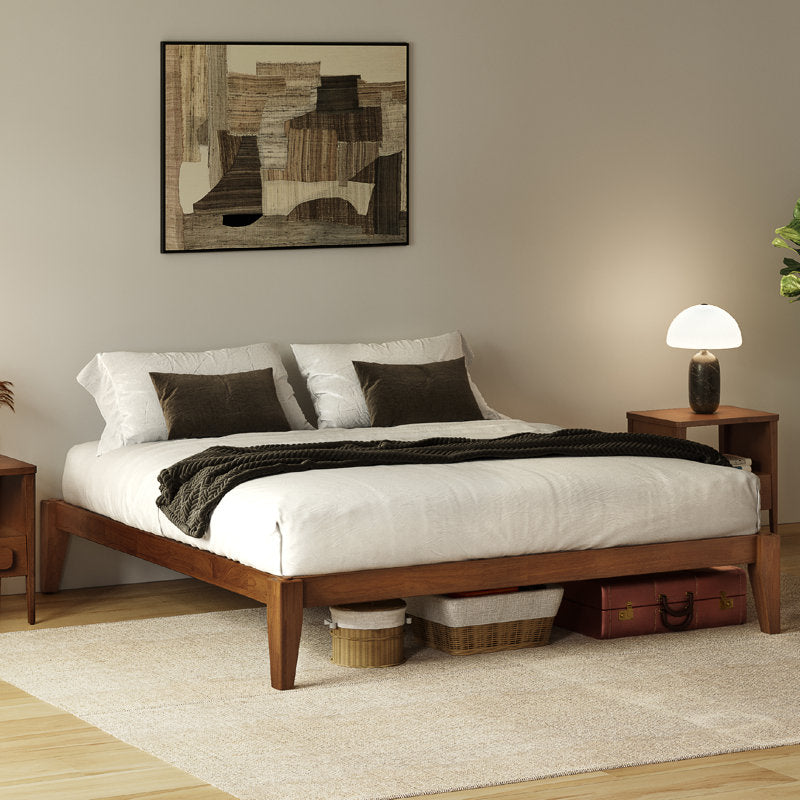
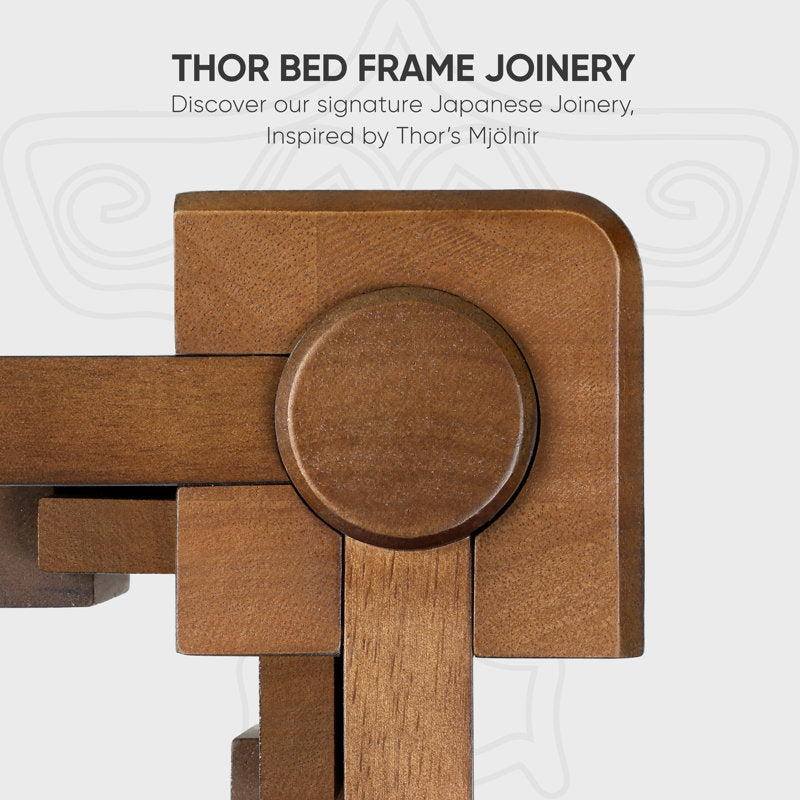
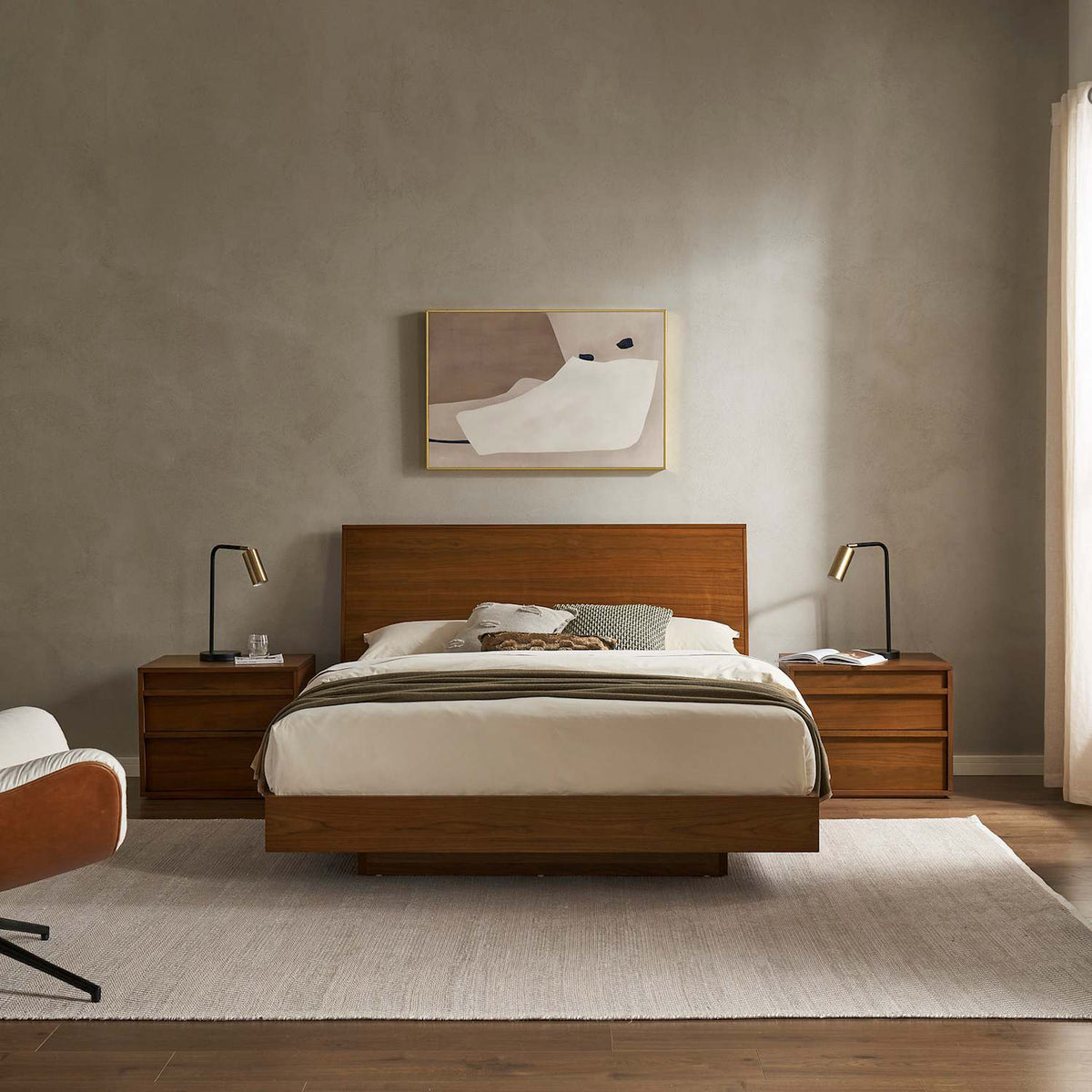
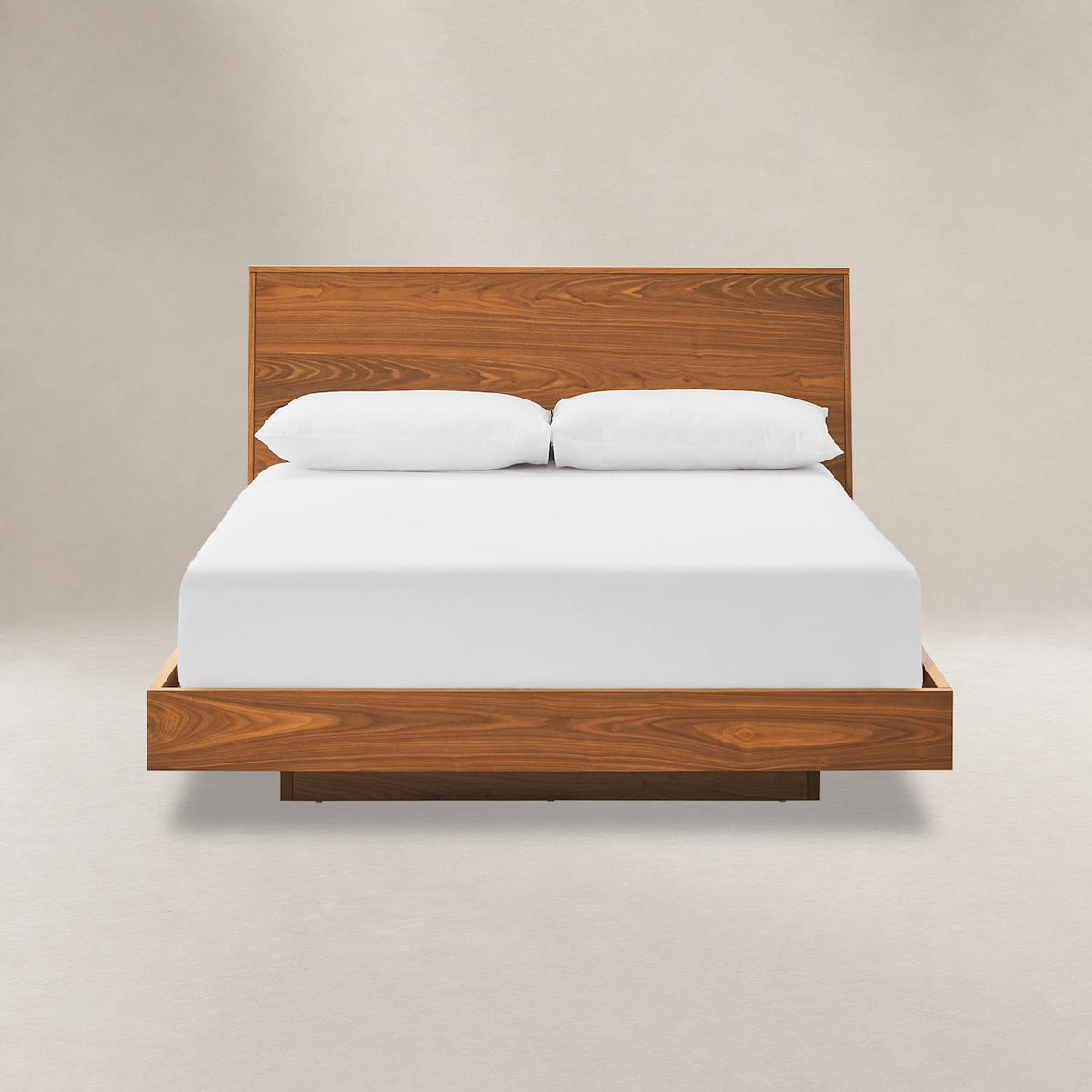
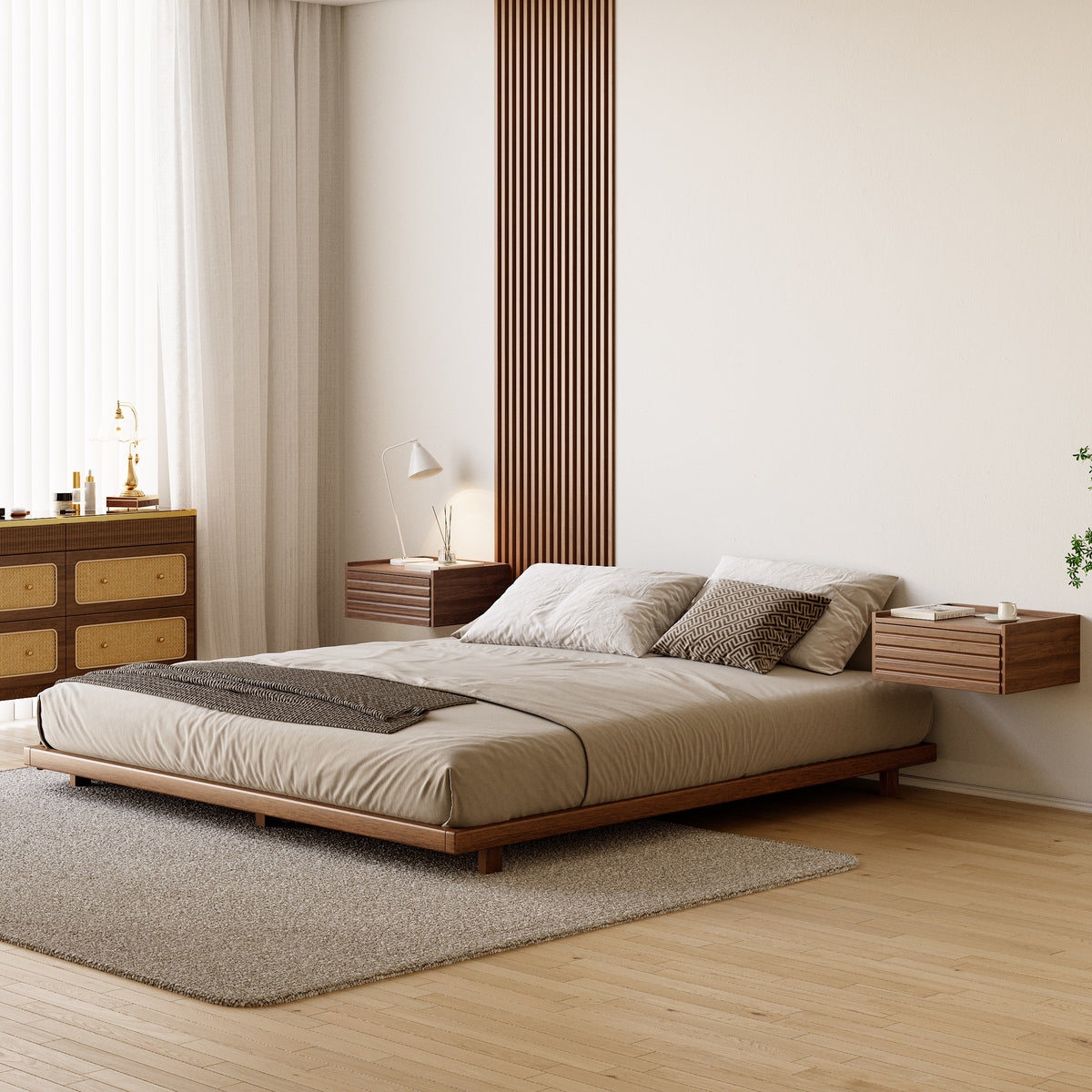
A wooden bed frame shows natural grain in oak, ash or walnut-toned finishes. A tatami bed sits very low, often with a wide platform edge. This is the most traditional look, ideal where the bed is the main piece.
Upholstered linen and bouclé beds
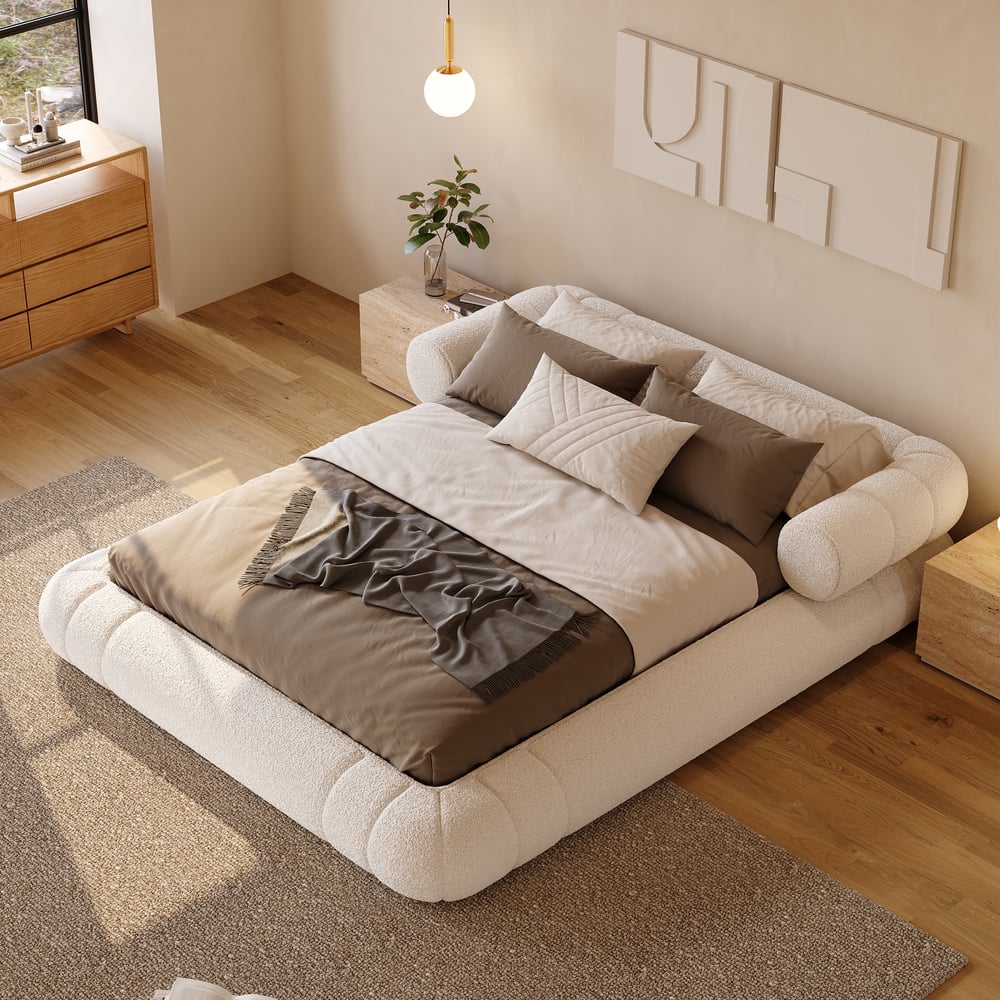
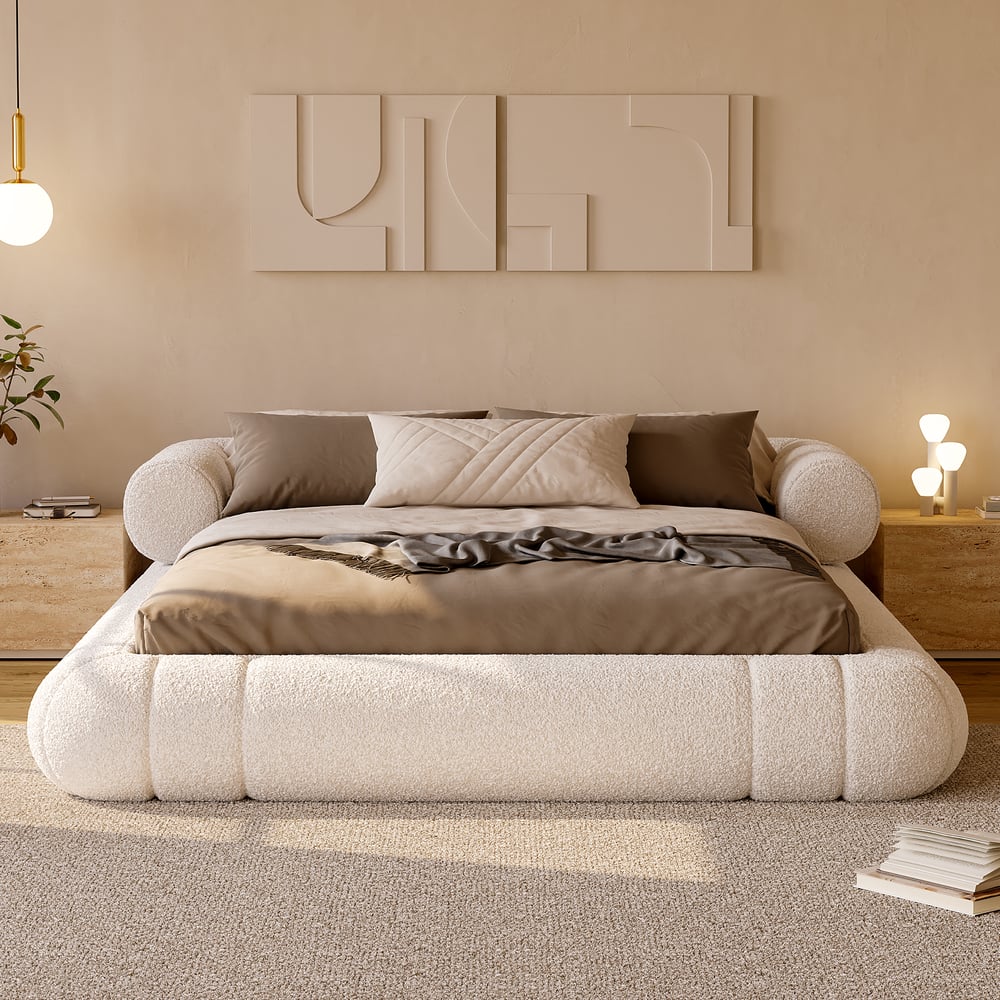
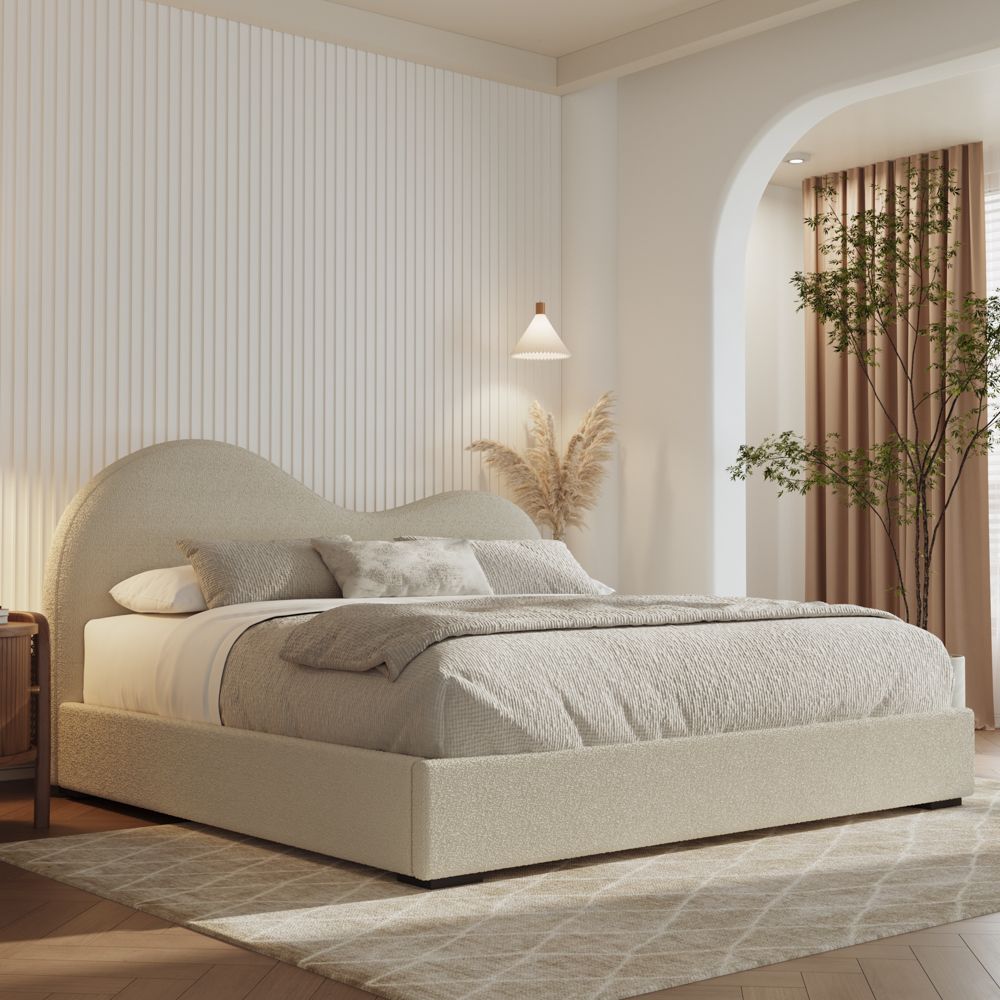
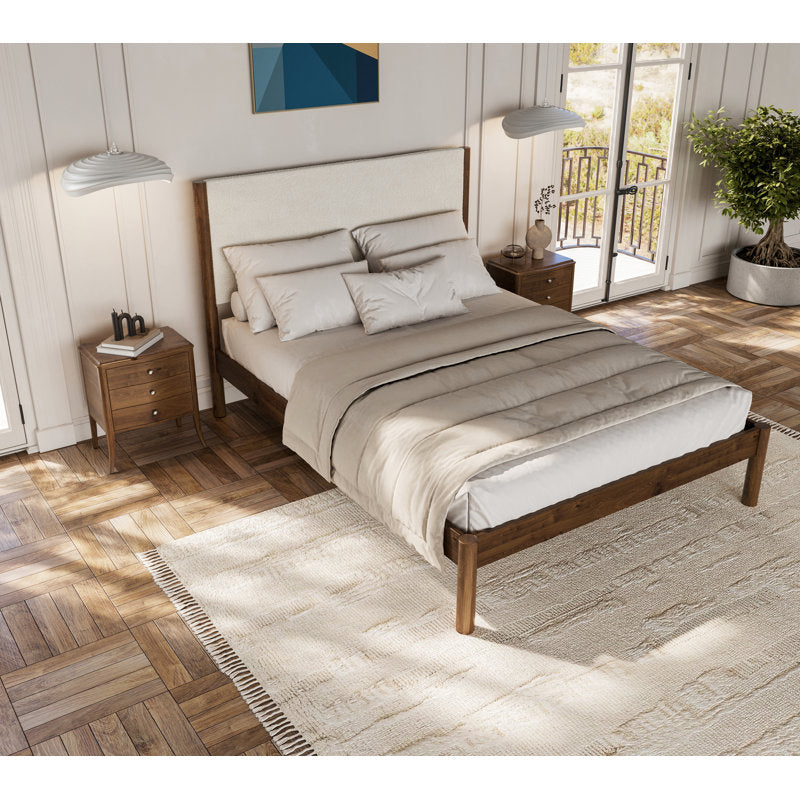
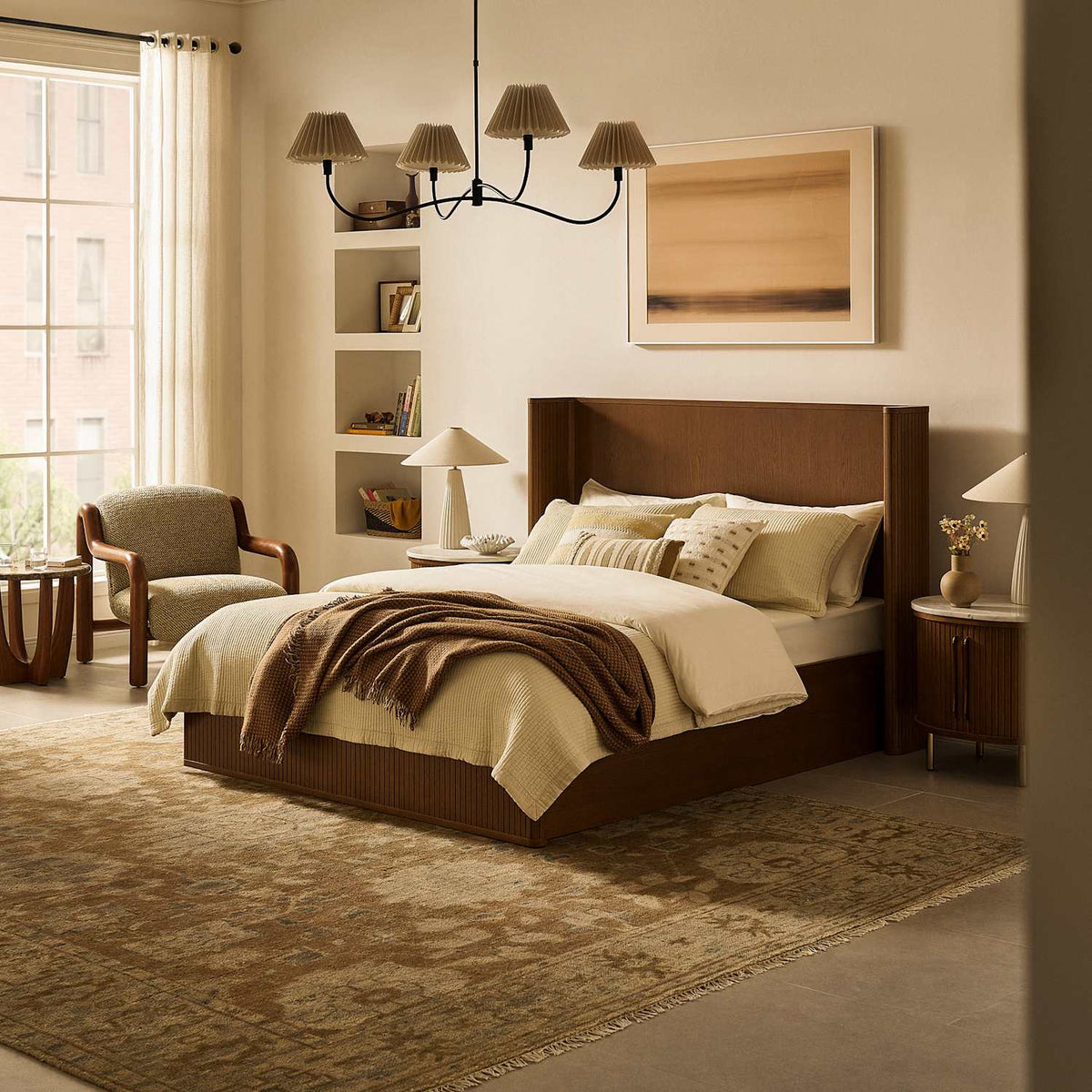
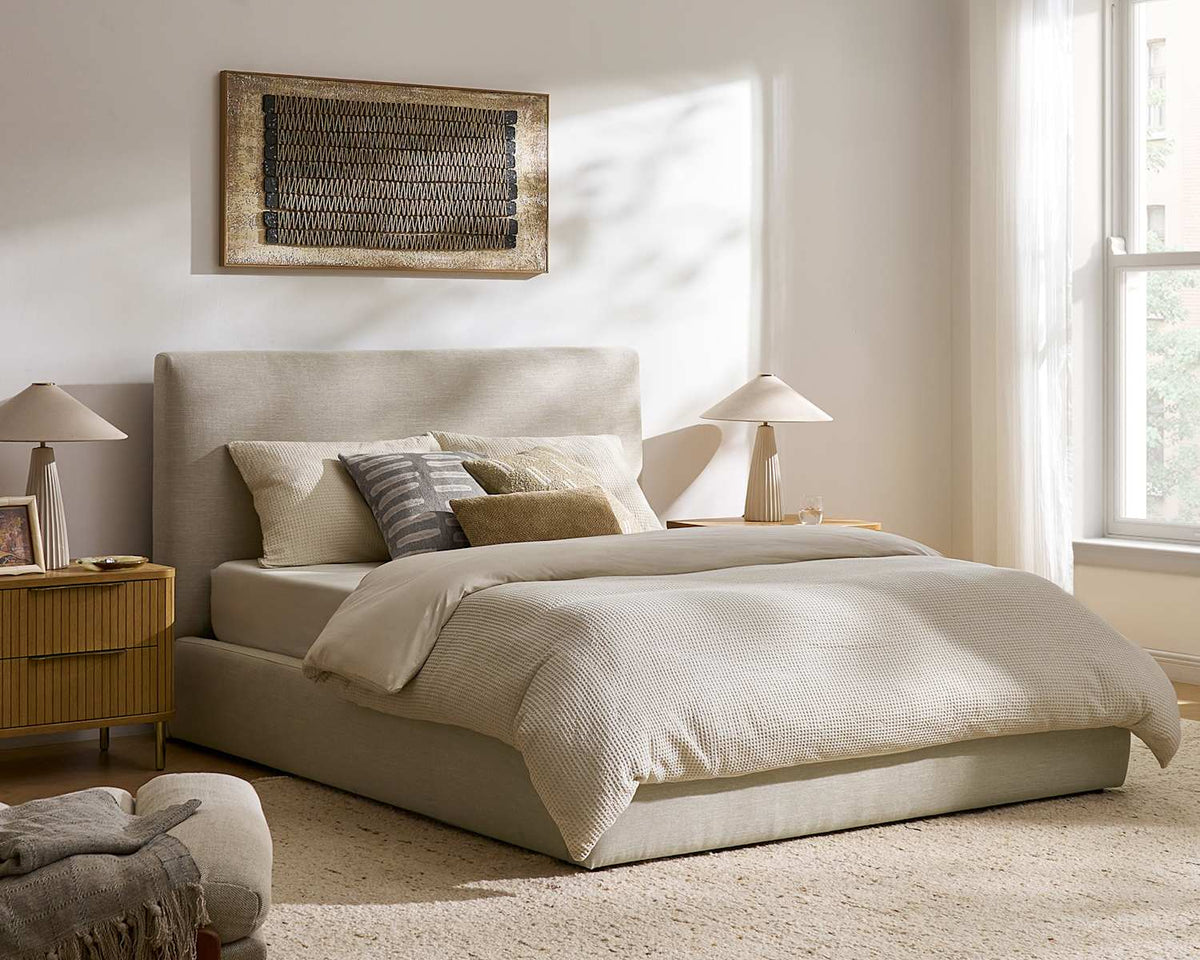
An upholstered linen bed feels relaxed, with slight natural wrinkles. A boucle bed adds cozy texture, often with rounded or bubble headboards. King, queen and extended-headboard options appear here, all in calm neutral tones.
Floor, storage and lift-up beds
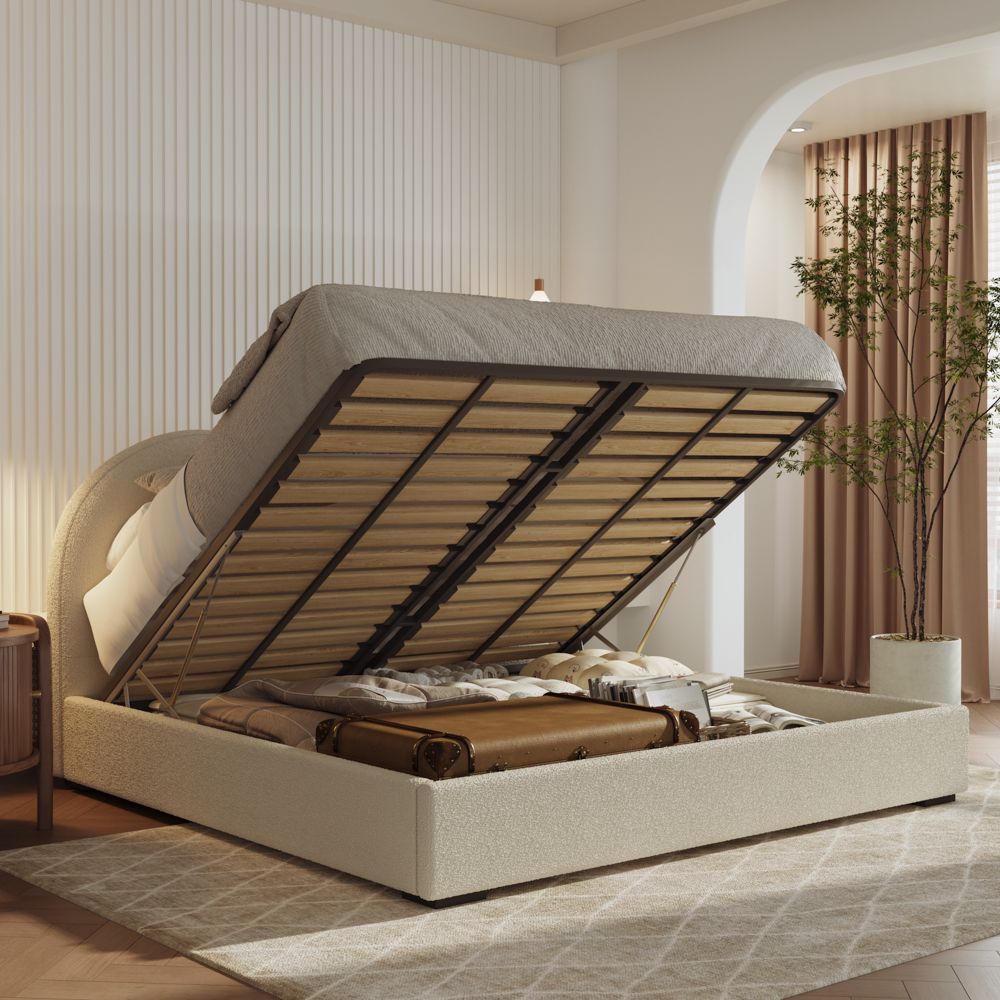
A floor bed sits almost on the ground for a relaxed feel. A storage bed hides linens and seasonal clothes under the mattress. Hydraulic lift-up frames raise the platform for easy access, which helps smaller bedrooms.
How to choose your Japandi bed?
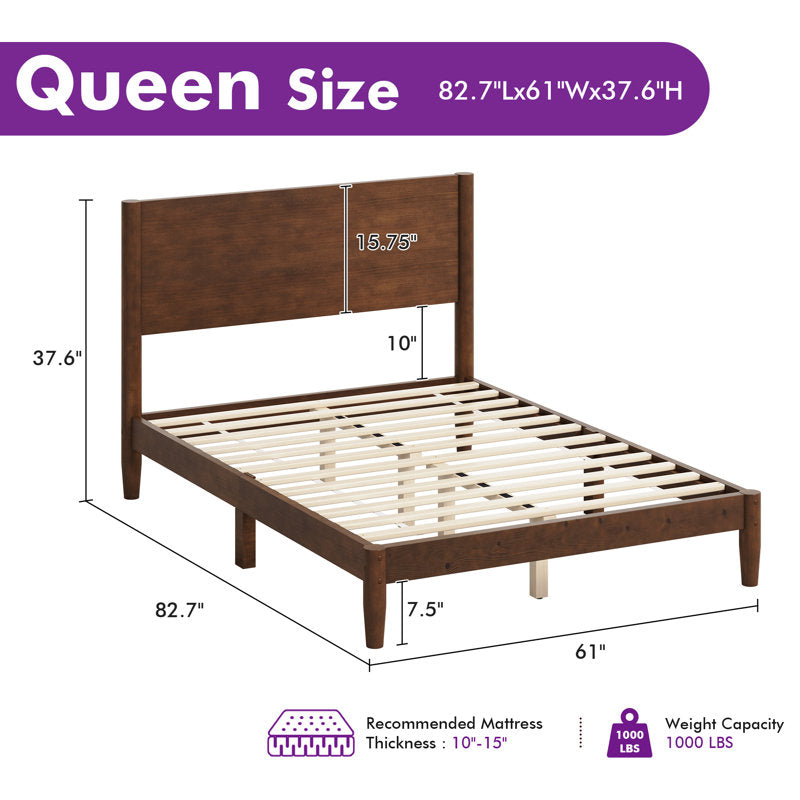
Start with size and height. Check your mattress size, then add the frame's extra width and length from the partner's dimensions. A low platform bed feels calm, but very low frames are harder to get in and out of. Next, check the slat spacing. Many mattress warranties require slats no more than about 3 inches apart. For queen and king sizes, confirm the frame has center support legs. For materials, solid wood frames usually last longest. Linen wrinkles and bouclé can pill, so gentle, regular vacuuming keeps fabric fresh. Finally, consider under-bed storage if your closet is small.
What to pair a Japandi bed with?
Flank the bed with low wooden Japandi nightstands to keep the horizontal line. Wall-mounted Japandi wall sconces free up surface space and give soft reading light. A wide Japandi dresser in a matching wood tone completes the room. Dress the bed in washed linen or cotton in layered neutrals. The look also suits Scandinavian and wabi-sabi bedrooms.
A word from the store
Japandistore lists only Japandi-style pieces. We hand-pick each bed from established partner stores, including Castlery, Homary, Burke Decor and Wayfair. Before listing, we compare materials, dimensions, real buyer reviews and partner warranty and return terms. Most beds here range from about $580 to $2,350. Prices, stock, shipping and returns are set by each partner and shown on its site.
FAQ — Japandi bed
Do Japandi beds need a box spring?
Usually not. Most frames in this style are platform beds with slats that support the mattress directly. A box spring would also spoil the low look. Check the partner page, as some frames recommend a bunkie board.
Is a low bed or floor bed bad for your back?
Not in itself. Back comfort depends mostly on your mattress and sleeping position, not frame height. Getting up is the real issue. Very low beds take more effort, especially with knee or hip problems.
What is the difference between a platform bed and a Japandi-style bed?
A platform bed is any frame with a slatted or solid base that holds the mattress without a box spring. Japandi frames are usually platform beds, but lower, simpler and made from natural materials.