

A Japandi sideboard gives your dining room or living room a long, low line that steadies the space. It hides dishes, linens and clutter, while its top becomes a calm display surface. The pieces here mix oak and walnut veneers, ash, rattan doors and fluted fronts. Some are tall credenzas, others are compact sideboards for smaller rooms. Finishes range from whitewashed oak to caramel wood and deep black. Browse the collection and choose the length, finish and storage your home needs.
Filters
12 products
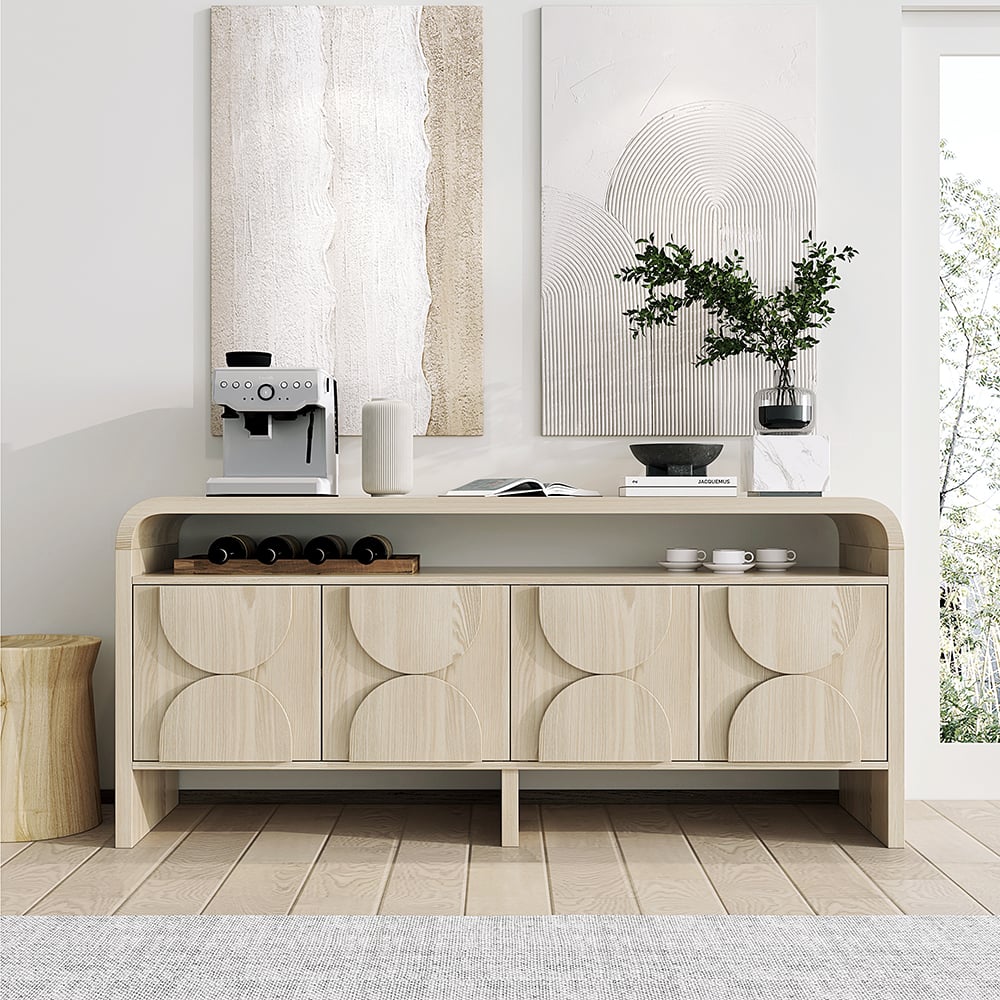
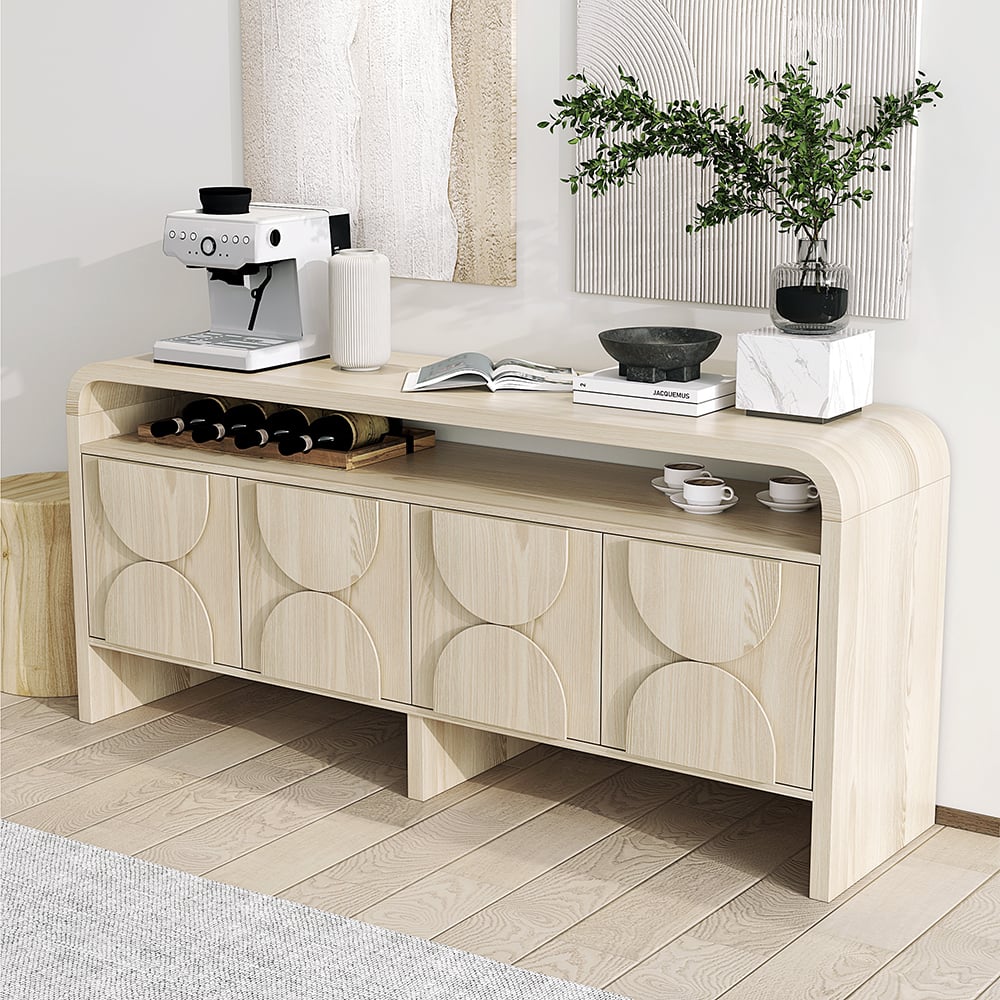
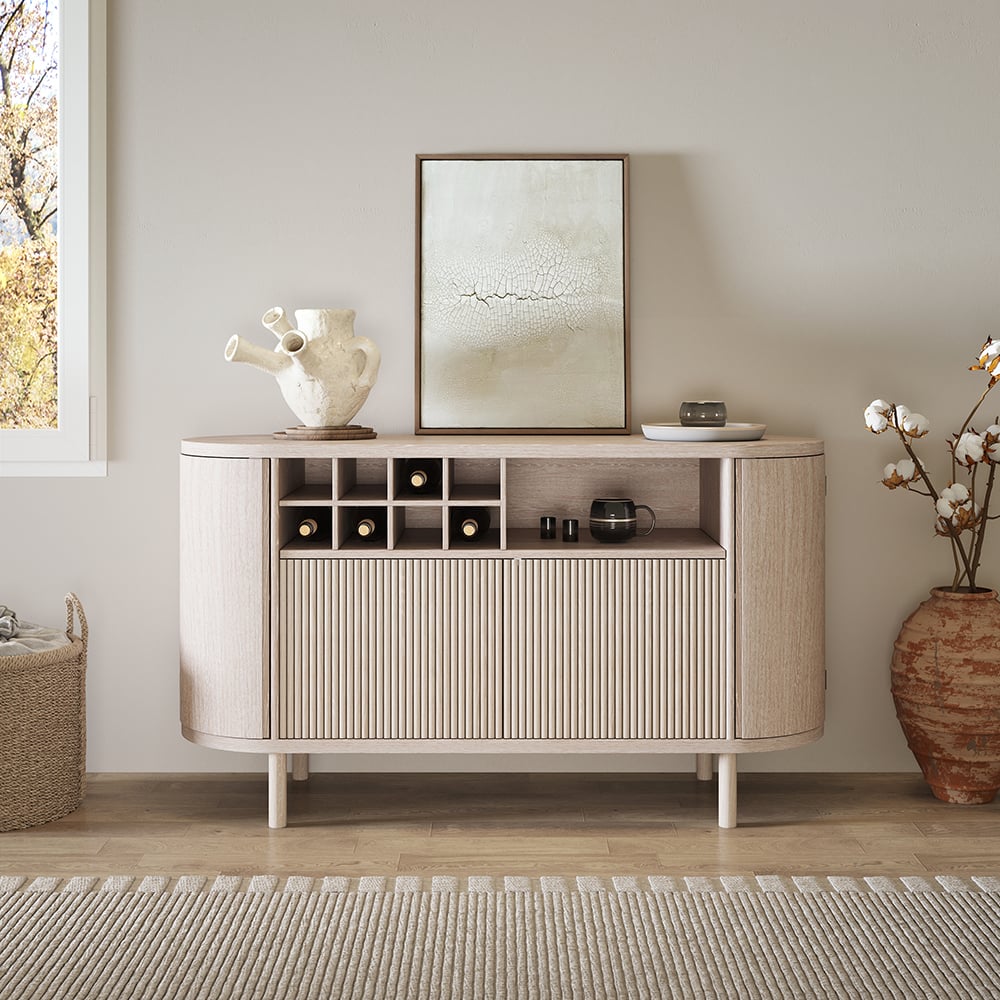
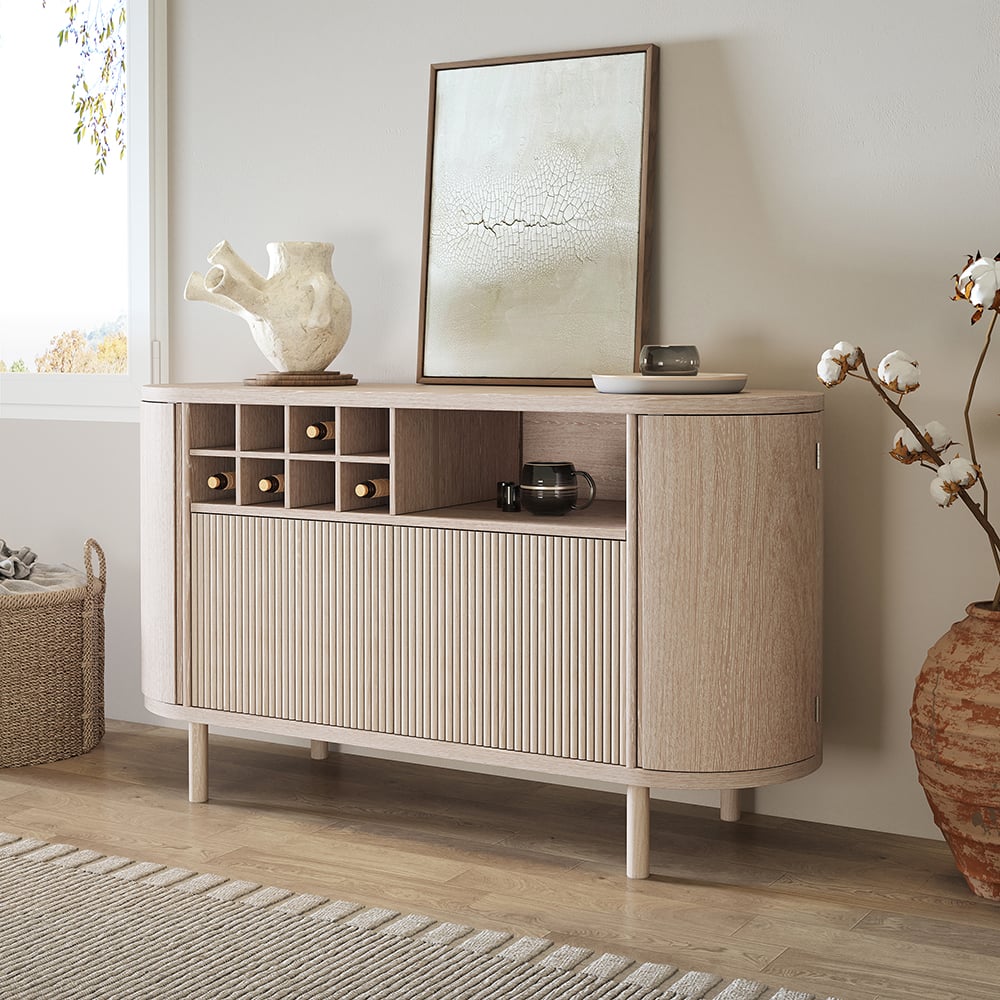
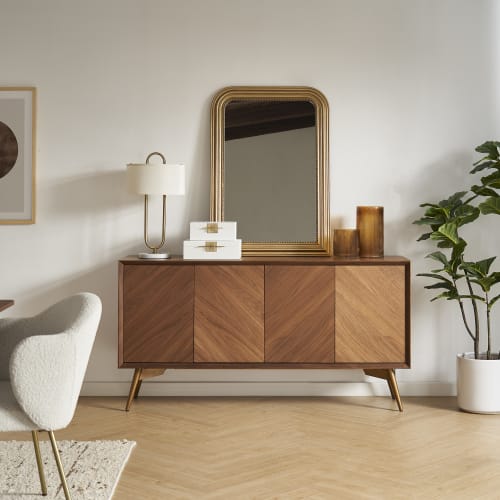
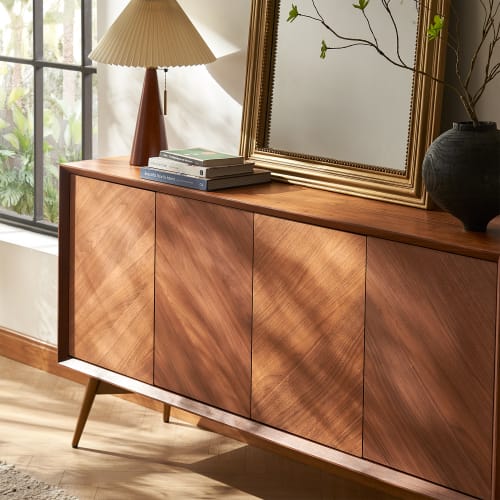
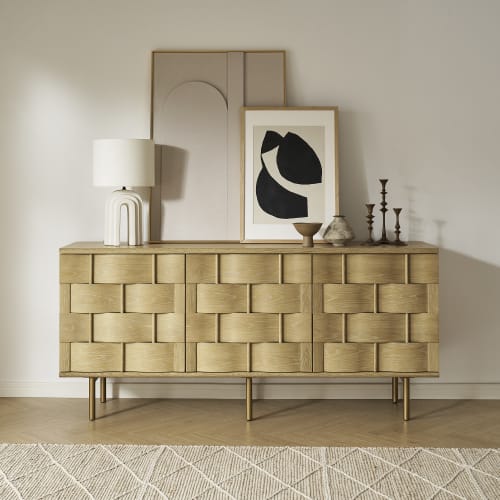
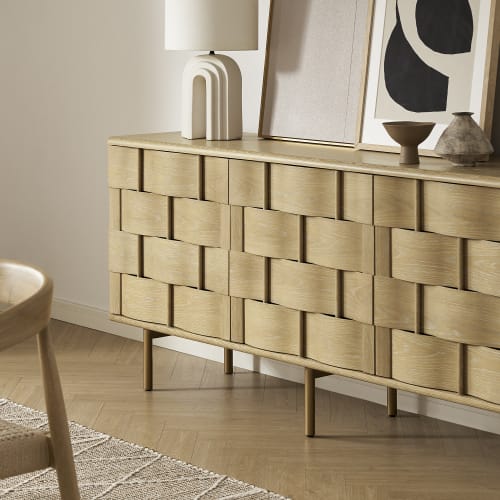
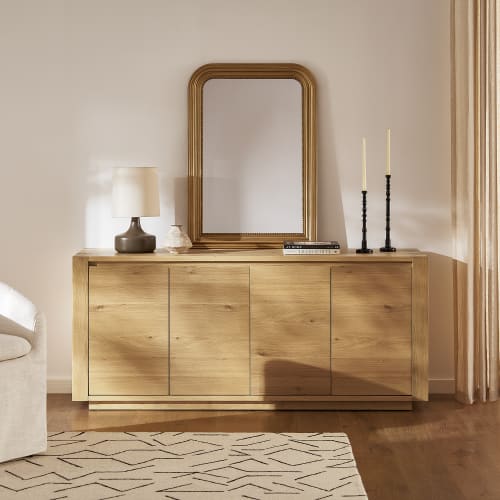
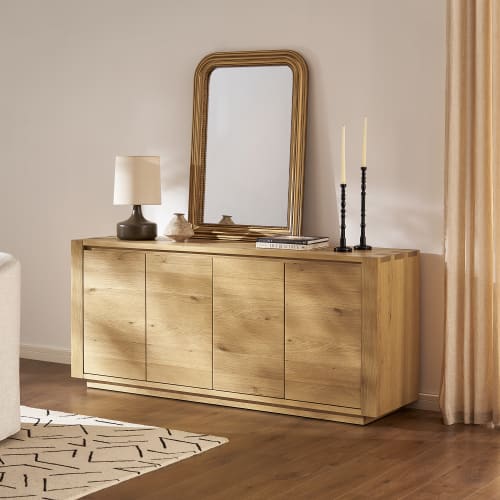
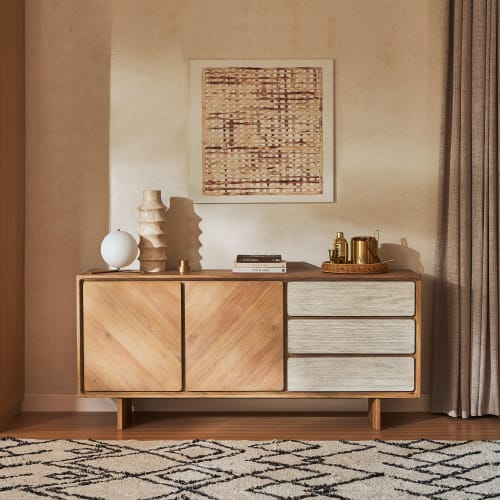
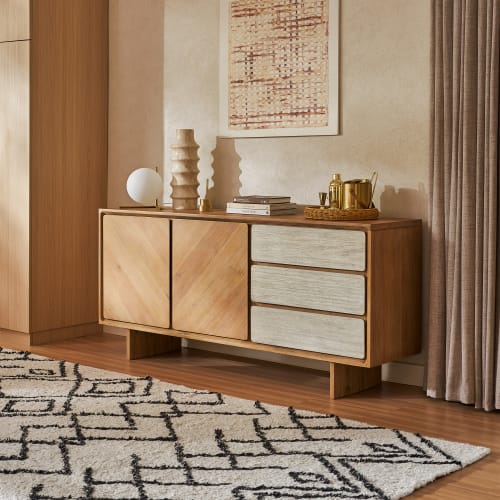
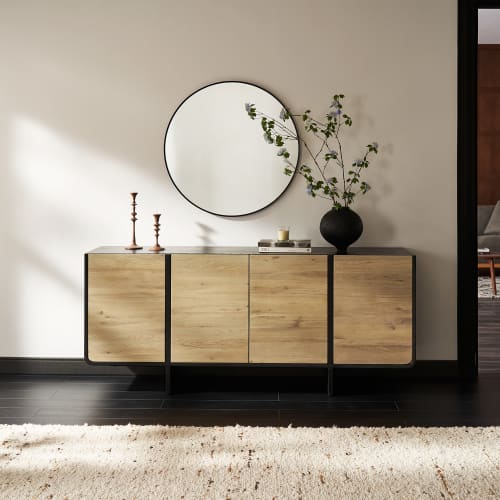
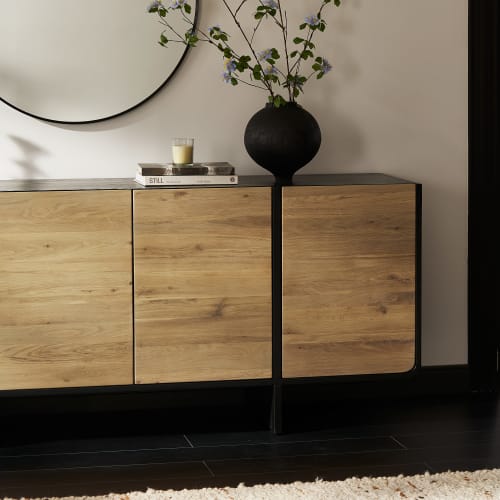
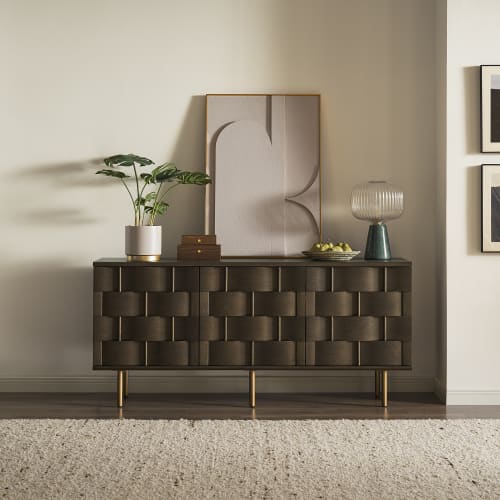
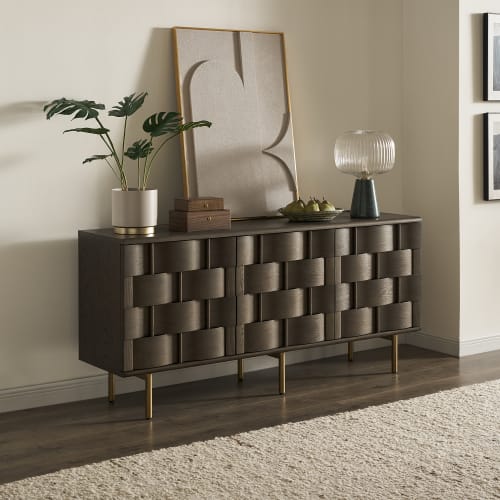
What is a Japandi sideboard?
A Japandi sideboard is a low storage cabinet that combines Japanese restraint with Scandinavian woodworking.
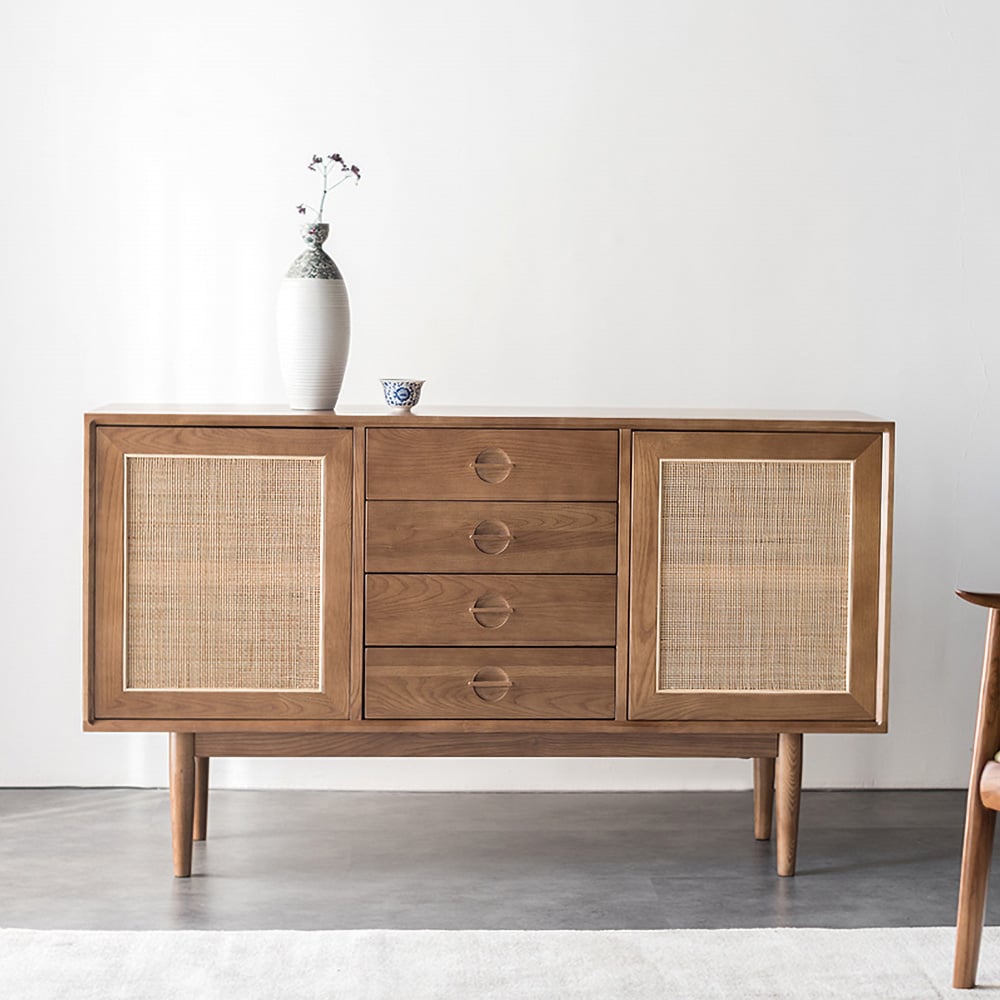
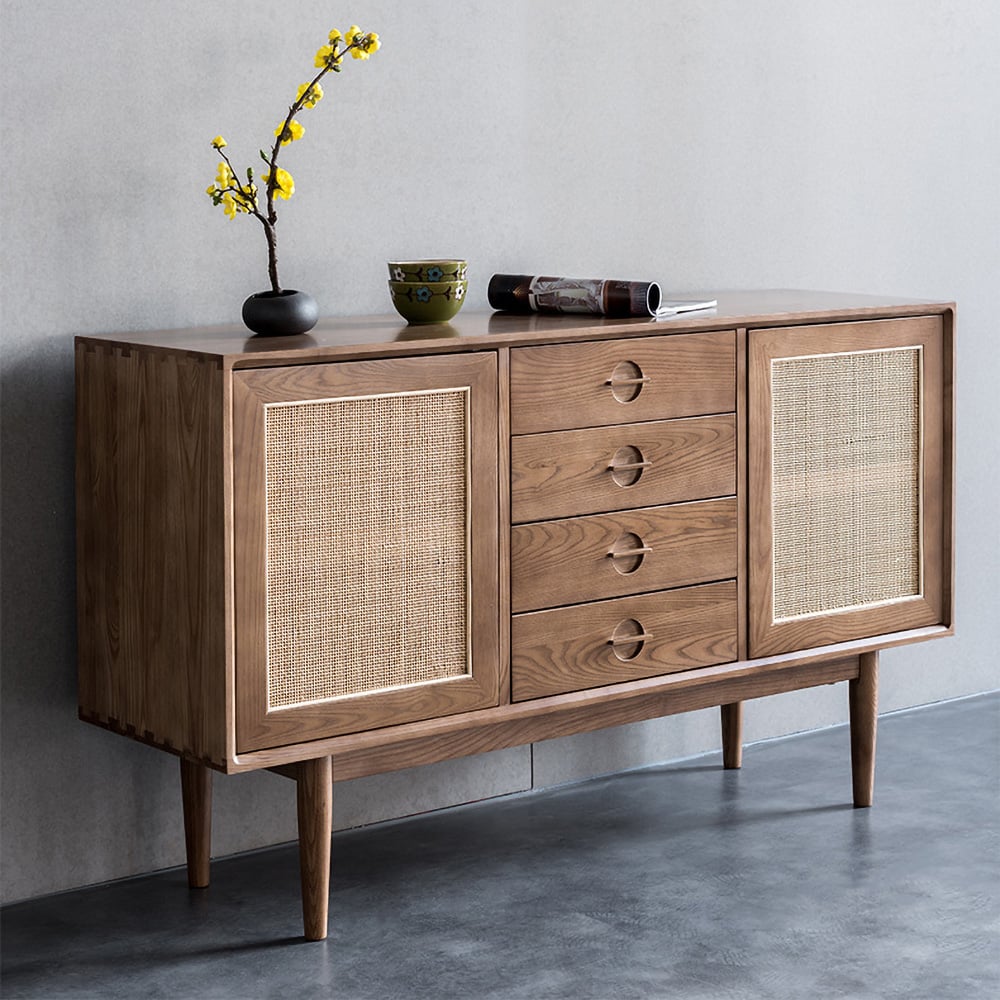
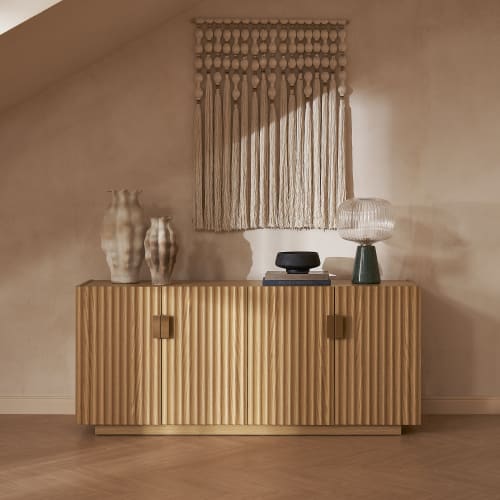
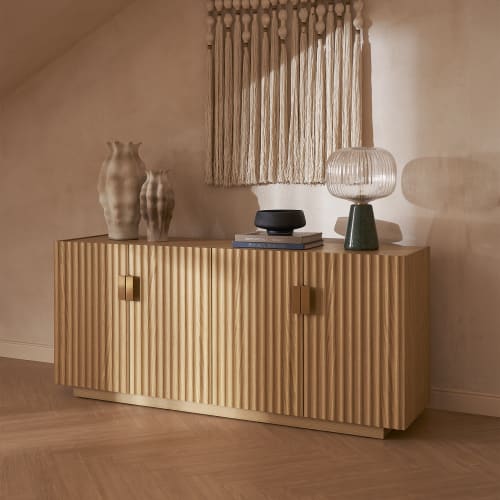
You can recognize one by its long, simple shape and natural wood finish. Doors often feature rattan, slats or fluted panels.
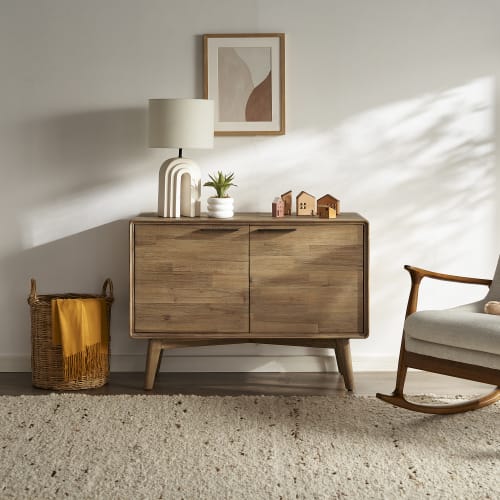
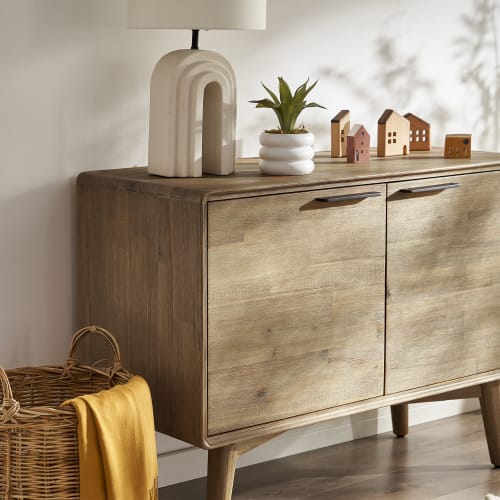
Legs are short, or the base sits close to the floor. Handles are slim, recessed or hidden.
Colors stay close to oak, walnut, ash and warm white. The top is clear and flat, ready for a lamp or a few chosen objects.
Why buy a Japandi sideboard?
Mid-century Scandinavian designers made the wooden sideboard a classic of modern homes.
Japanese interiors add the habit of storing things out of sight to keep rooms calm. A Japandi sideboard brings these ideas together.
It is also one of the most versatile pieces you can buy. It works in a dining room, under a TV or in a wide entryway.
With care, a well-made sideboard can move with you from home to home for many years.
Styles and variations of Japandi sideboards
Wood and rattan sideboards
A wood and rattan sideboard pairs a solid frame with woven doors. The cane lets air circulate and adds a light, handmade texture. Ash and oak versions look bright and fresh, which suits dining rooms with linen and pale wood.
Fluted and walnut sideboards
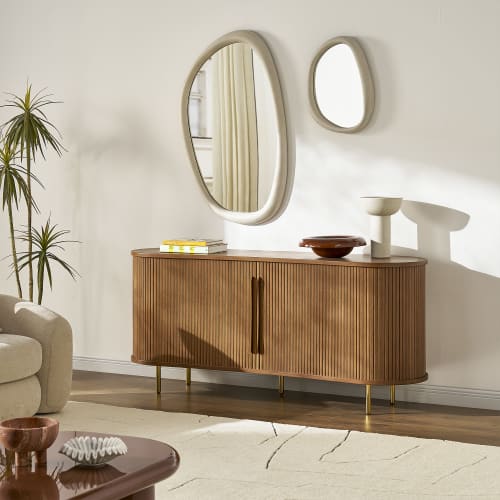
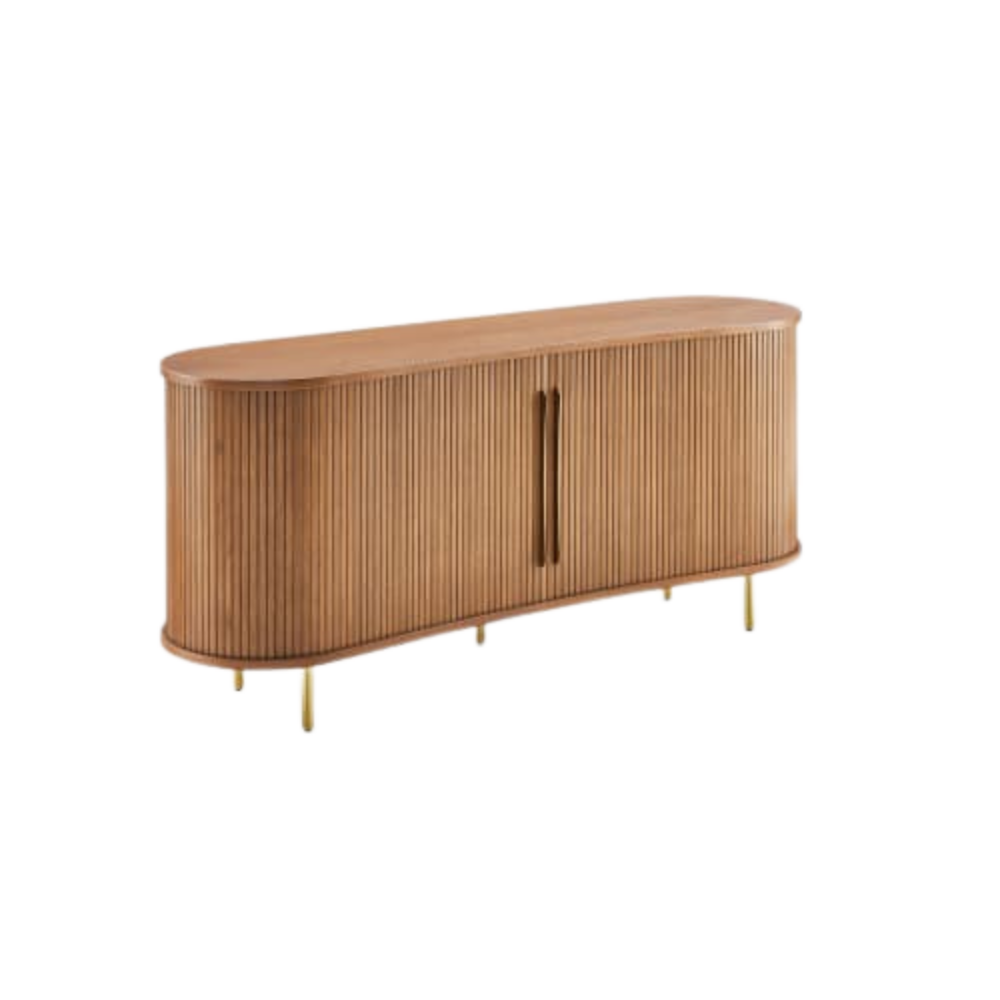
A fluted sideboard adds vertical rhythm while keeping the front simple. A walnut sideboard brings a deeper, warmer tone that grounds light floors. Both work in living rooms, where they often double as a media unit.
Credenzas and buffets
A credenza is often taller or narrower than a sideboard, which helps in small dining rooms. A buffet is a dining room sideboard for dishes and serving. One piece here also works as an entryway shoe cabinet.
How to choose your Japandi sideboard?
Measure the wall and leave some empty wall on each side, so the piece does not look squeezed.
In a dining room, keep at least 36 inches between the sideboard and the table edge so chairs can move.
Most sideboards are about 30 to 36 inches tall and 16 to 20 inches deep.
Then look at storage. Doors hide clutter, while drawers suit cutlery and linens.
Check the materials on the partner's listing. Veneer over engineered wood is lighter and more stable. Solid wood can be refinished.
Use mats under vases and lamps, and dust with a dry cloth.
What to pair a Japandi sideboard with?
Hang Japandi wall art or a round mirror above the sideboard, centered on its length.
Add a lamp on one side and a group of Japandi vases on the other. Odd-numbered groups look most natural.
If it holds your TV, compare it with a dedicated Japandi TV console. The look also suits Scandinavian and mid-century modern rooms.
A word from the store
Japandistore lists only Japandi-style furniture. We hand-pick each piece from established partners: Castlery, Homary, Hernest, Wayfair and Kave Home.
Before listing, we compare materials, dimensions, real buyer reviews and partner warranty and return terms.
Most pieces here range from about $360 to $2,700. Prices, stock, shipping and returns are set by each partner and shown on their site, where you buy directly.
FAQ — Japandi sideboard
What is the difference between a sideboard, a buffet and a credenza?
They are similar storage cabinets. A buffet usually lives in the dining room. A sideboard is a general name for a long, low cabinet. A credenza often has flush doors and suits living rooms or offices.
Can a sideboard be used as a TV stand?
Yes, if it is wide and strong enough. Choose one a few inches wider than your TV. Check the top's weight capacity on the partner's listing. Openings at the back for cables are a useful bonus.
How do you decorate a Japandi style sideboard?
Keep the top sparse. Hang one large piece above it, such as art or a mirror. Add a lamp, one vase with a branch and a few books. Leave at least a third of the top empty.