

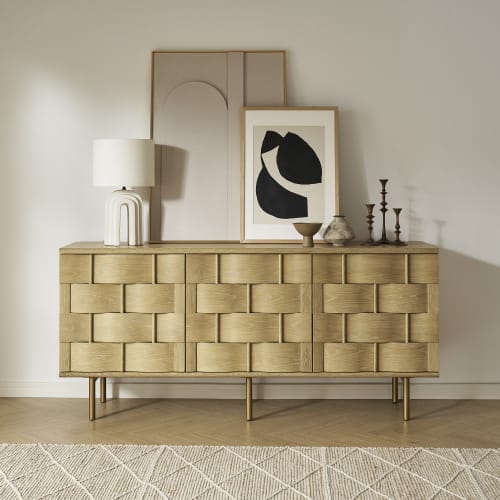
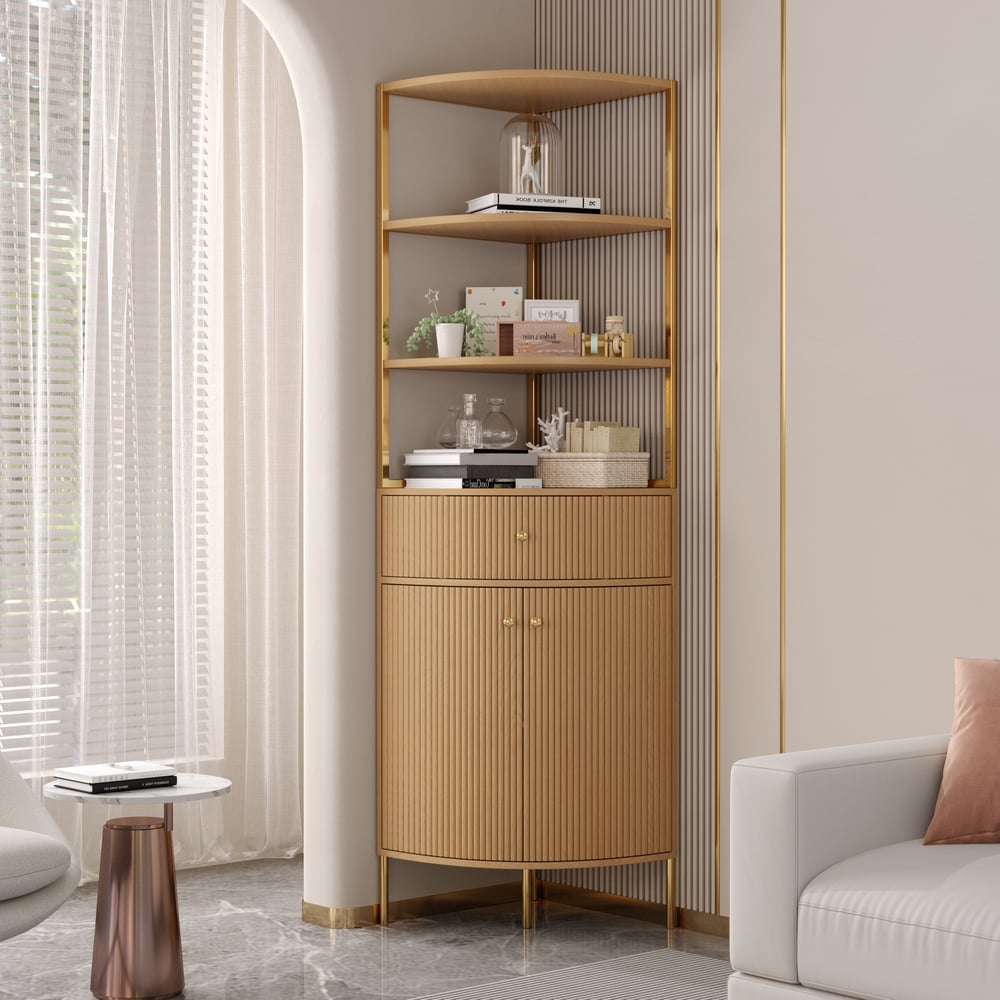
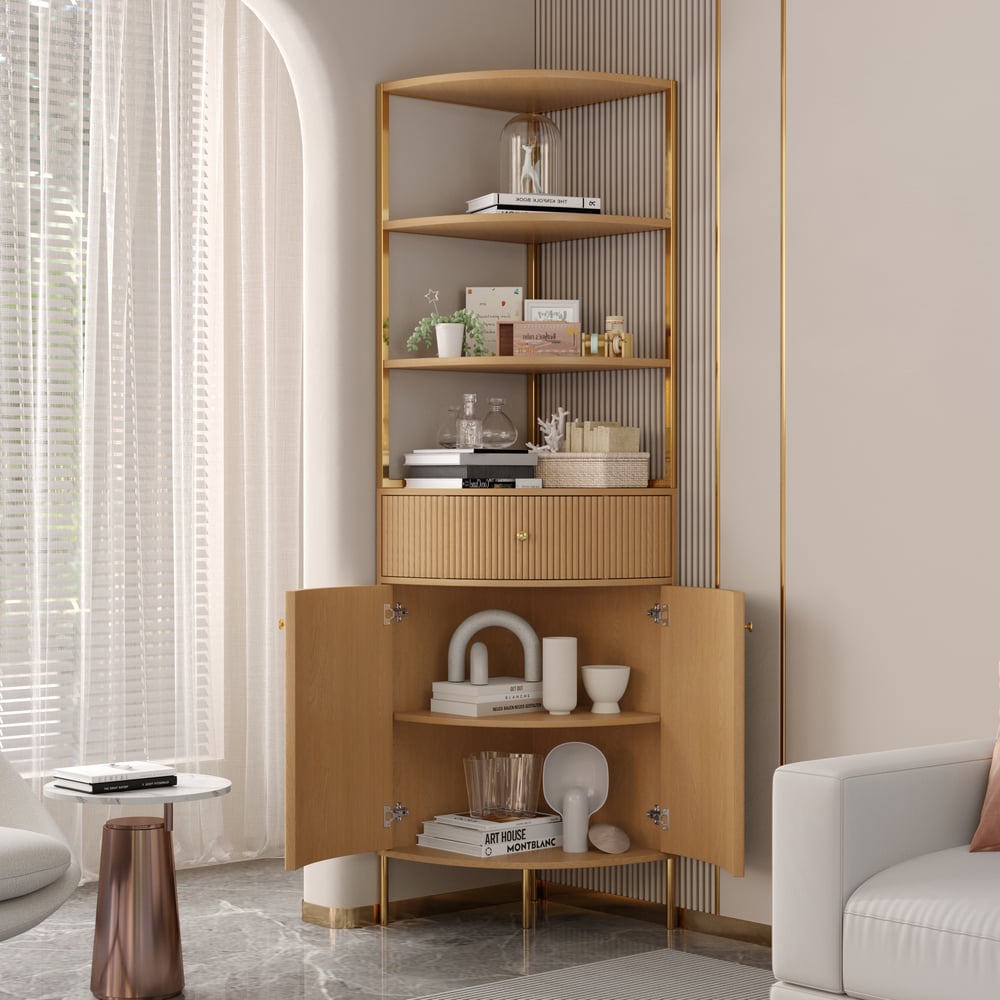
A Japandi cabinet keeps everyday clutter out of sight while adding warmth to the room. It is the answer when you need serious storage but still want a calm, open feel. The cabinets here include highboards, a tall sideboard, a wardrobe and entryway shoe cabinets. Finishes range from washed white and natural wood to walnut veneer and black. Woven rattan doors and slim metal legs add texture and lightness. Browse the collection below and compare sizes, finishes and storage layouts.
Filters
4 products


What is a Japandi cabinet?
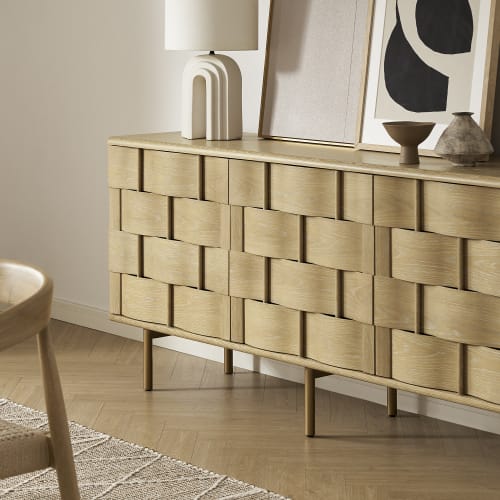
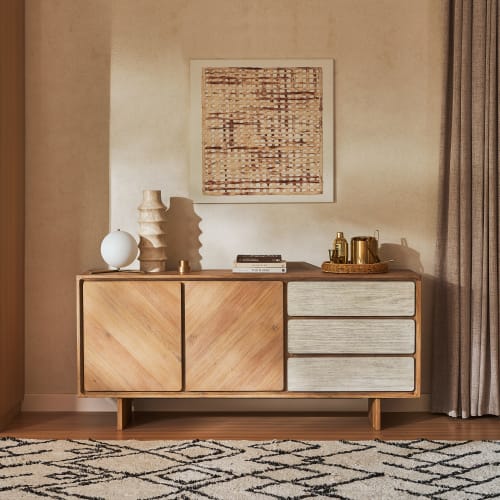
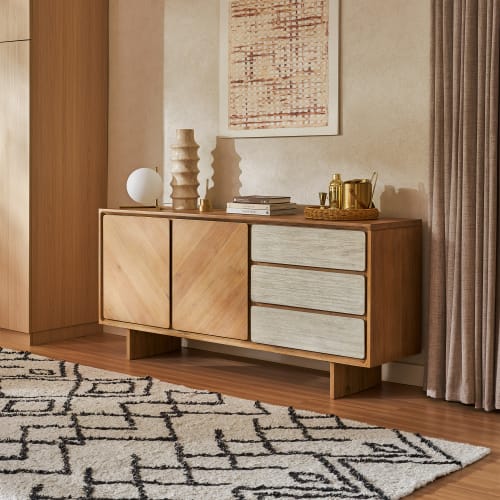
A Japandi cabinet is a closed storage piece designed in the Japandi style. That style blends Japanese order and restraint with Scandinavian warmth. You can recognize one by flat or softly textured doors, visible wood grain and simple proportions. Handles are slim, recessed or barely there. Some designs use woven rattan fronts that let air circulate. Legs, when present, lift the body off the floor to keep it light. Colors stay close to wood, white and black.
Why buy a Japandi cabinet?
Japanese homes have long relied on hidden storage, such as closets behind sliding fusuma panels. Scandinavian design adds a love of practical, well-made, natural wood furniture. A Japandi storage cabinet combines both. It gives every object a place, which is the quiet secret of calm rooms. Less visual clutter also makes daily cleaning easier. A well-built cabinet works hard for many years. It can move from entry to bedroom to living room as your home and needs change.
Styles and variations of Japandi cabinets
Highboards and tall sideboards
A highboard is a tall cabinet with doors and often a drawer. It holds dishes, linens or media on a small footprint. The wood and black highboards suit dining rooms. A tall sideboard can act as a bar.
Shoe storage and entryway cabinets
A shoe storage cabinet keeps pairs off the floor and free of dust. Slim depths suit narrow hallways. An entryway cabinet also gives keys a home. Shoes come off at the door in Japanese homes, so it fits the style.
Rattan, walnut and wardrobe cabinets
A rattan cabinet adds handwoven texture and lets linens breathe. A walnut cabinet brings deeper color to a living room. For bedrooms without a closet, the washed white wardrobe closet offers hanging space in a light finish.
How to choose your Japandi cabinet?
Start with what you will store. Shoes need about 12 to 14 inches of depth, while dishes and media need more. Measure the wall, the ceiling height and the door clearance in front. Then check materials. Solid wood is durable and can be refinished. Engineered wood with walnut or other veneer is stable and often easier on the budget. MDF is smooth and paints well but dislikes moisture. Look closely at hinges, drawer runners and adjustable shelves. Always anchor tall units to the wall to prevent tipping. Dust weekly and wipe with a slightly damp cloth, then dry.
What to pair a Japandi cabinet with?
Top a low cabinet with a lamp, a ceramic vase and a small framed print. Three objects are usually enough to keep it calm. Match wood tones with nearby Japandi sideboards for a coordinated wall. Open shelves balance closed doors, so pair cabinets with Japandi bookshelves for display. This look also suits mid-century, Scandinavian and minimalist homes.
A word from the store
Japandistore only lists Japandi-style pieces. We hand-pick our cabinets from established partner stores: Kave Home, Homary and Castlery. Before listing, we compare materials, dimensions, real buyer reviews and the partner's warranty and return terms. Most cabinets here range from about $465 to $2,100. Prices, stock, shipping and returns are set by each partner and shown on their site.
FAQ — Japandi cabinets
What is the difference between a cabinet and a sideboard?
A sideboard is long, low and about waist height, made for dining rooms. A cabinet is a broader term and can be tall or narrow. Highboards sit between the two, with sideboard storage on a smaller footprint.
How do you hide clutter in a Japandi home?
Give everything a closed home. Use cabinets with solid or woven doors for daily items. Keep open shelves for a few chosen pieces. Add baskets inside to group small things, and clear surfaces at the end of each day.
Is engineered wood good for cabinets?
Yes, good engineered wood is stable and resists warping. A real wood veneer gives the look of walnut or oak at a lower cost. Watch for moisture, chipped edges and thin panels. Check reviews and the partner's warranty first.