

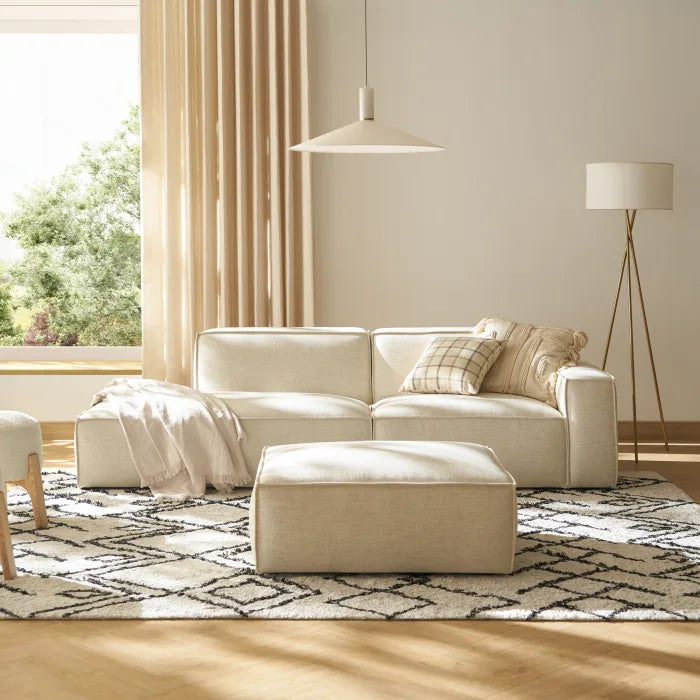
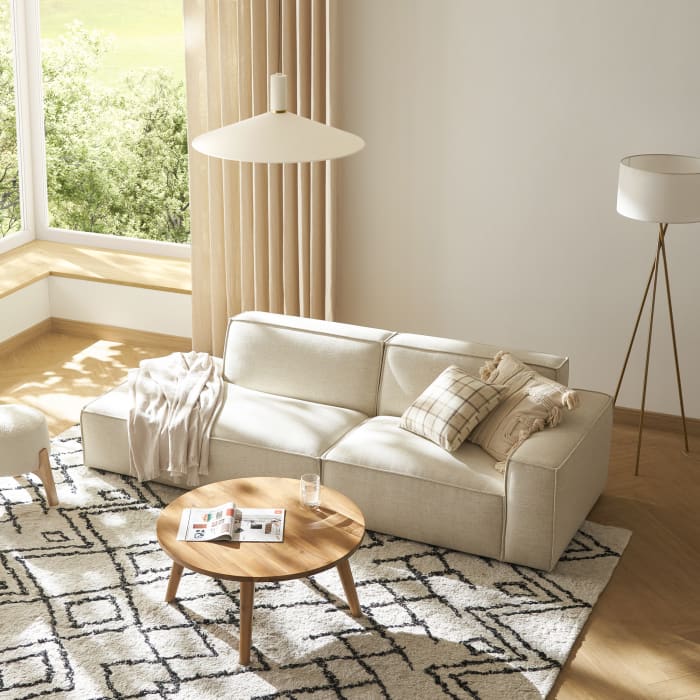
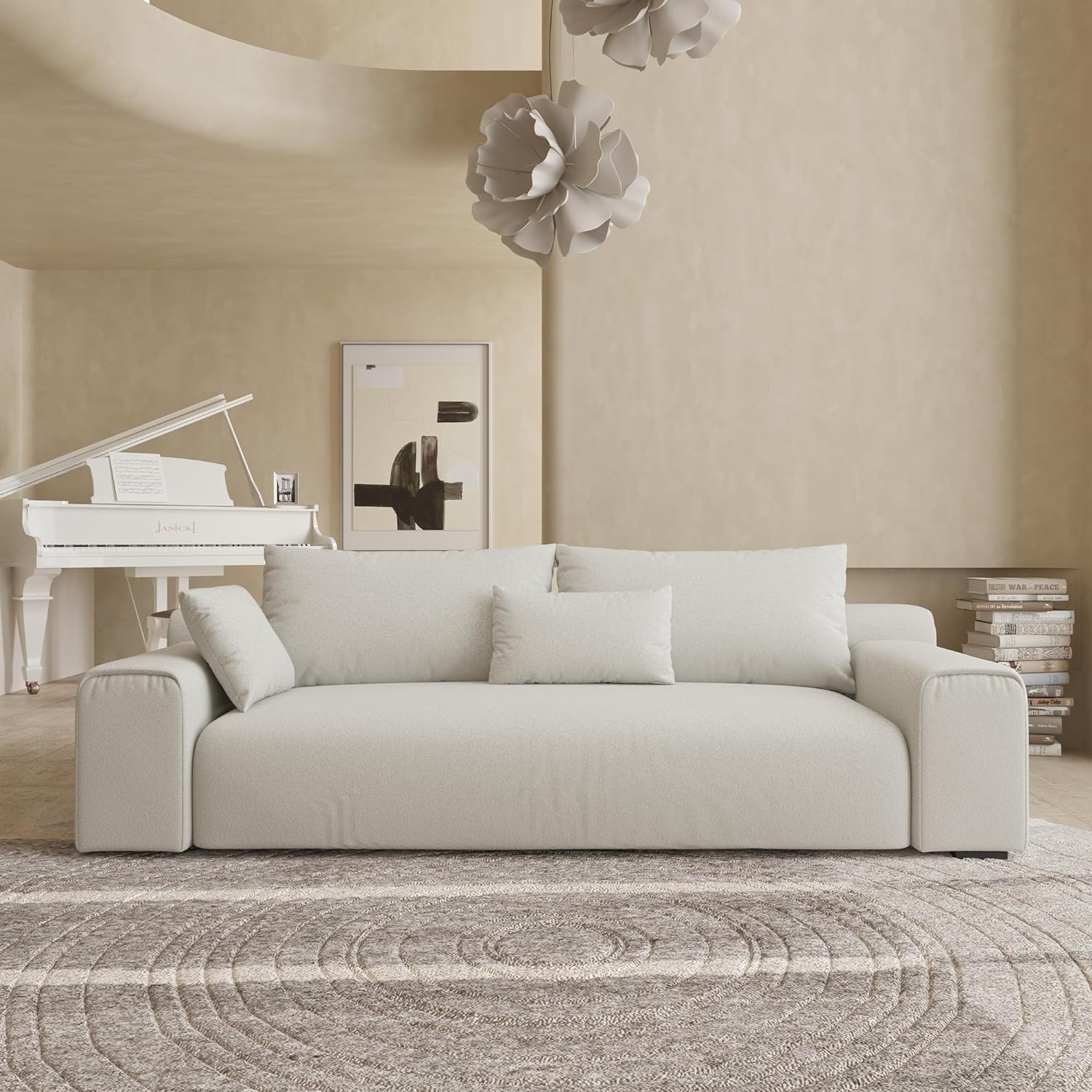
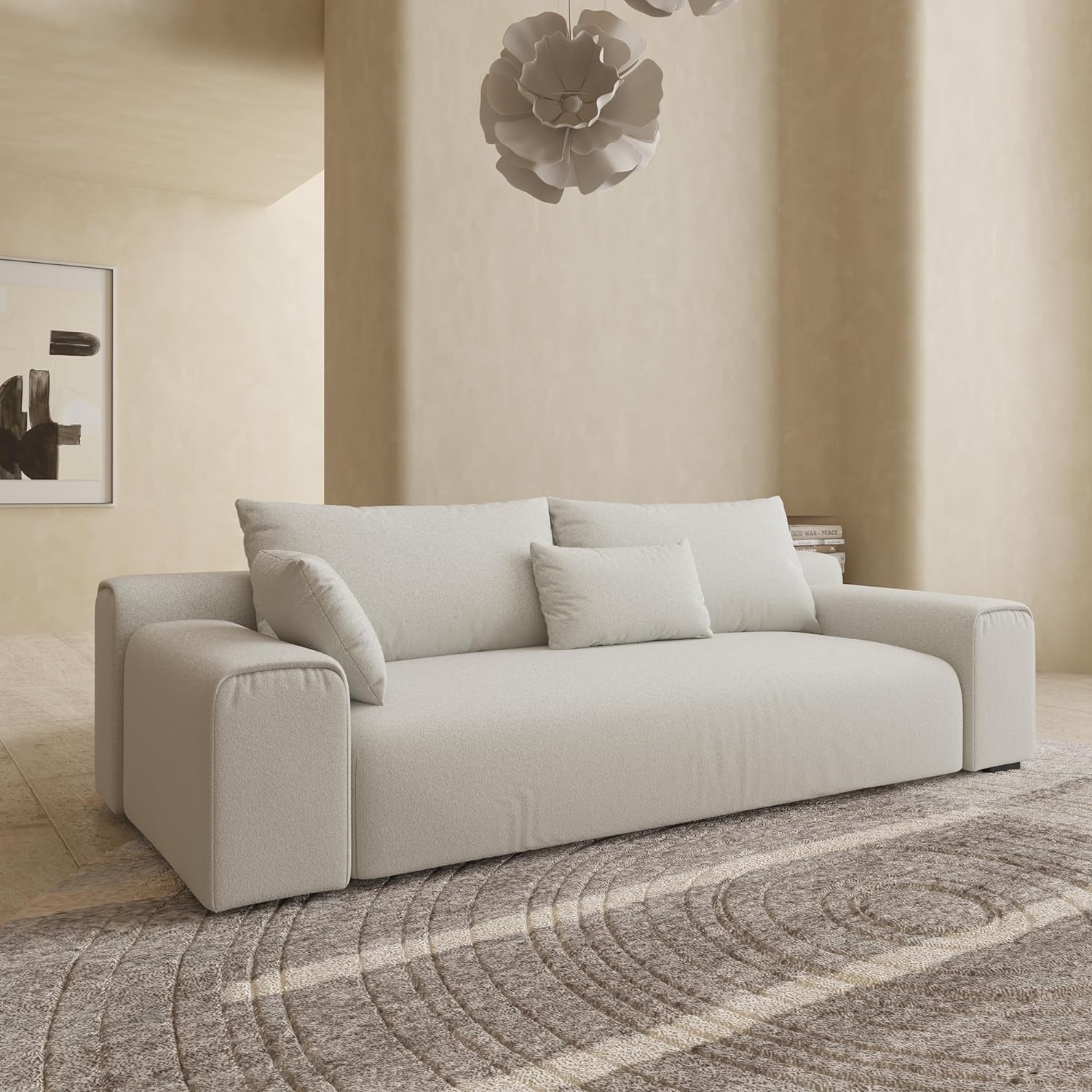
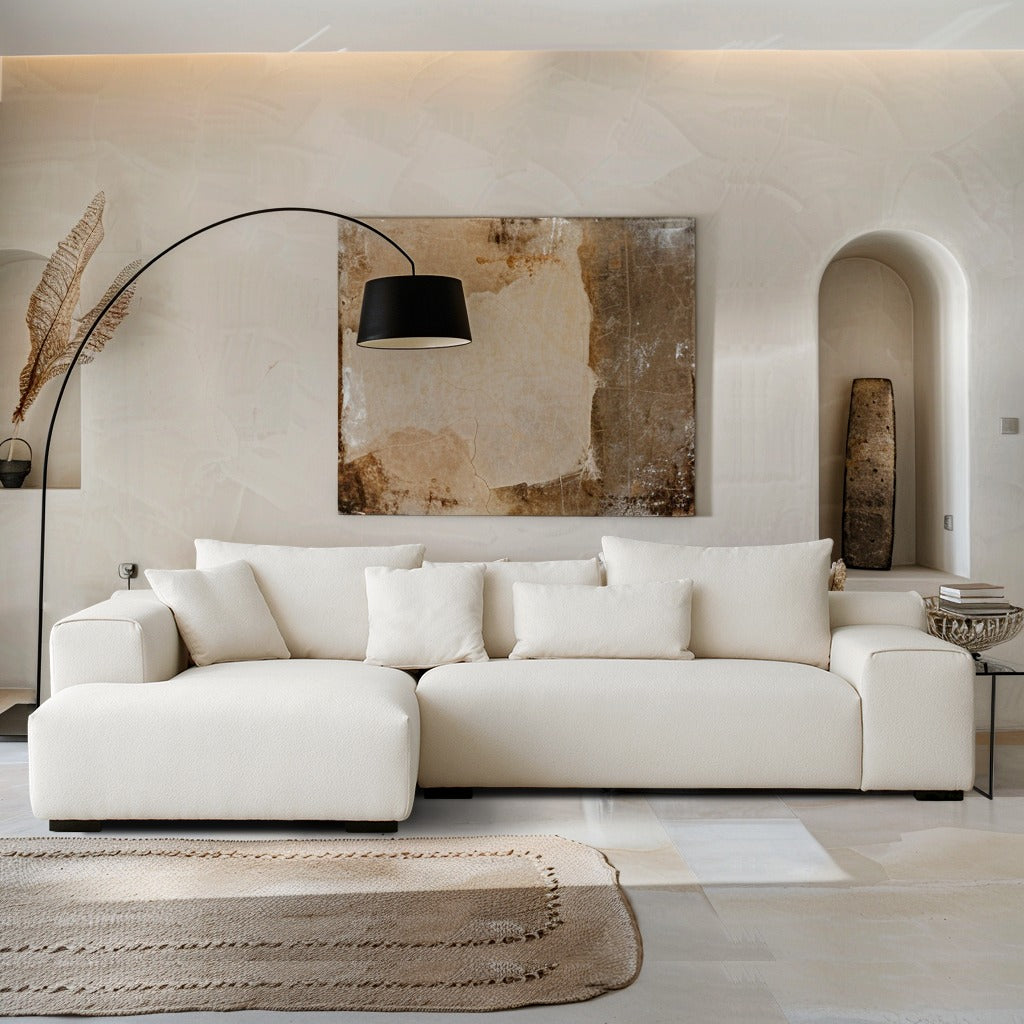
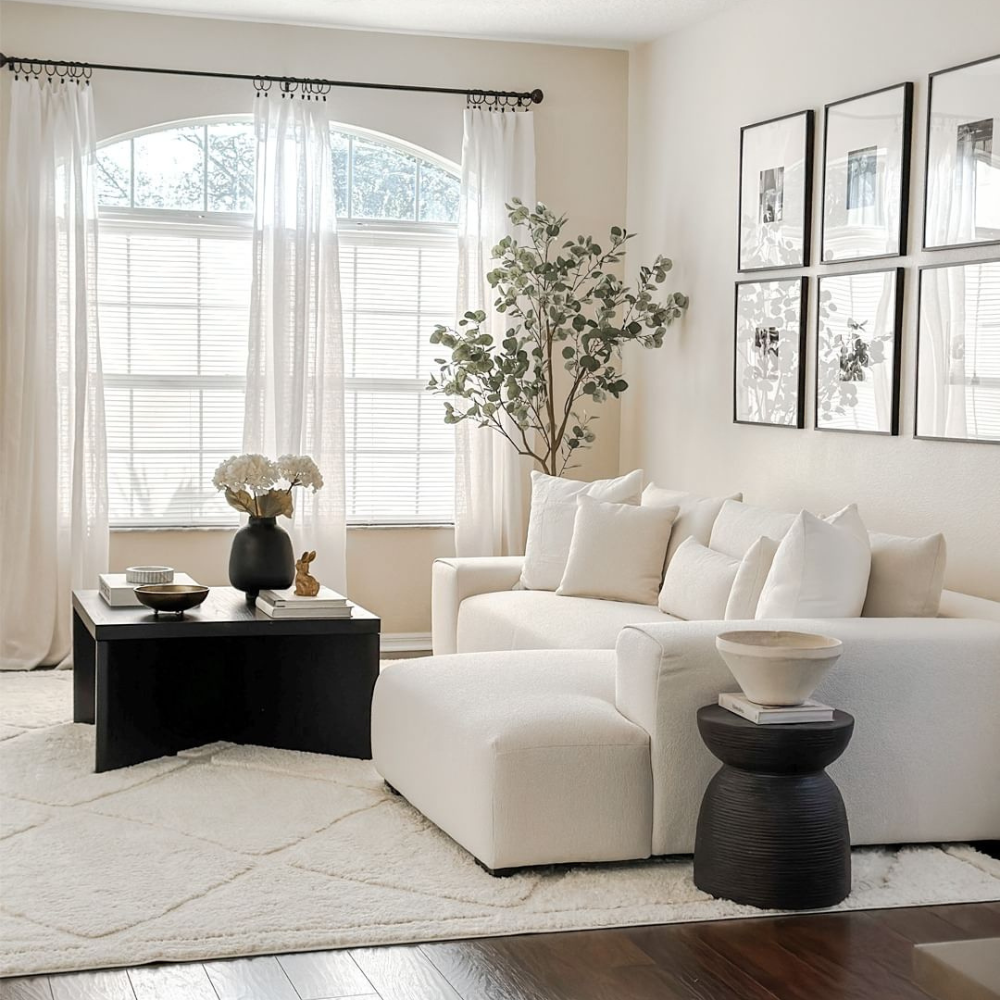
A Japandi sofa sets the calm tone of a living room before anything else does. It suits anyone who wants a seat that looks quiet, feels soft and still works hard every day. Most designs sit low, with clean arms and relaxed cushions. Fabrics stay natural and textured, from linen and cotton to bouclé, in oatmeal, ivory and warm gray. Many pieces show solid wood frames or exposed wooden legs. This edit covers loveseats, three-seaters, sleeper sofas and modular sectionals from established partner stores. Browse the collection below and compare fabrics, sizes and seat depths at your own pace.
Filters
27 products
What is a Japandi sofa?
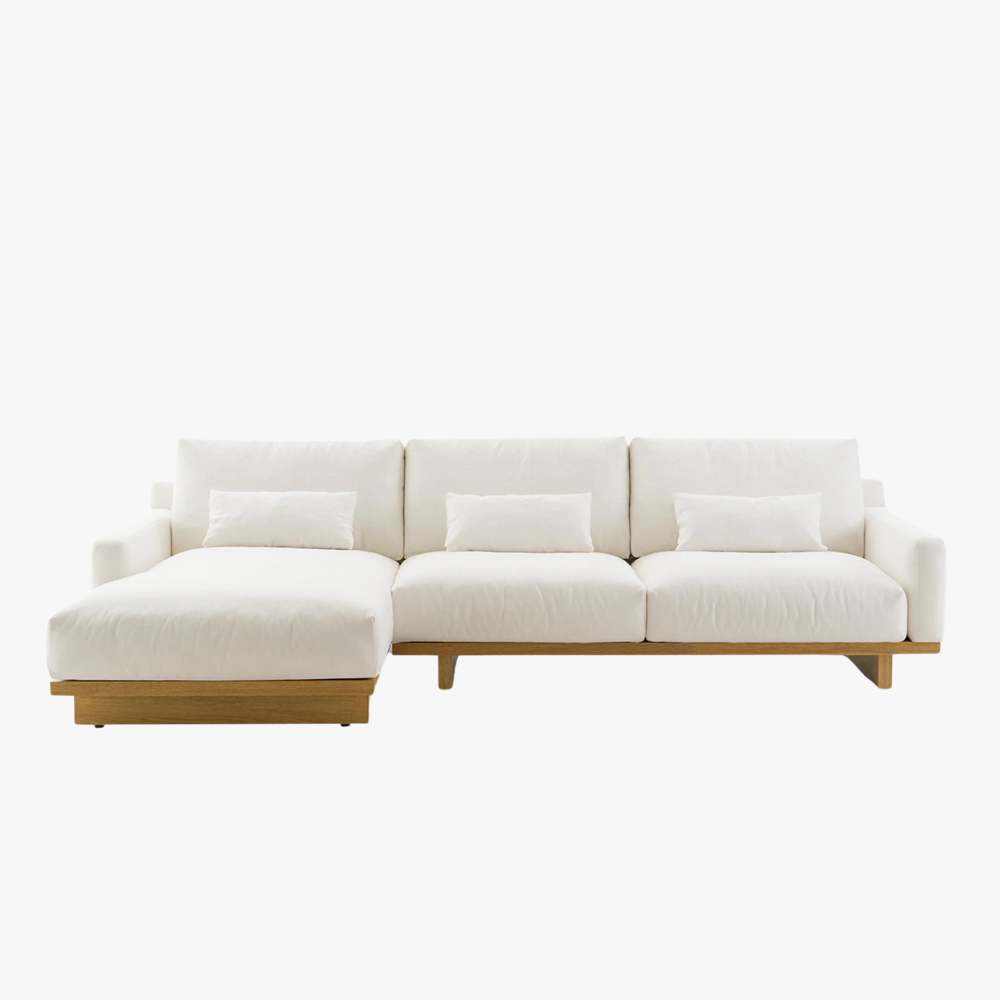
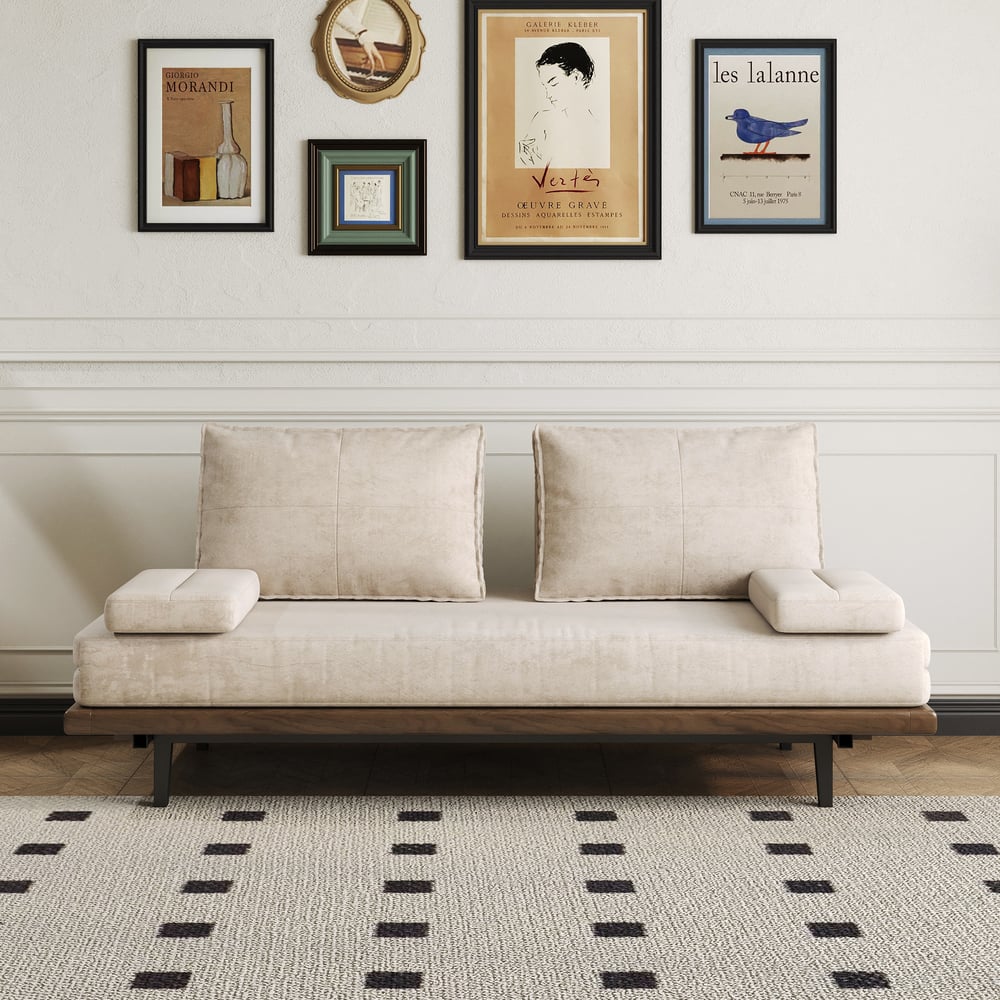
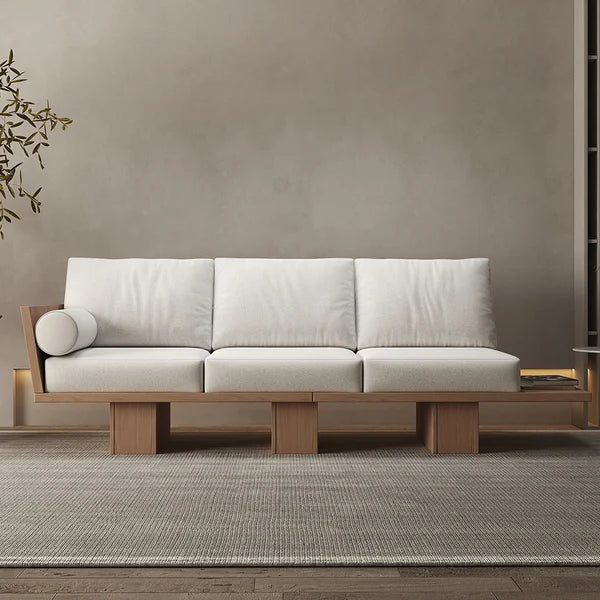
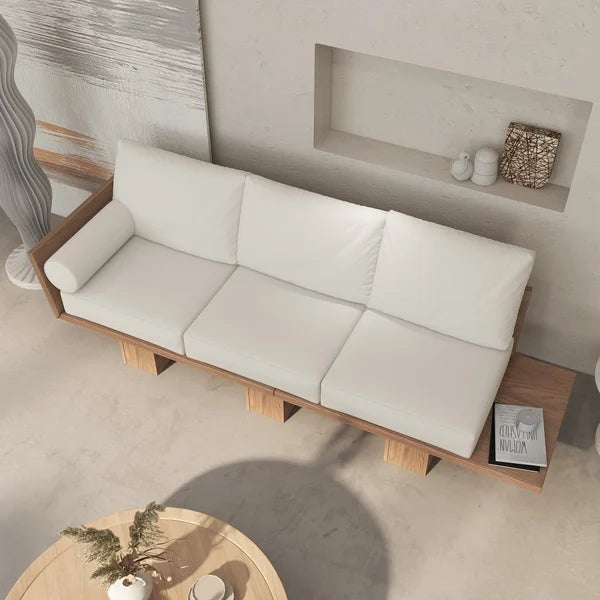
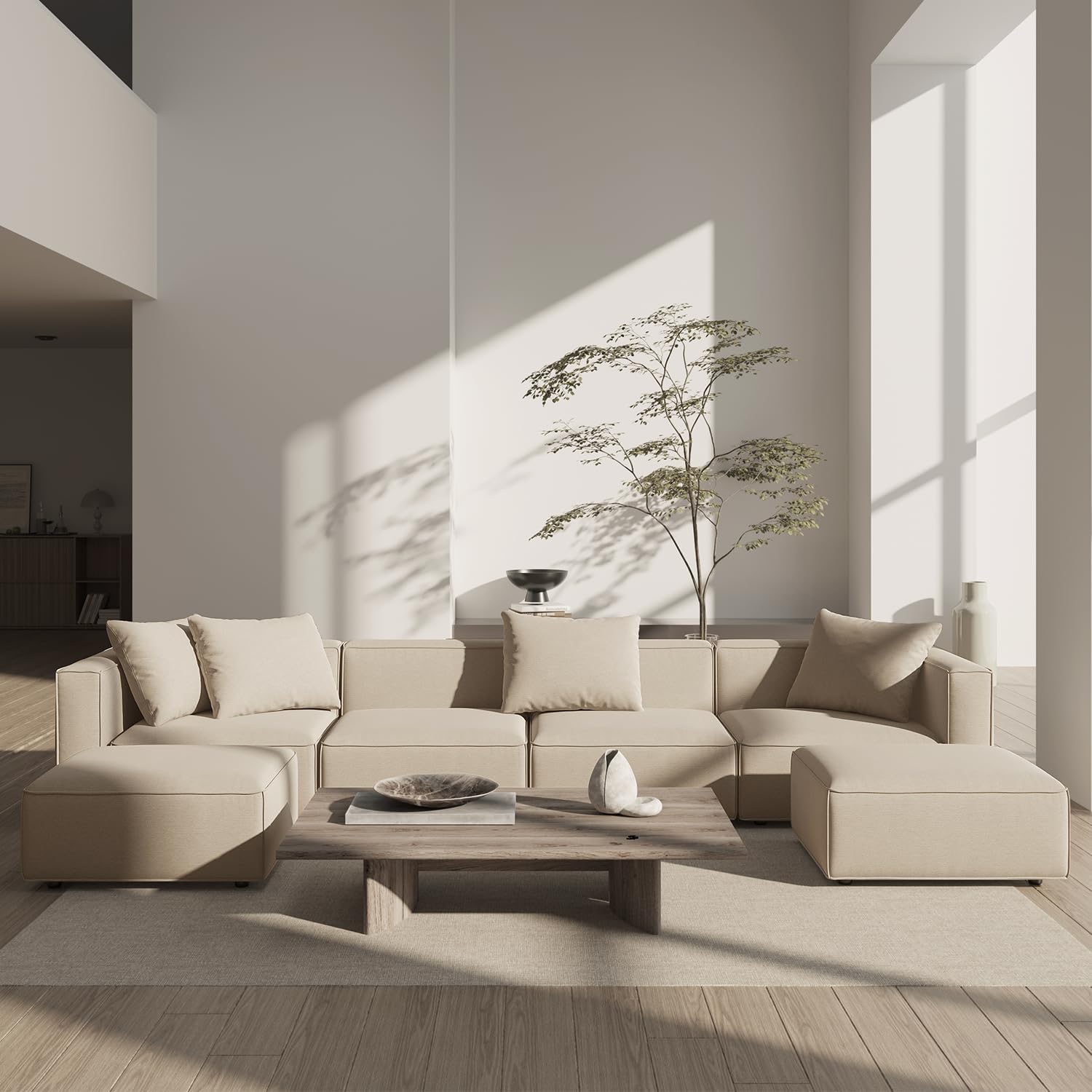
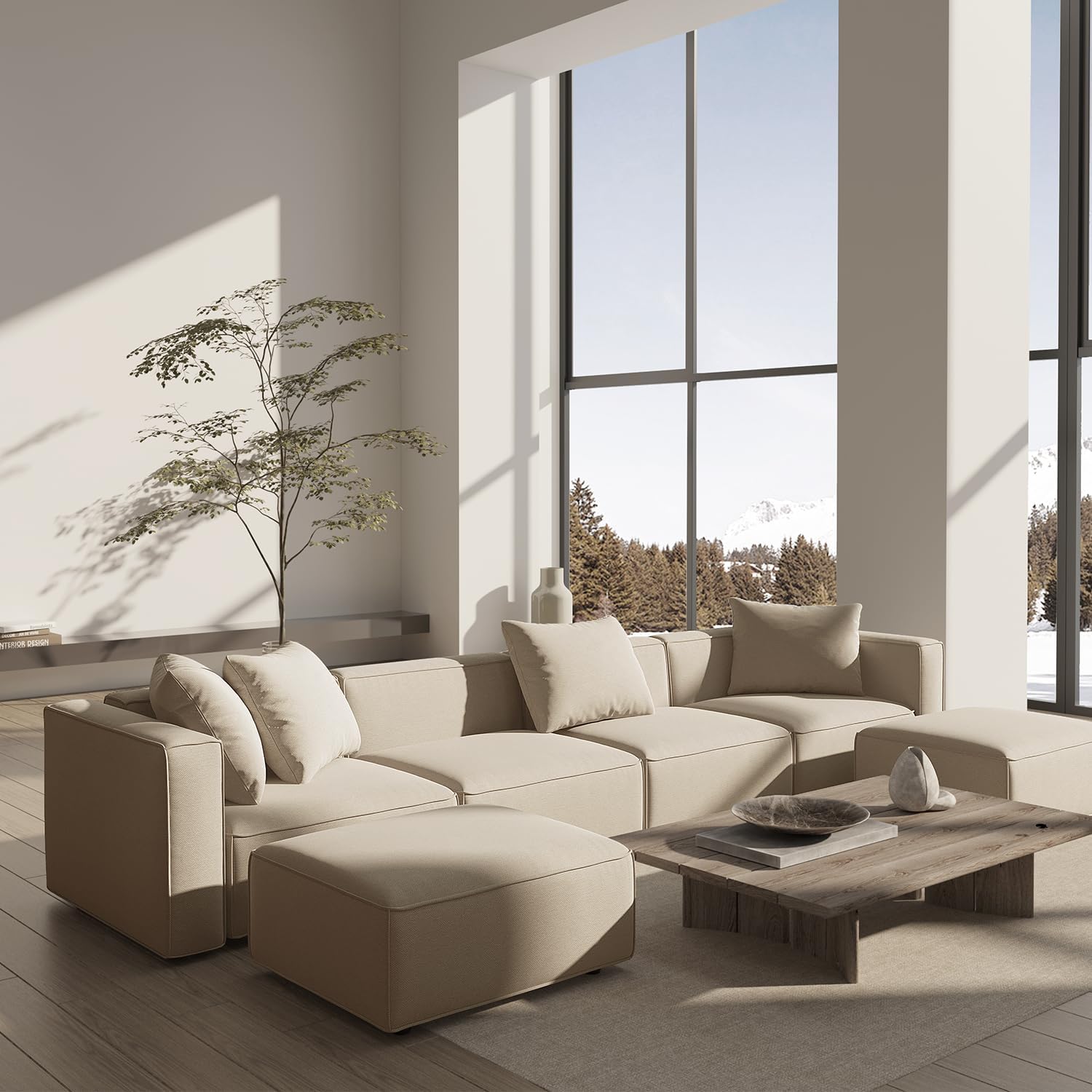
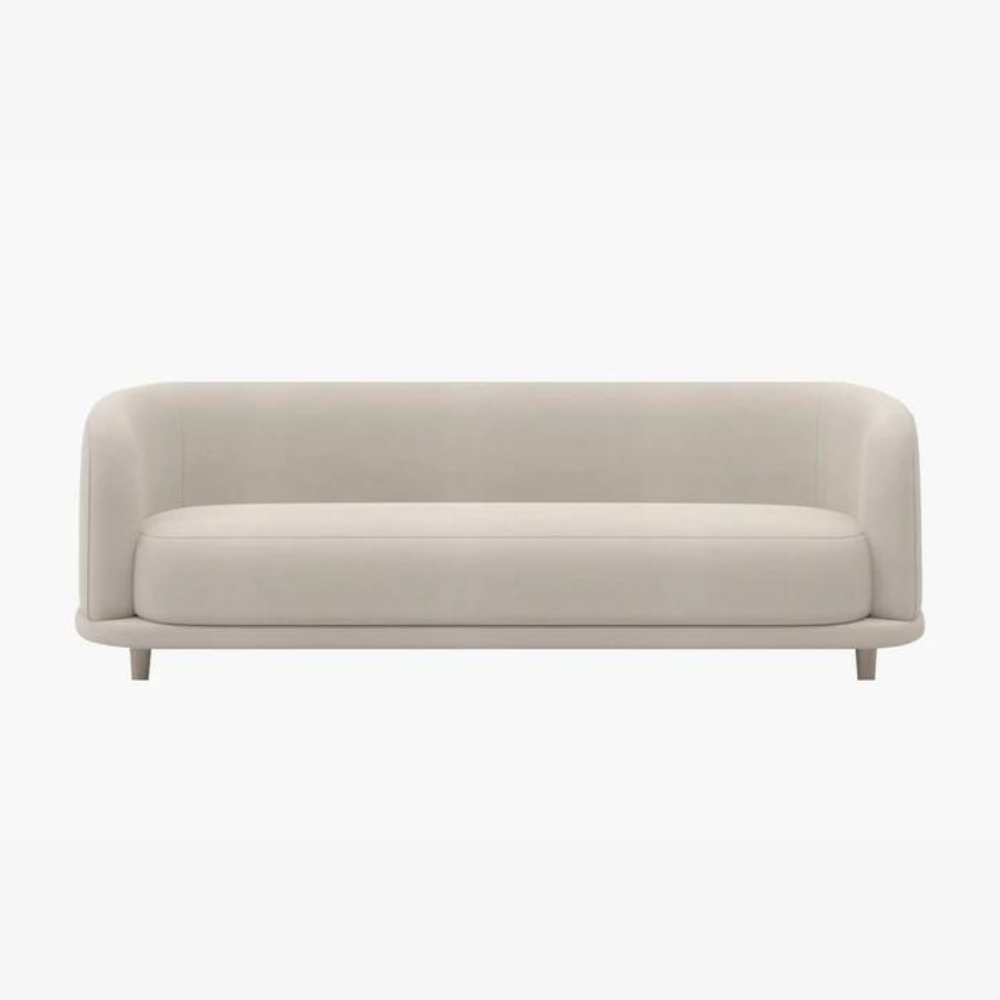
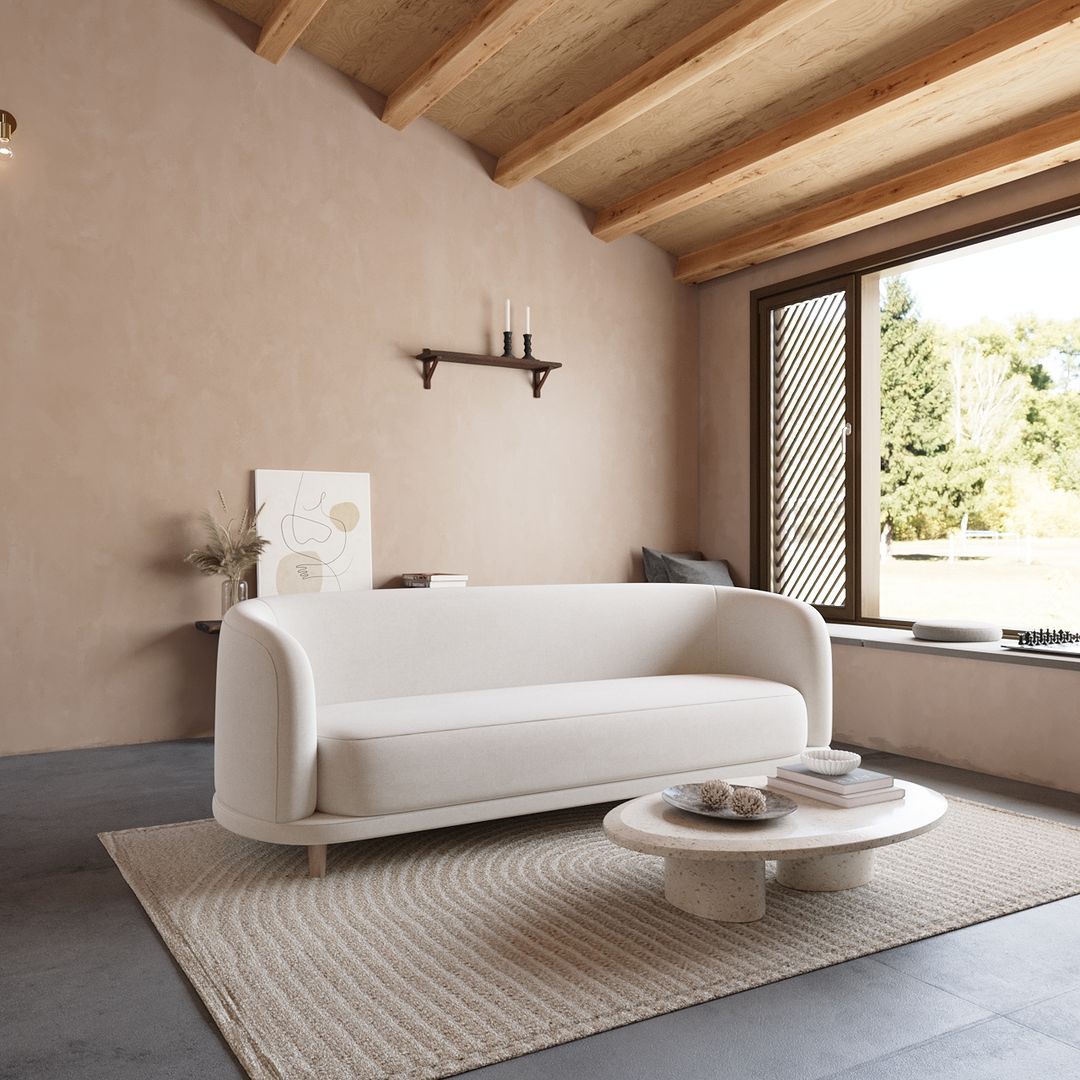
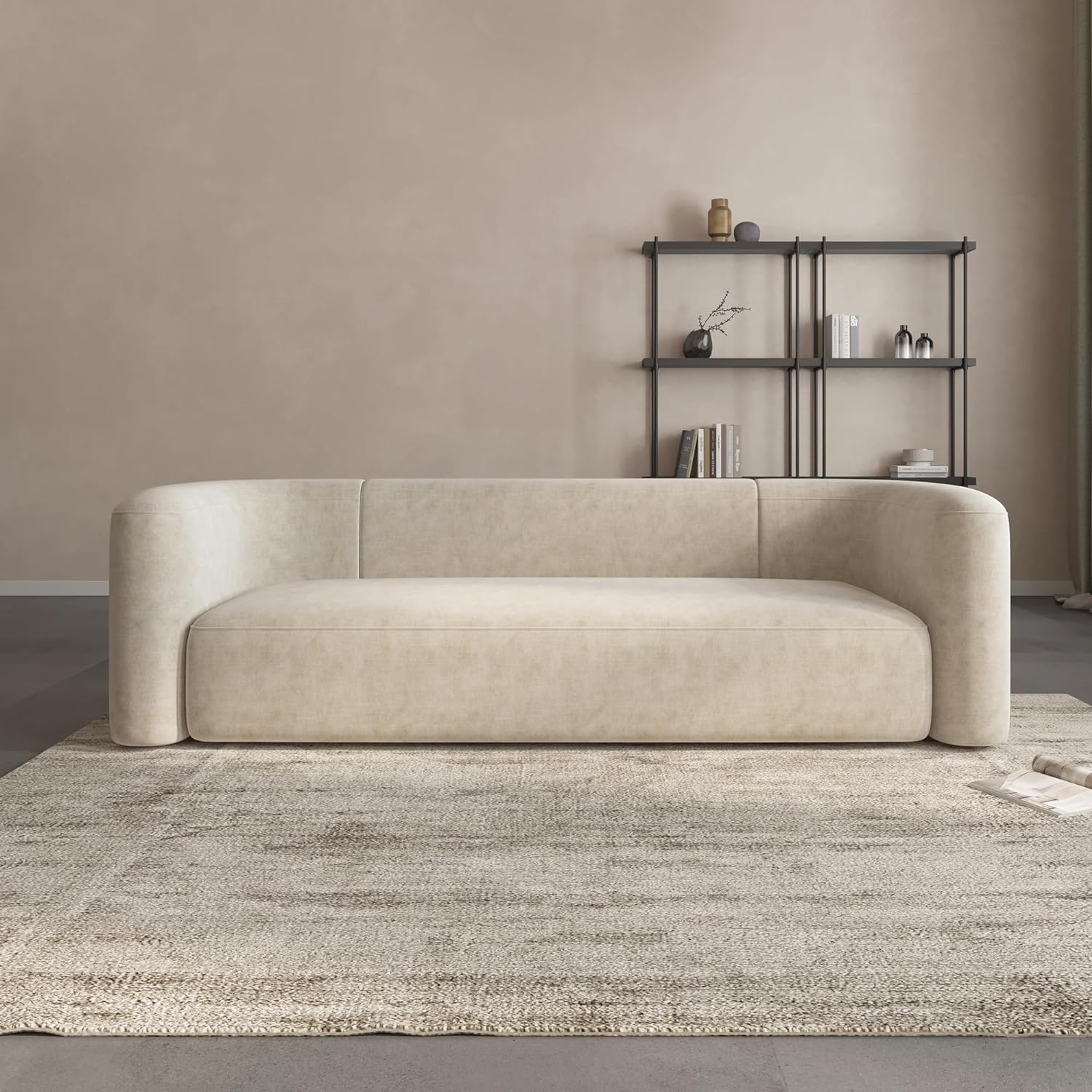
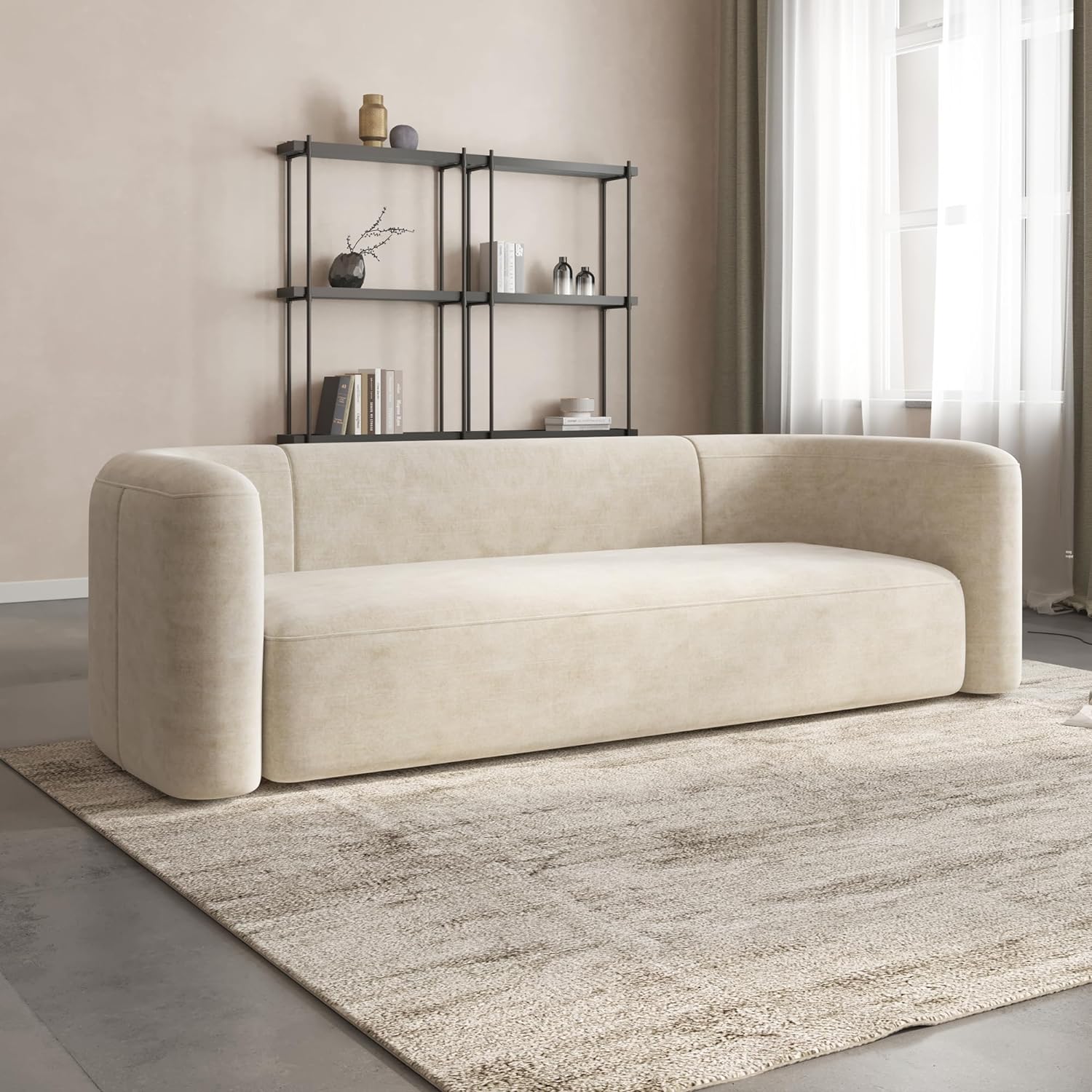
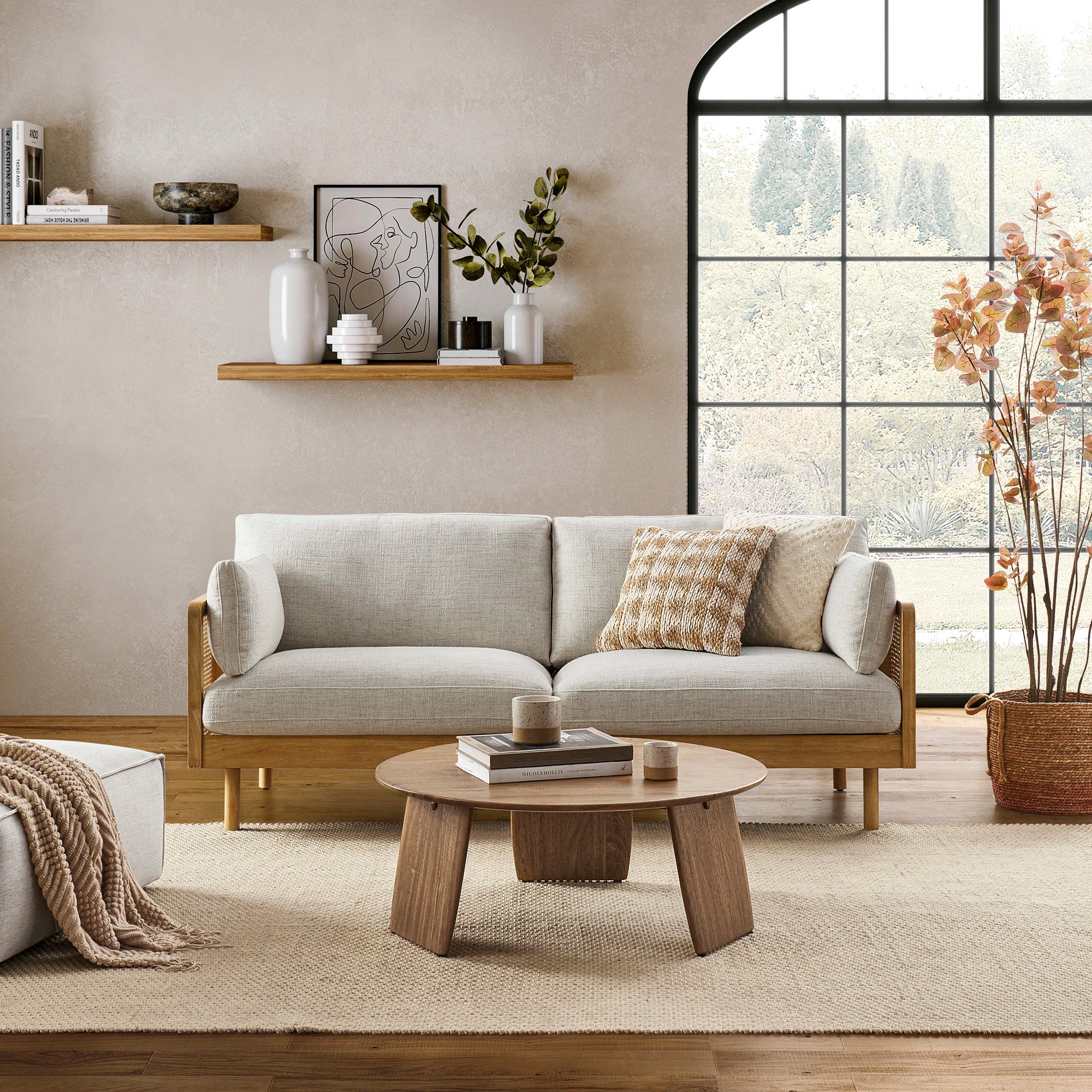
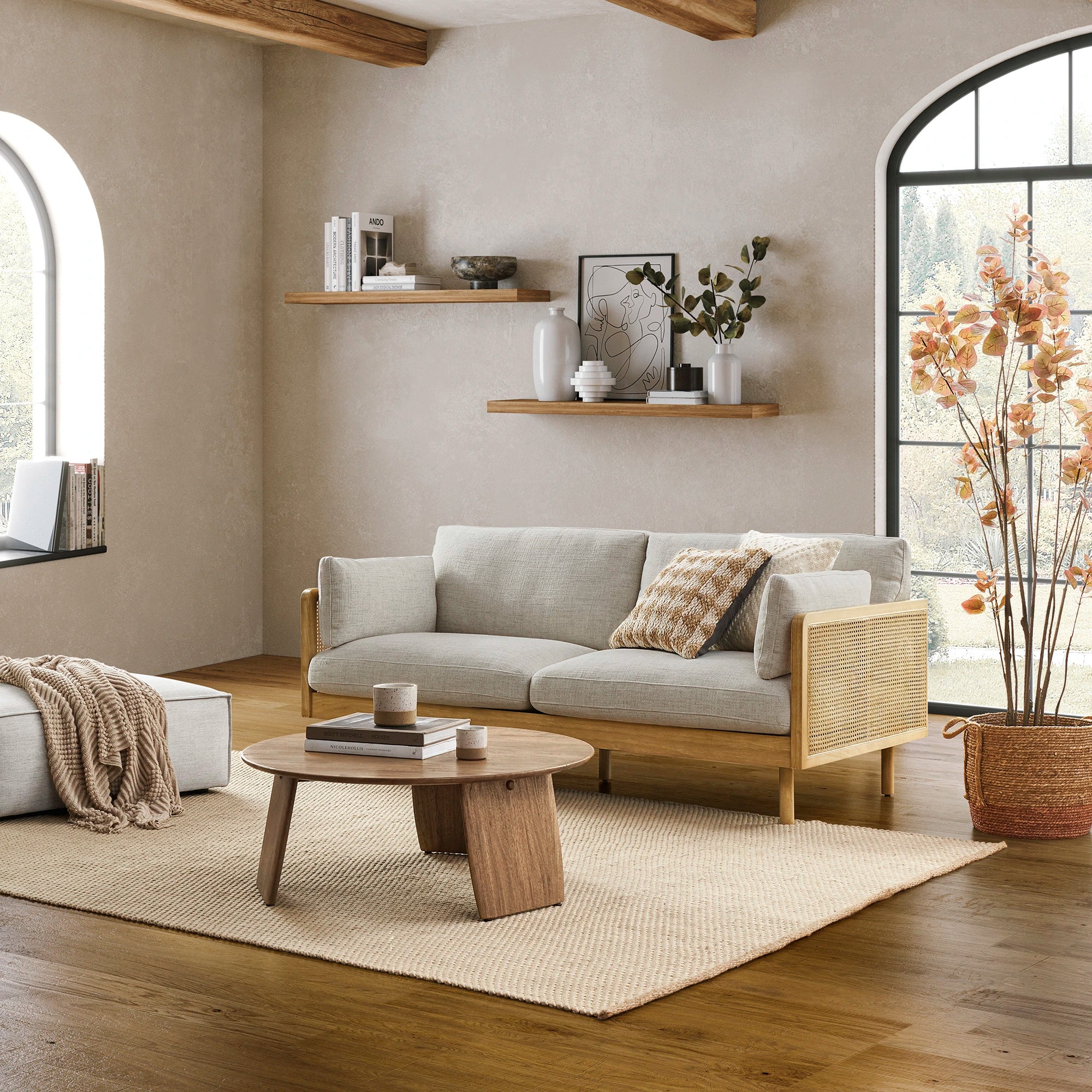
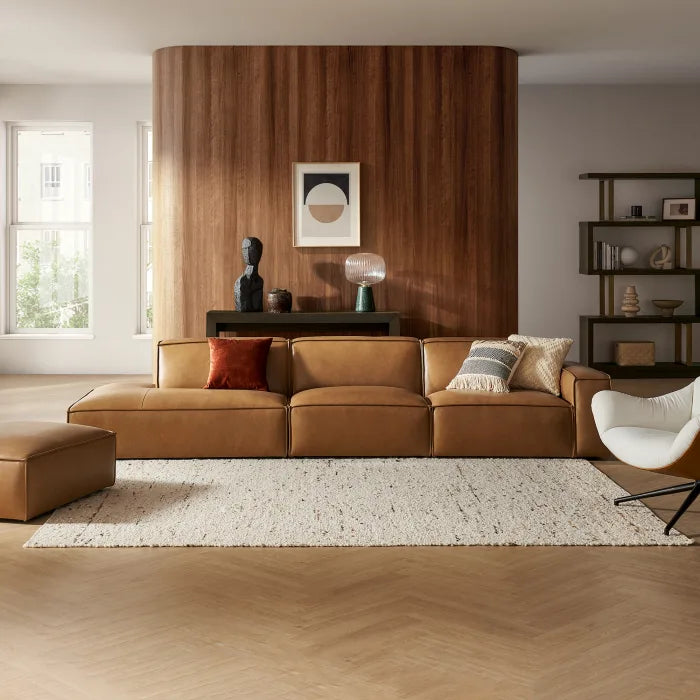
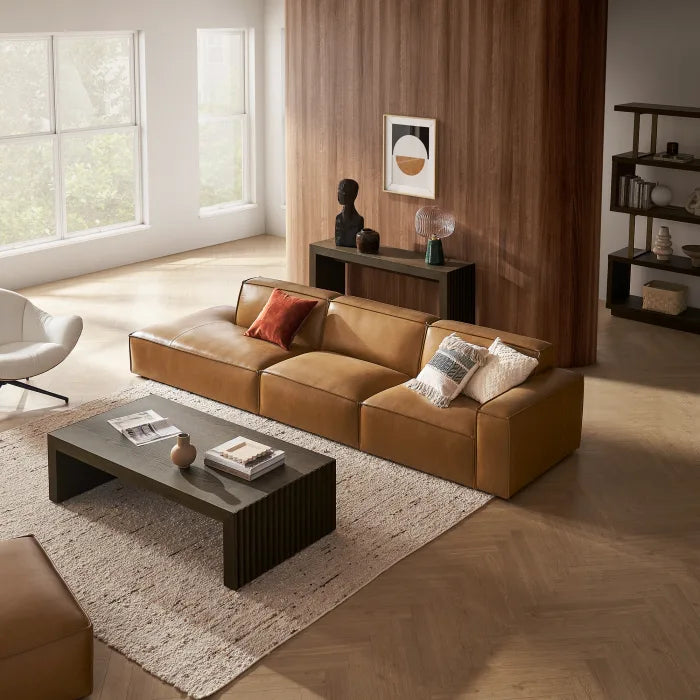
A Japandi sofa blends Japanese restraint with Scandinavian comfort. You can recognize one by its low, horizontal profile and simple, clean lines. Shapes are squared or gently curved, never fussy. Upholstery is textured but plain: linen, cotton blends, bouclé, corduroy or soft velvet. Colors stay muted, from ivory and sand to taupe, sage and charcoal. Wood often shows as a visible frame, a plinth base or tapered wooden legs. You won't see tufting, nailhead trim or loud prints.
Why buy a Japandi sofa?
Japandi grew from two traditions that value useful, honest objects. Japan brings wabi-sabi, the quiet beauty of natural and imperfect materials. Scandinavia adds hygge, the idea of a warm, cozy home. Mid-century Scandinavian modern furniture shaped its low, clean forms. The result is a sofa that feels restful to look at and to sit on. Neutral fabrics also age well, so it won't look dated soon. Each model is sold by a partner store under its own terms.
Styles and variations of Japandi sofas
Low-profile linen and wood sofas
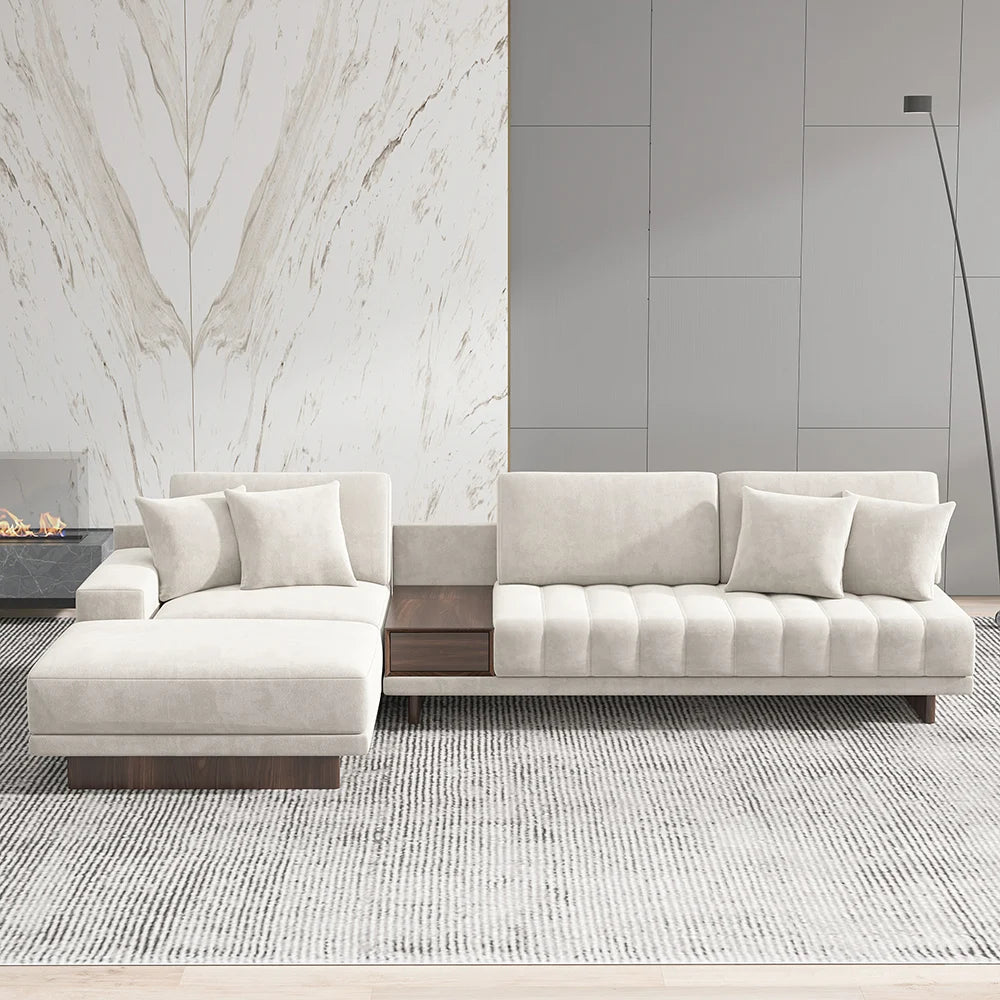
The classic look pairs a low seat with a solid wood frame or exposed legs. A linen sofa brings a relaxed, slightly rumpled texture. This low profile sofa shape keeps sightlines open, which helps smaller living rooms feel larger.
Bouclé and curved sofas
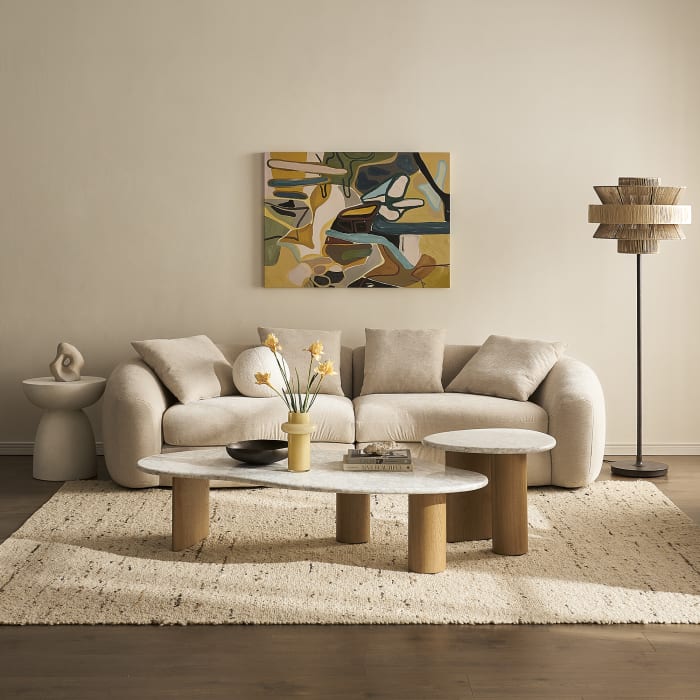
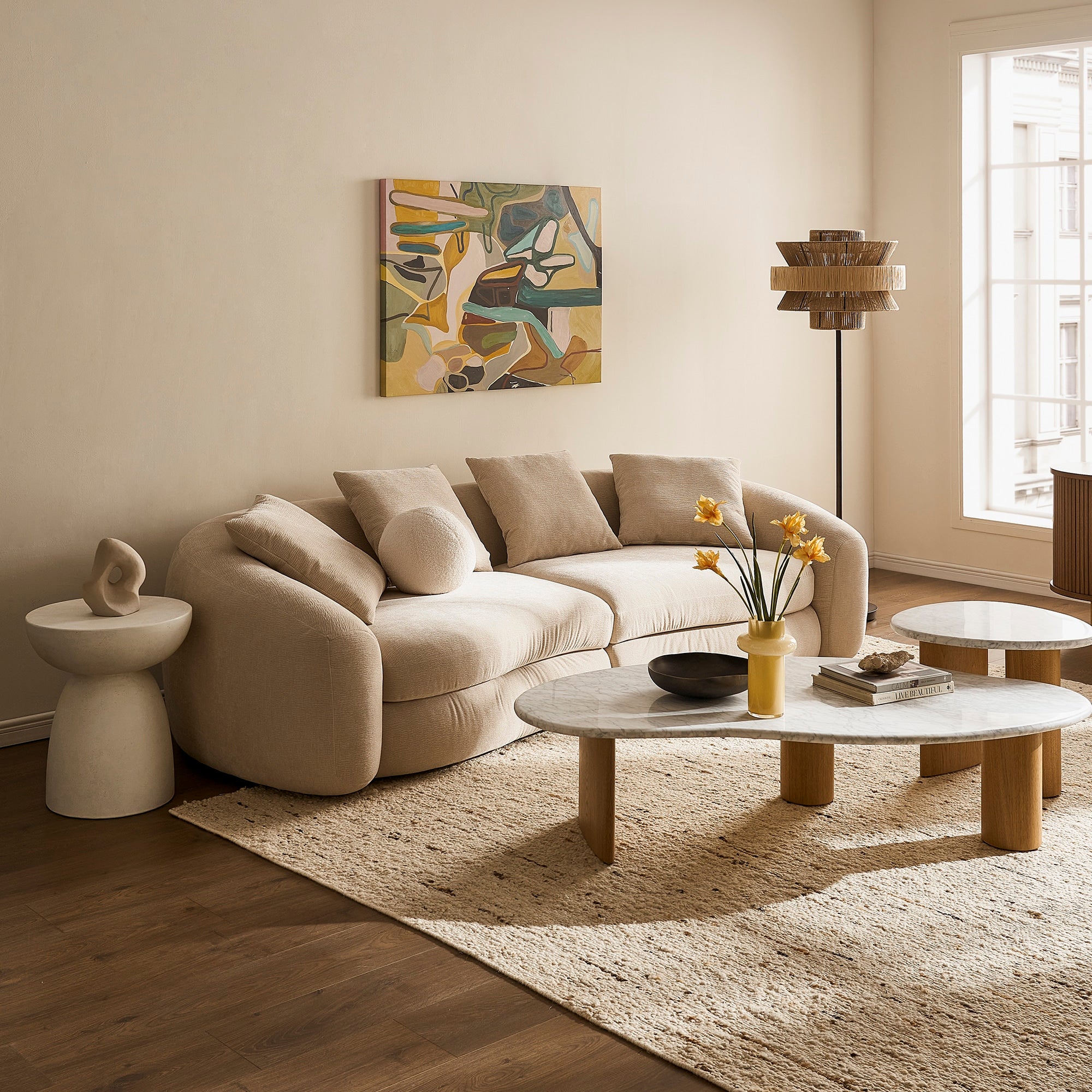
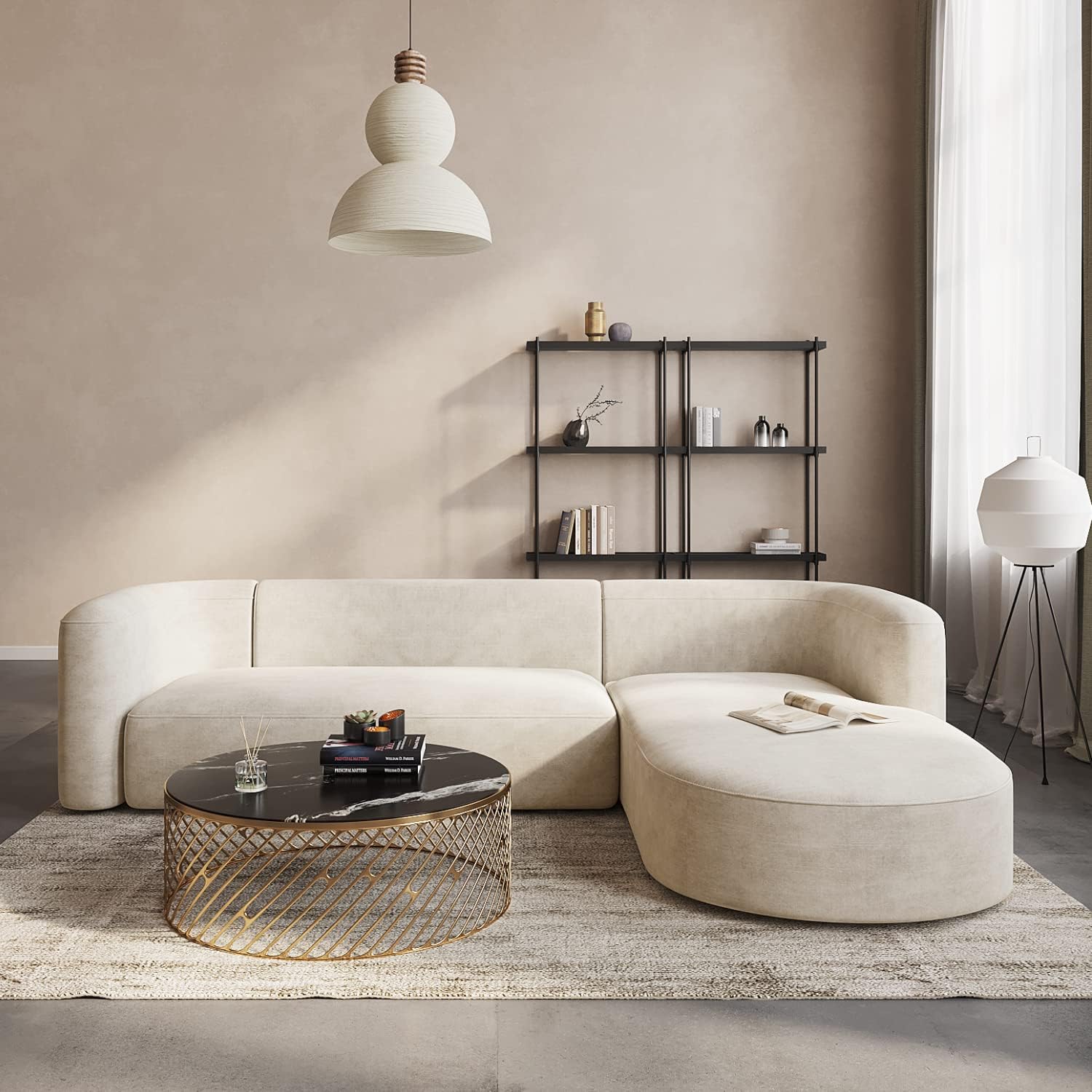
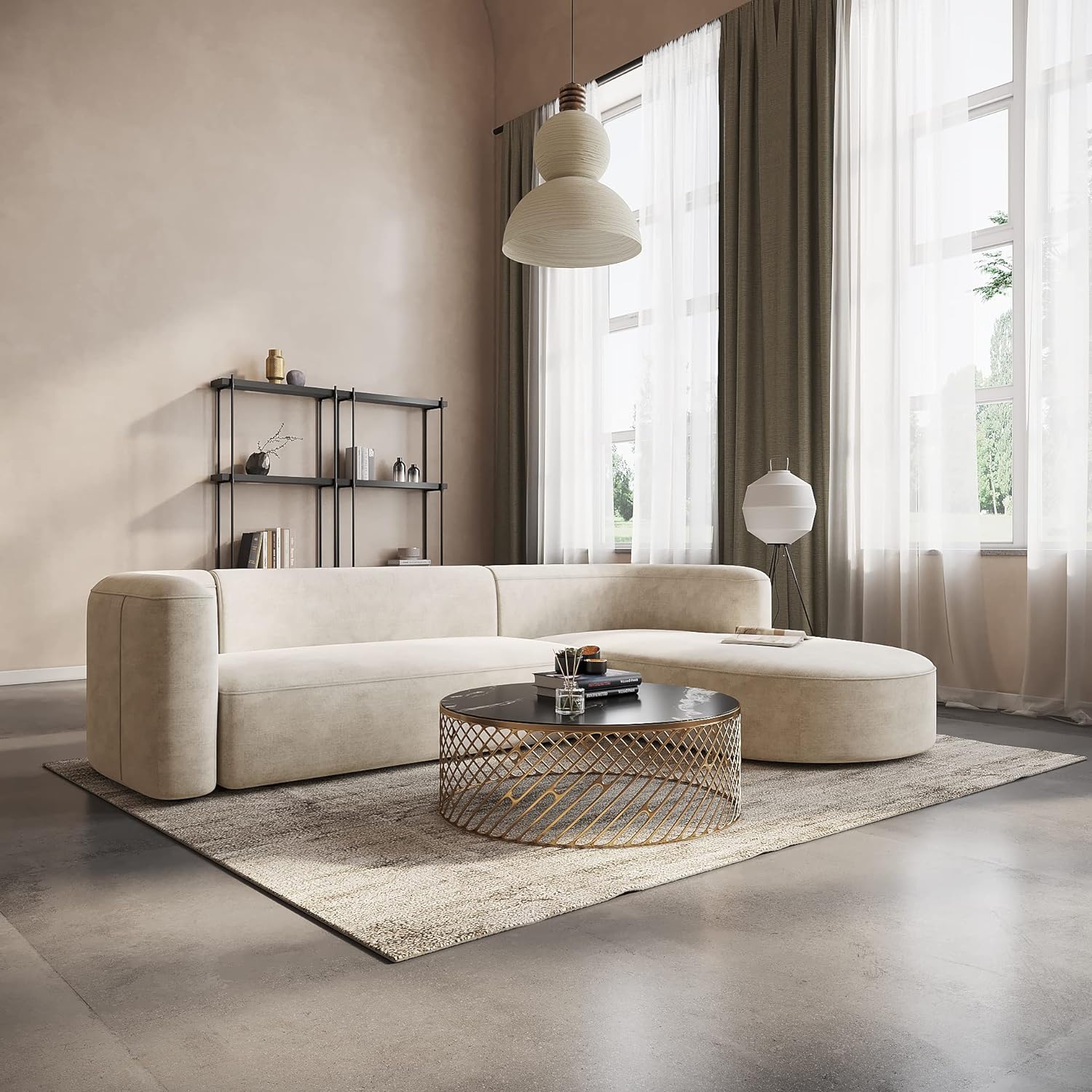
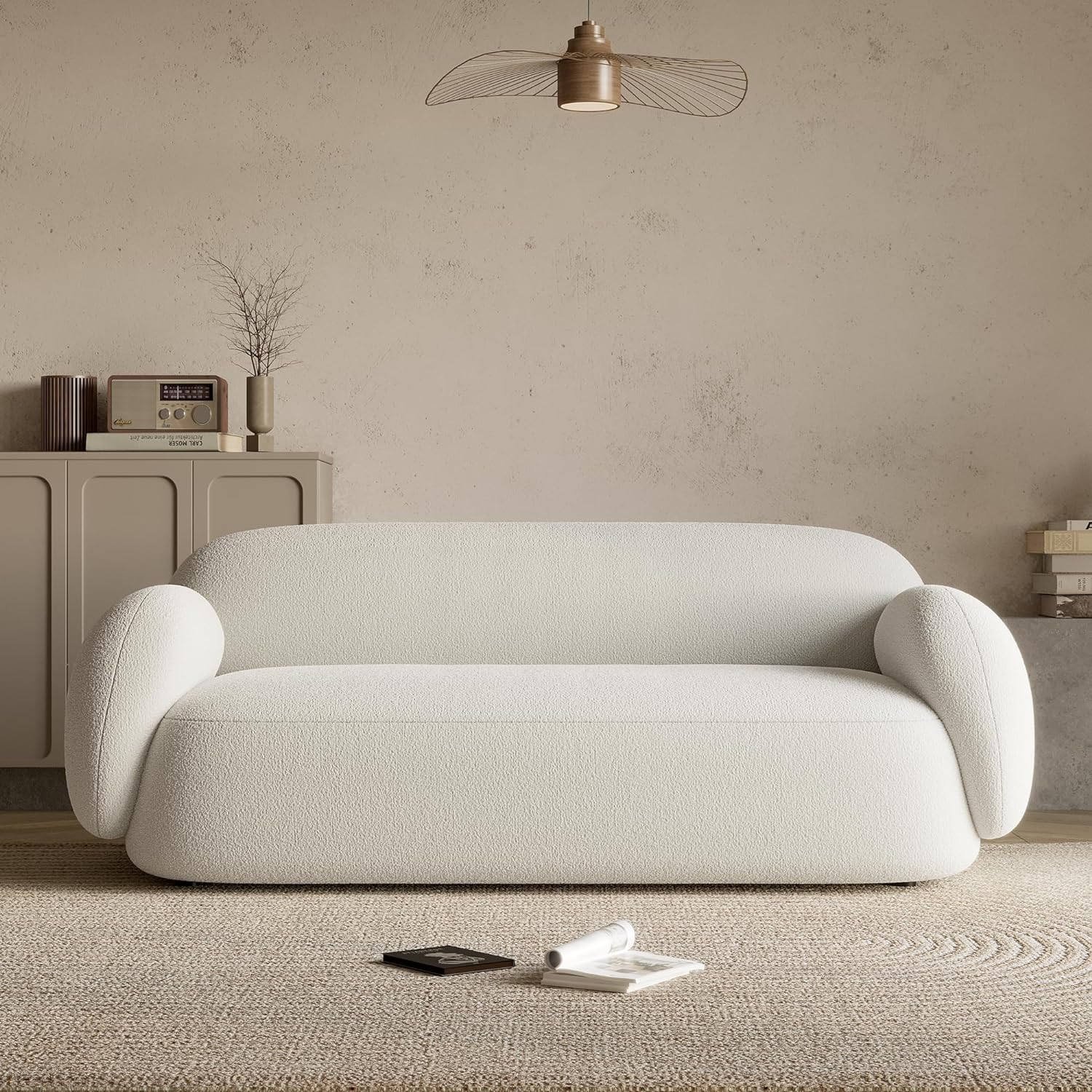
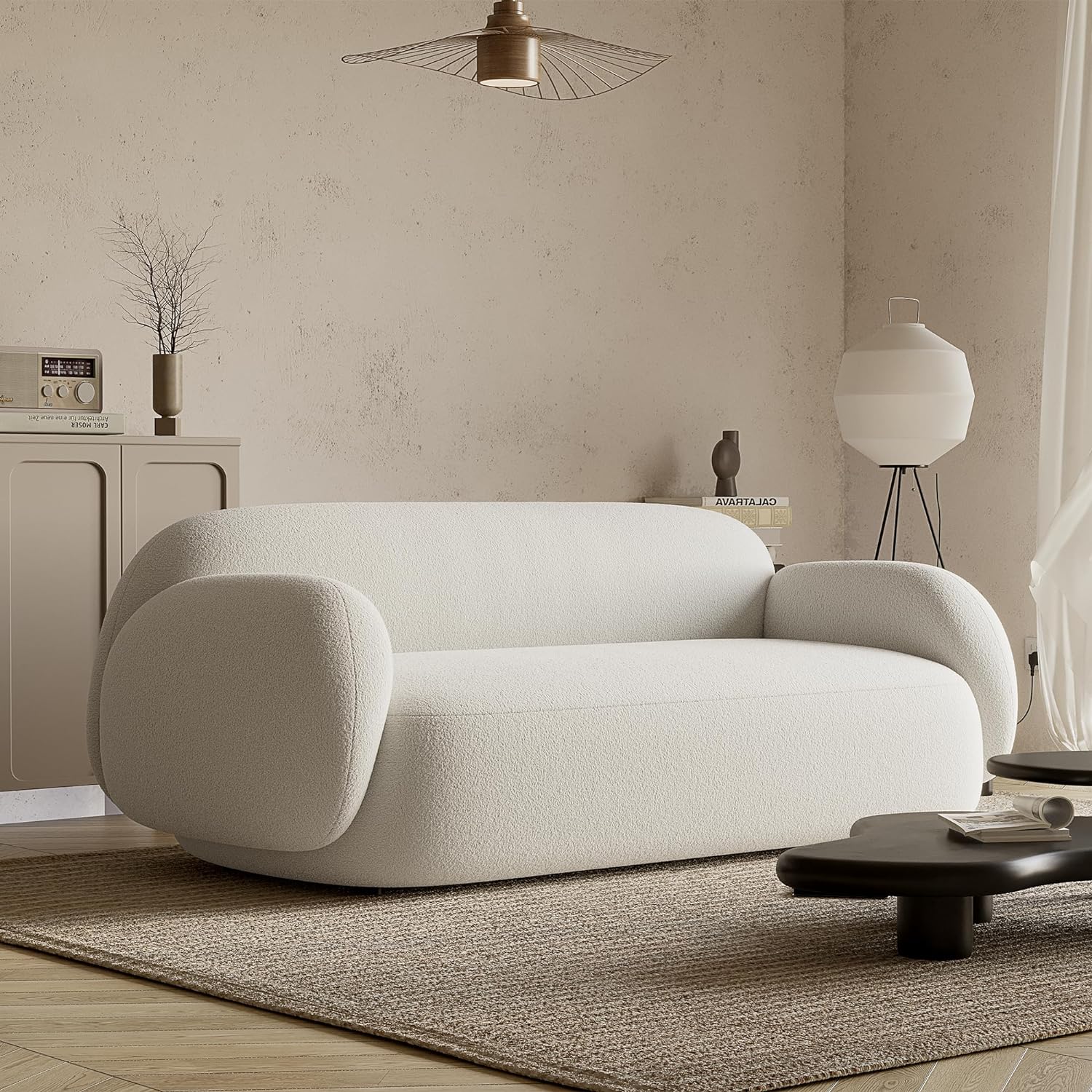
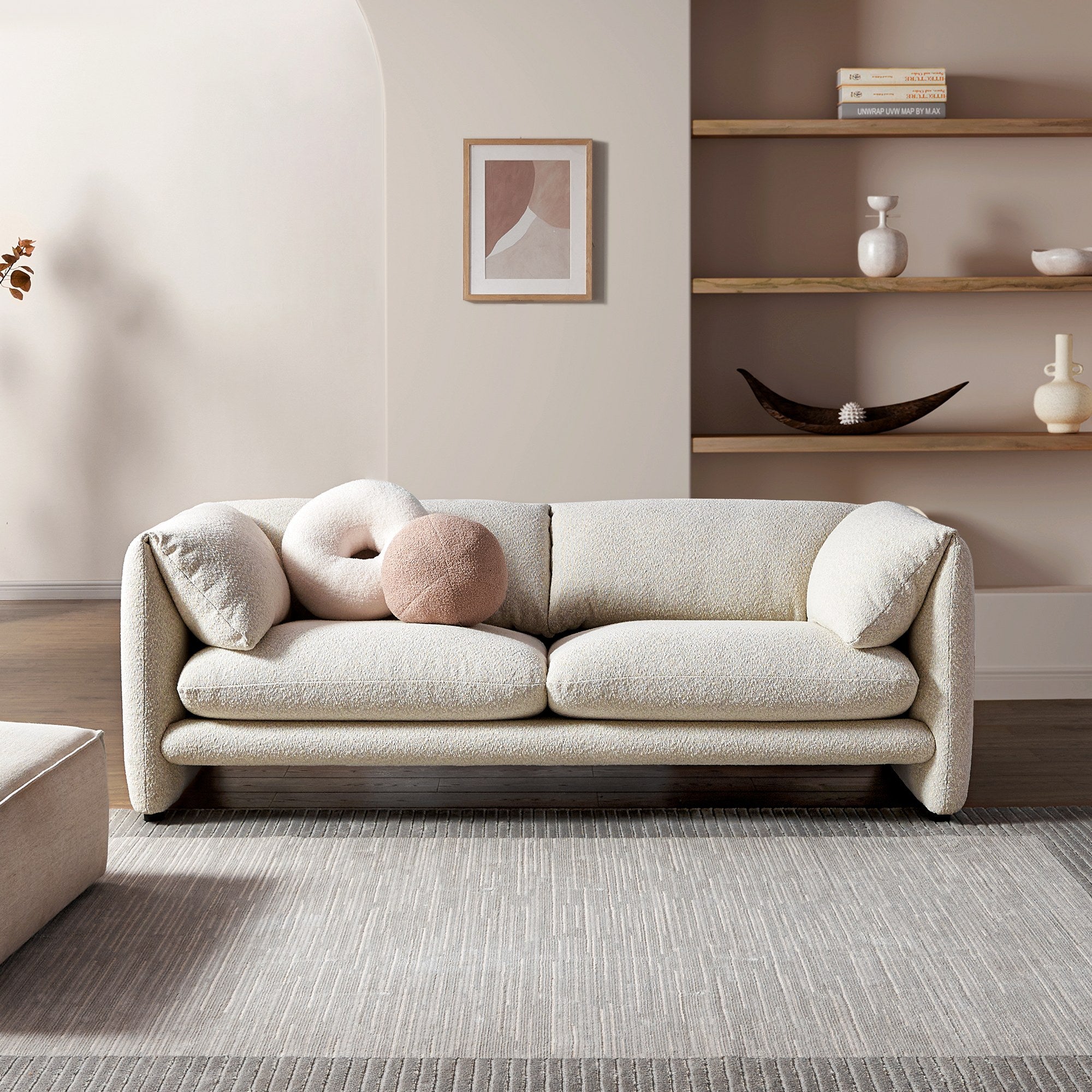
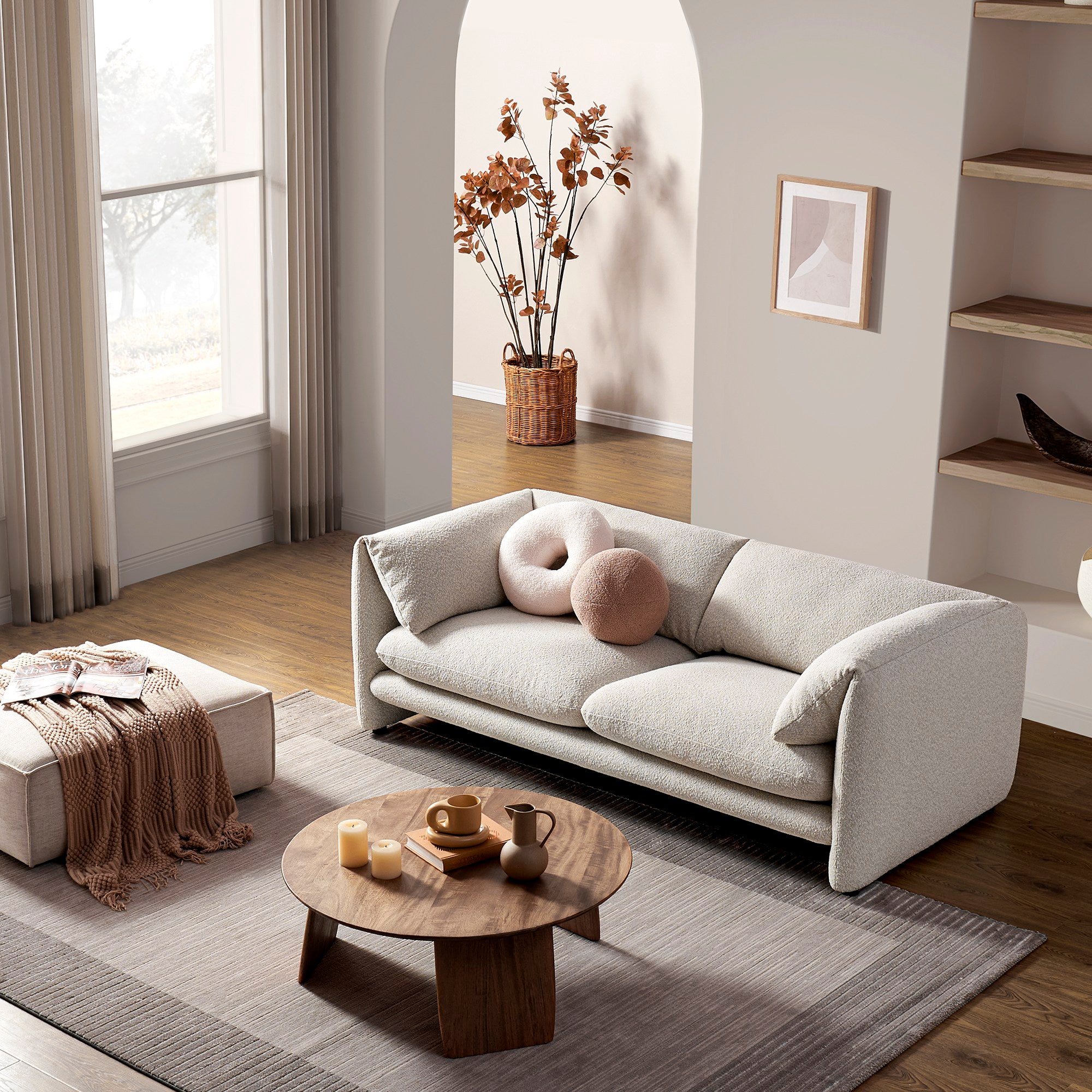
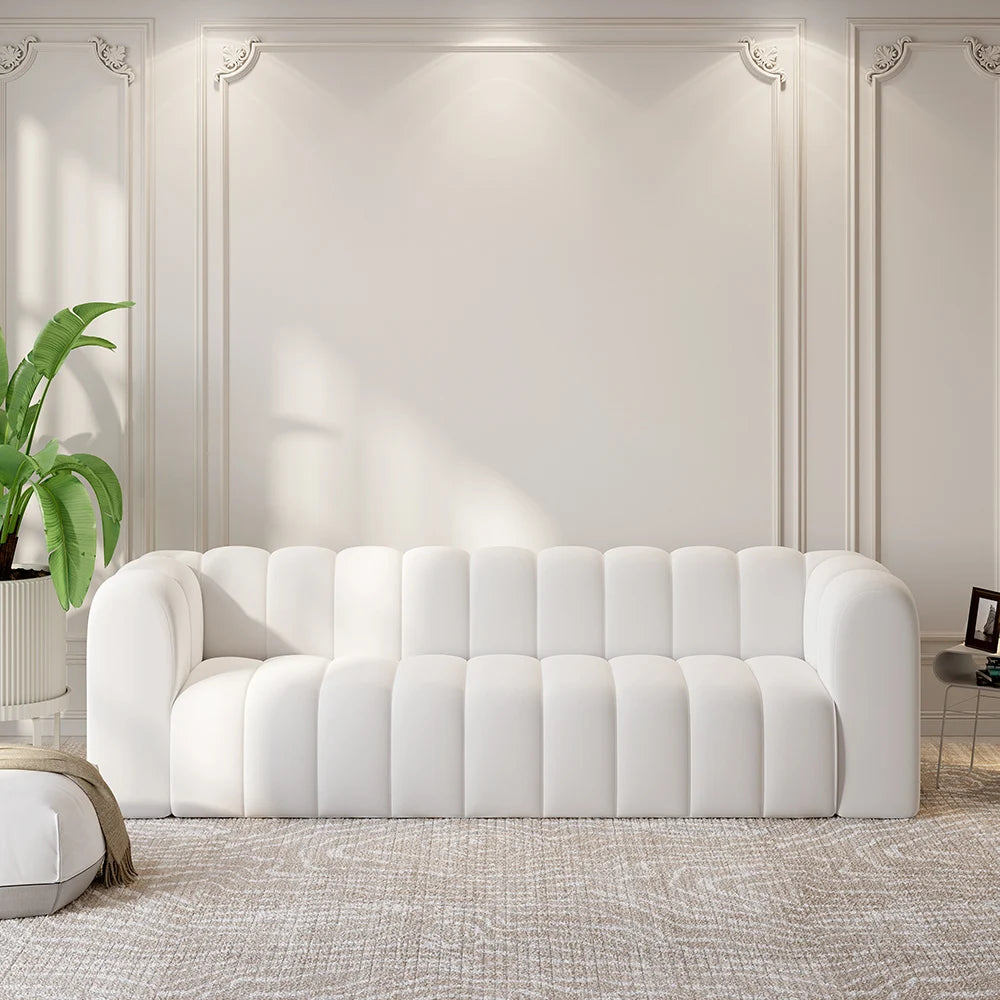
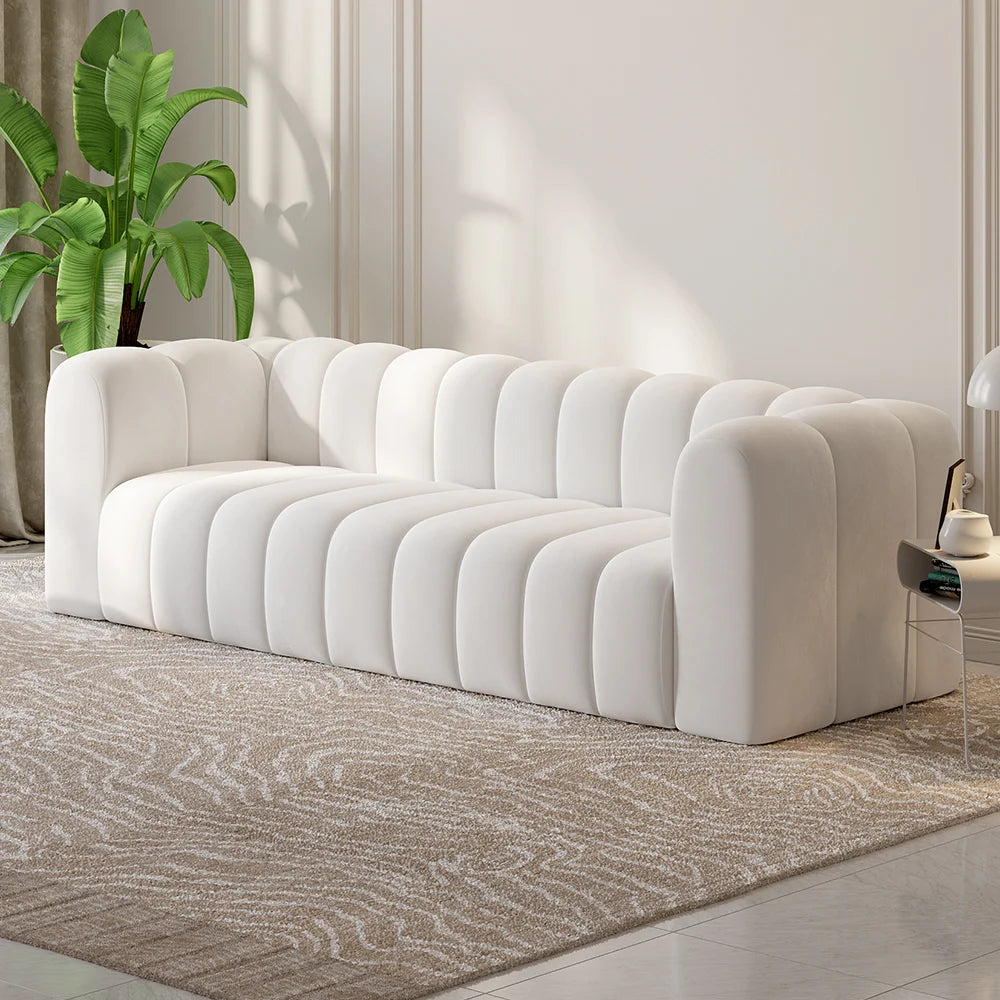
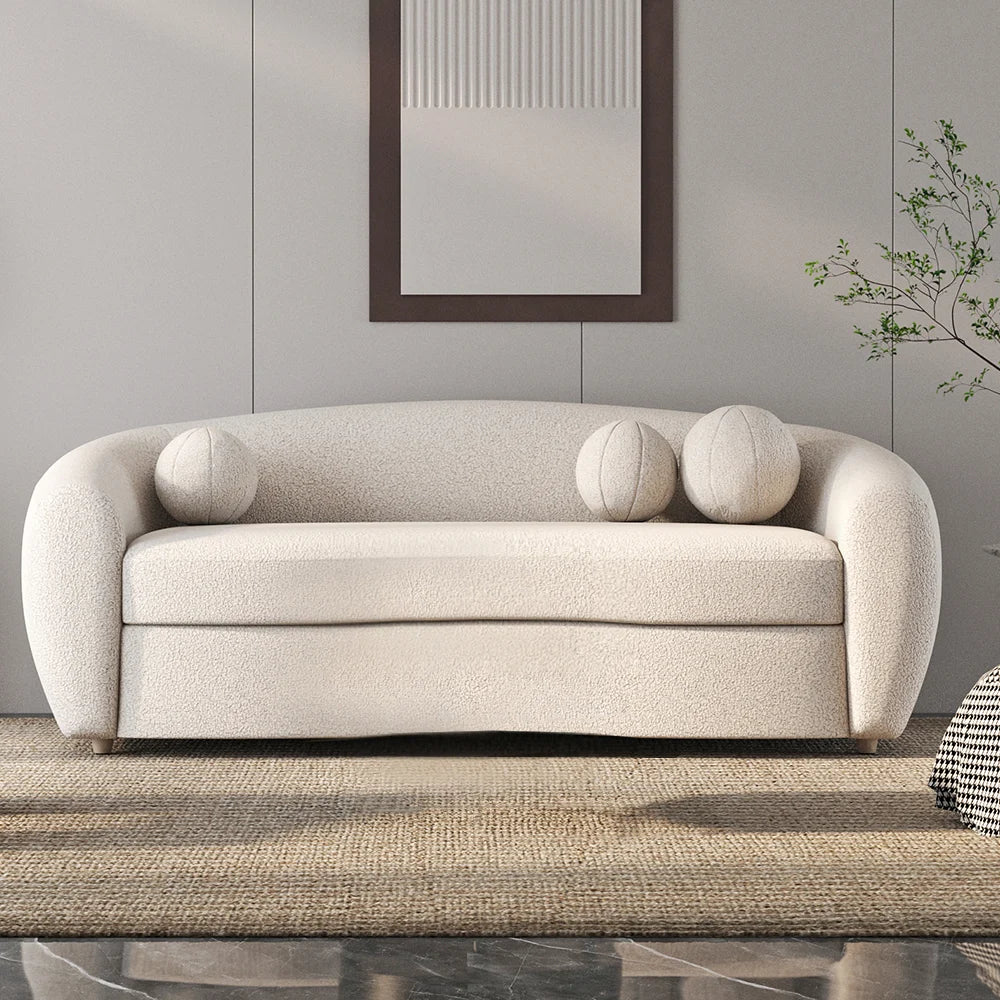
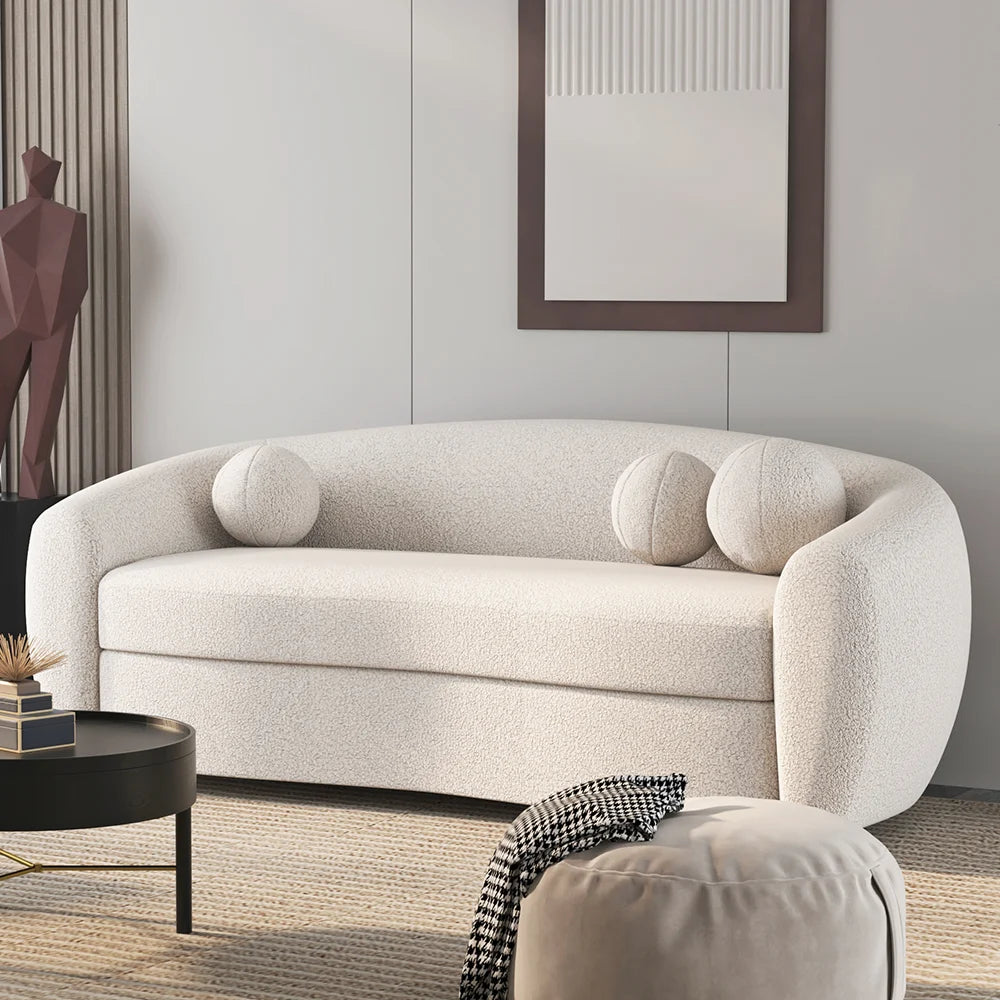
A boucle sofa adds softness through its looped, nubby fabric. Curved and bubble shapes push the idea further, with rounded backs and no sharp corners. In ivory or cream, they warm a minimal room, especially away from walls.
Sectionals, modular and sleeper sofas
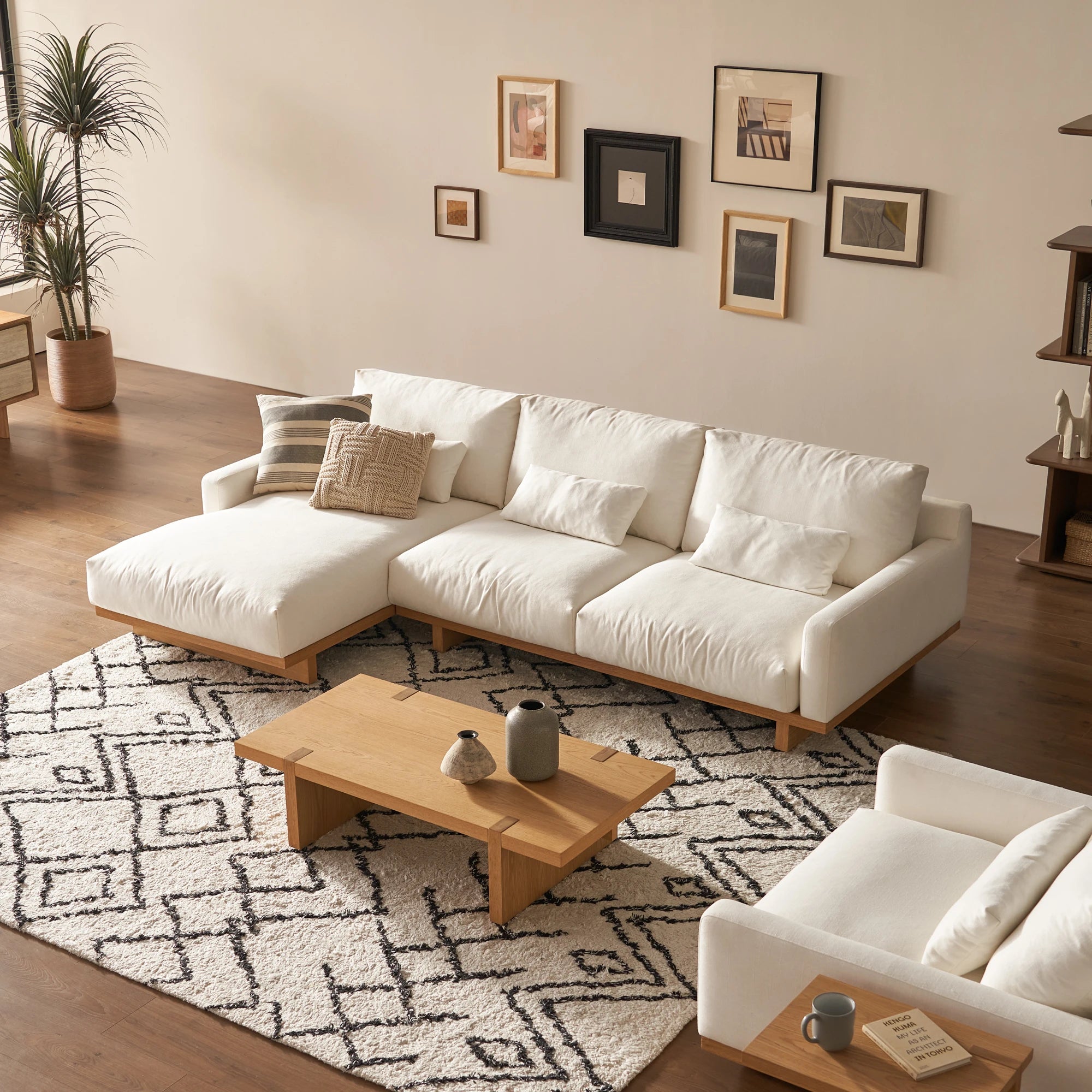
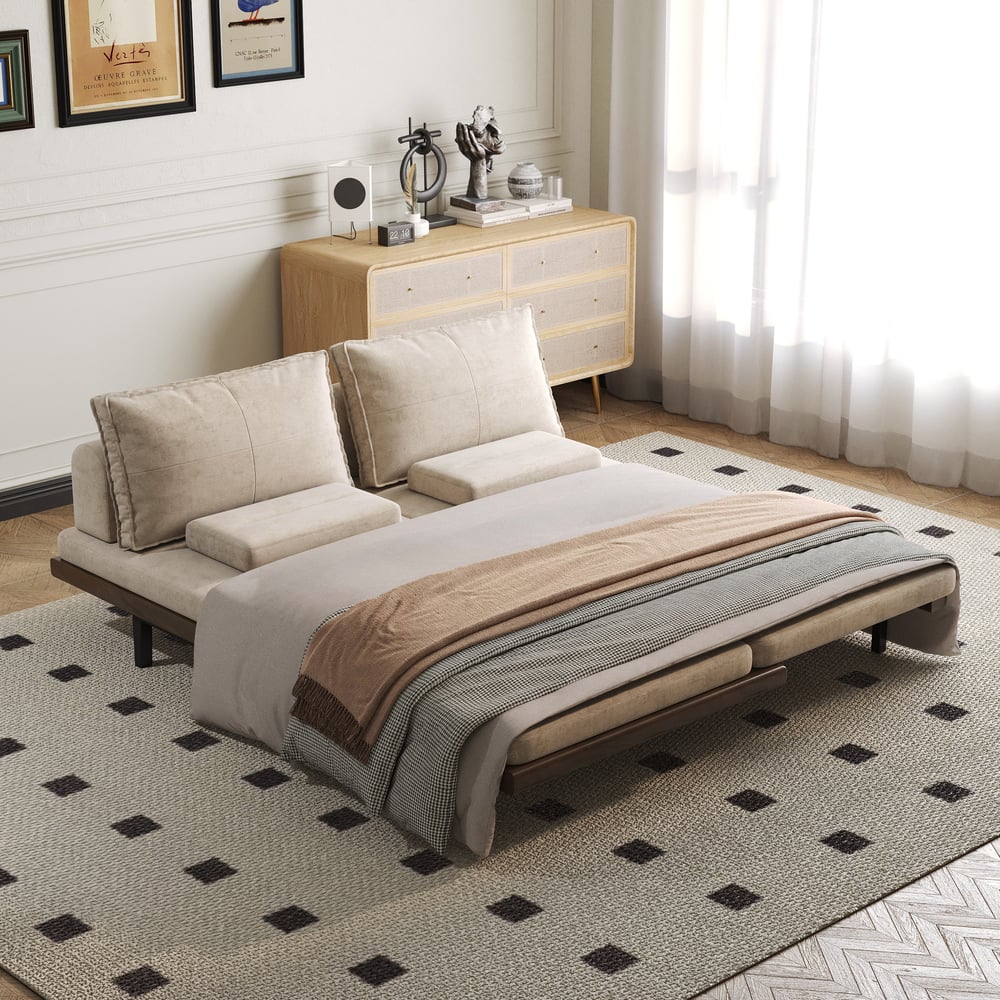
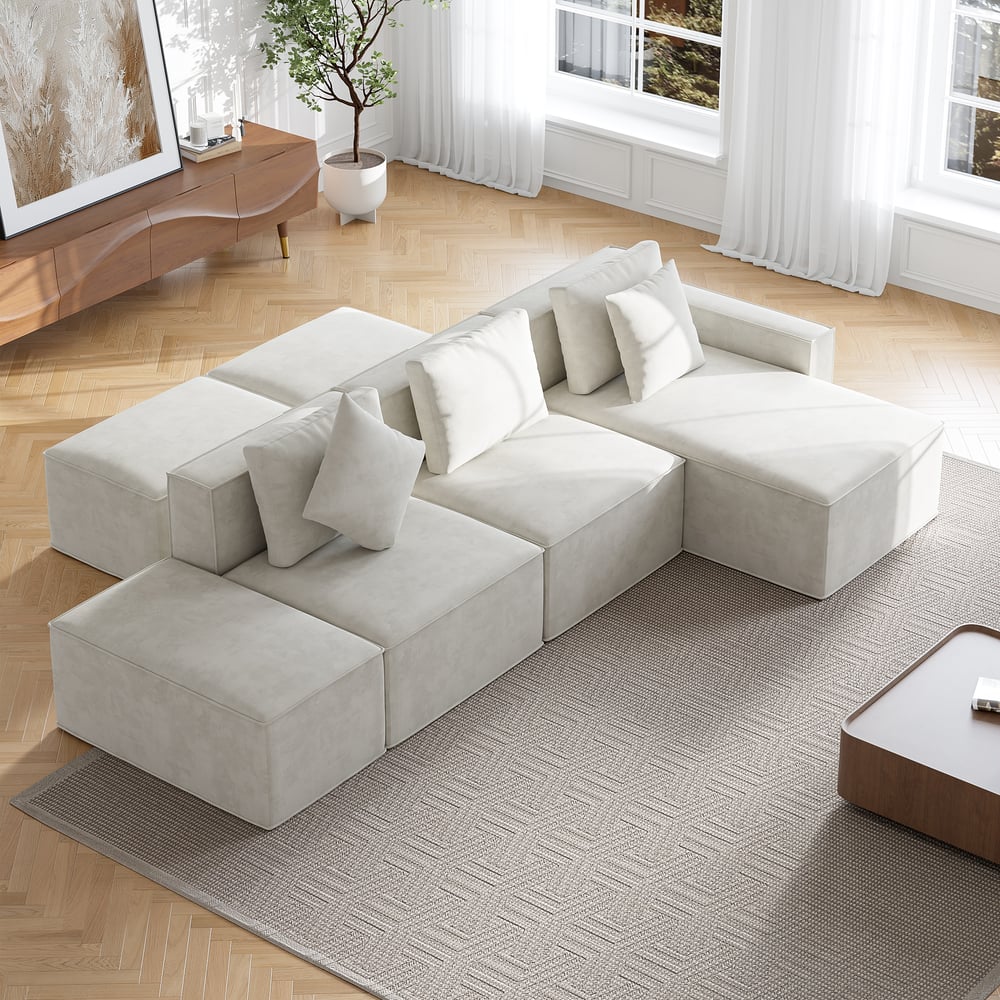
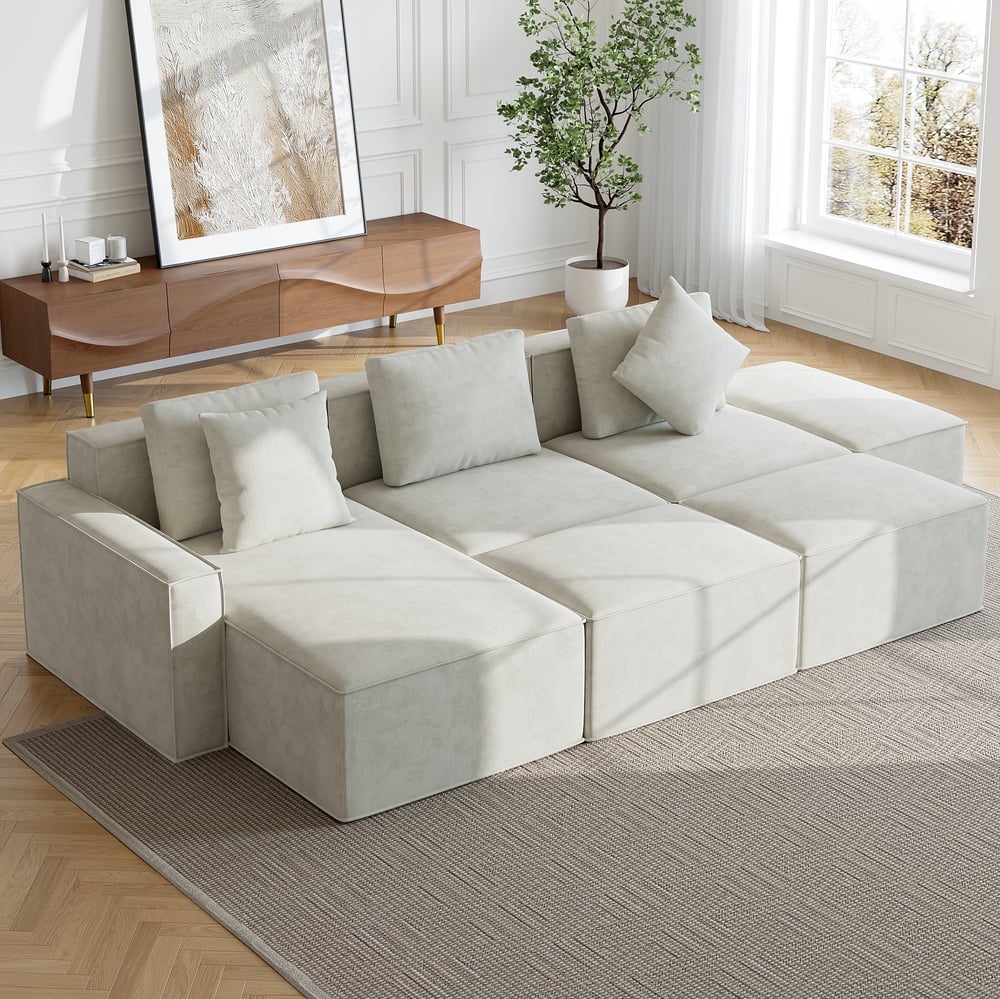
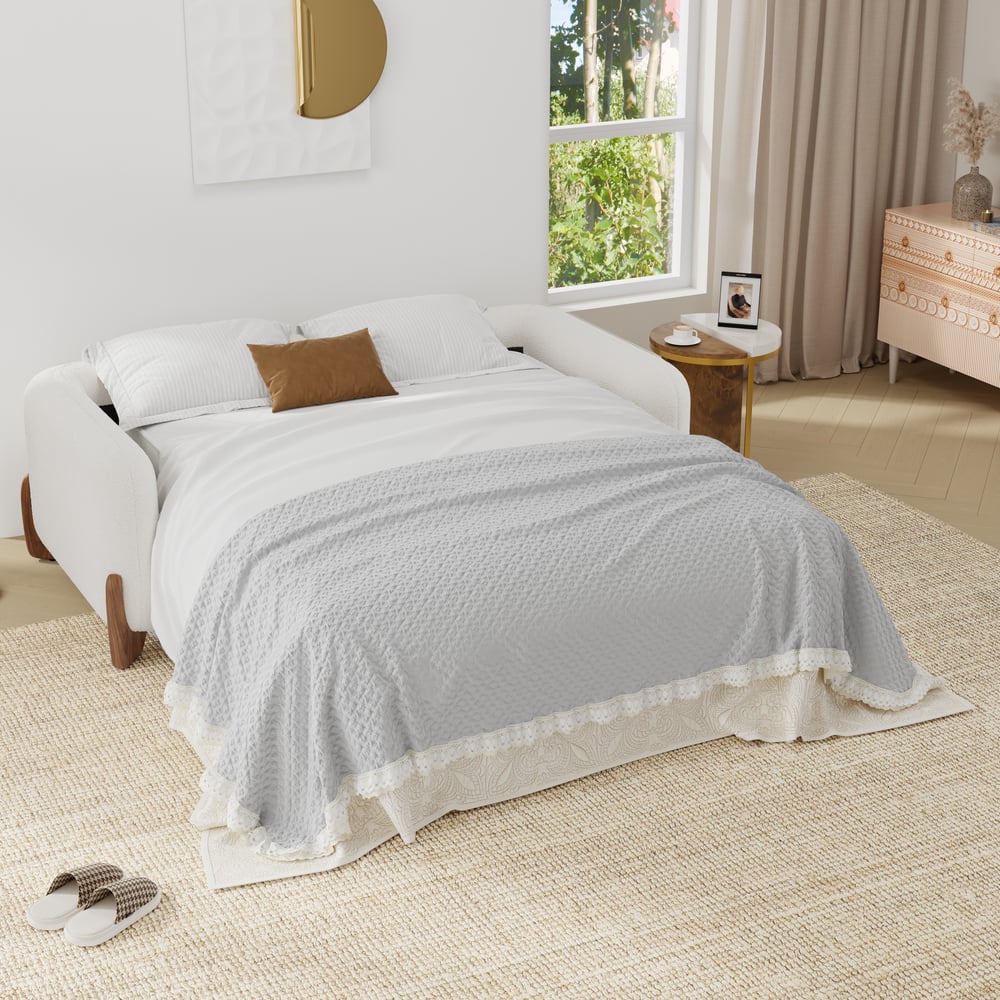
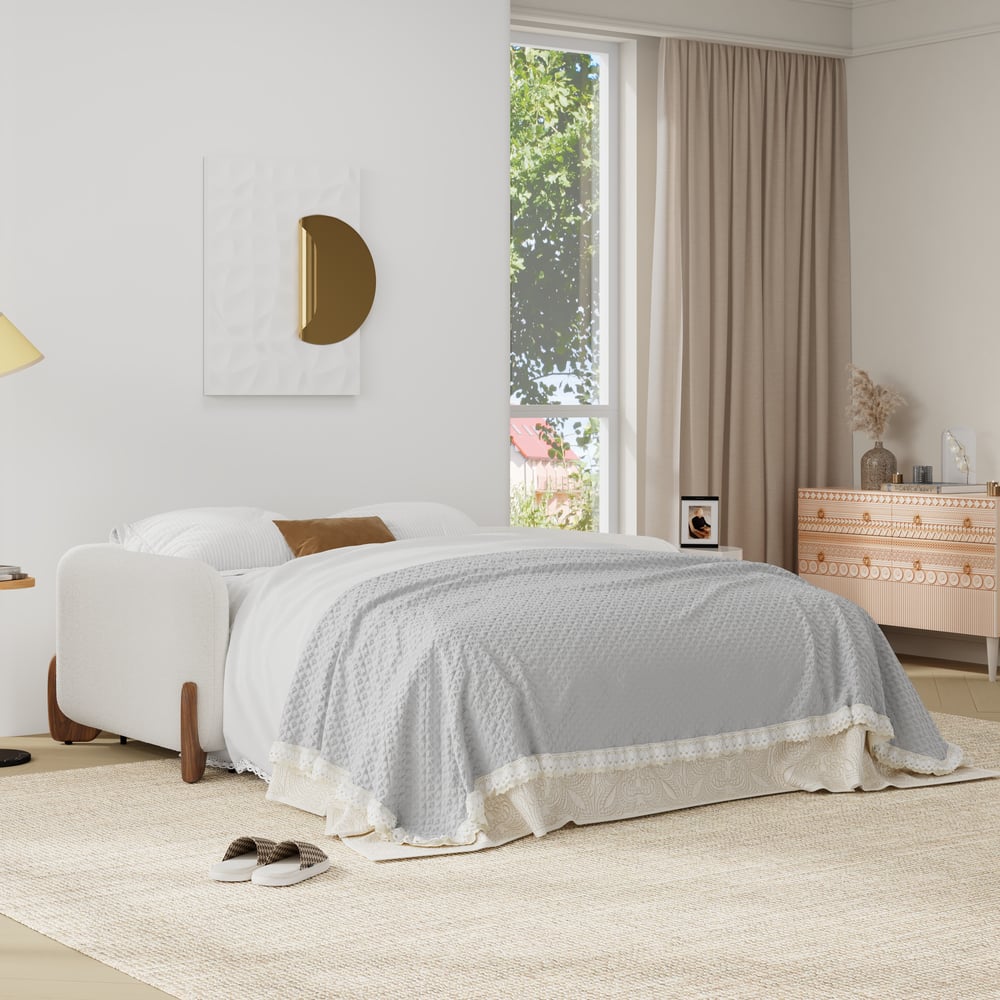
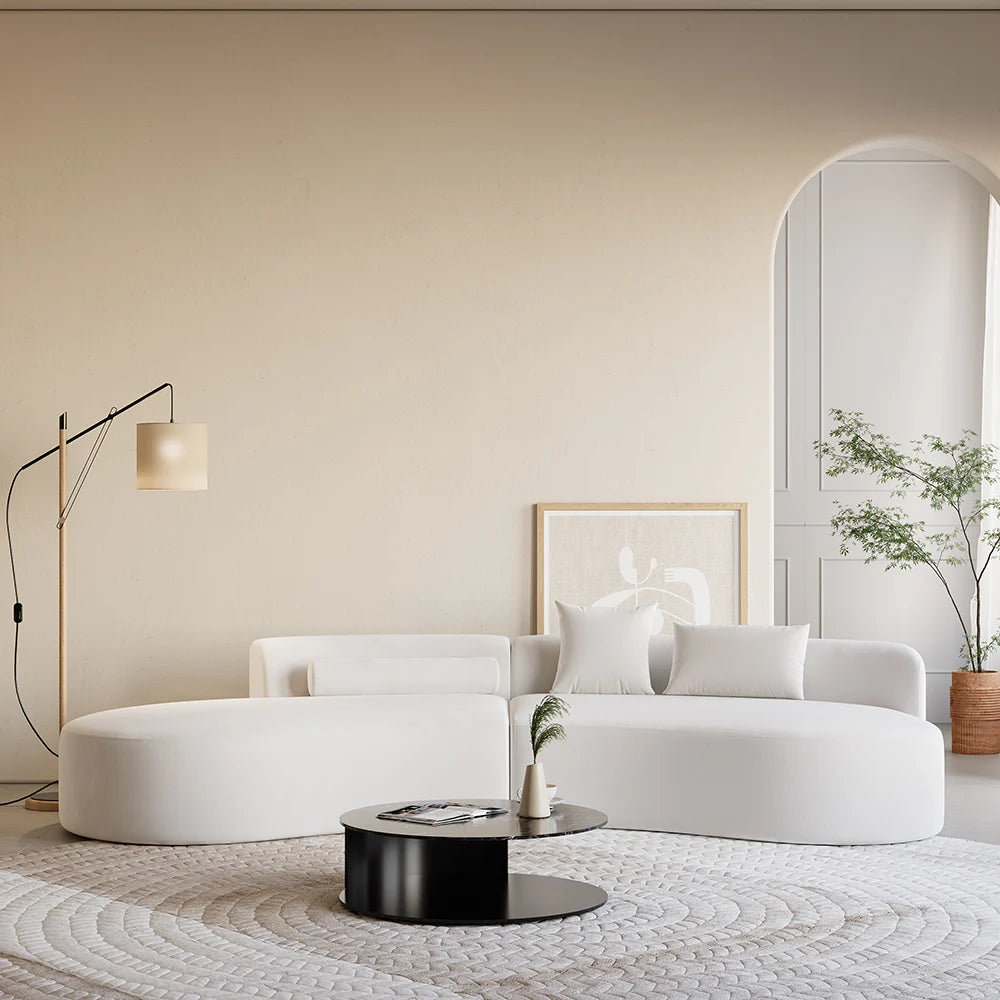
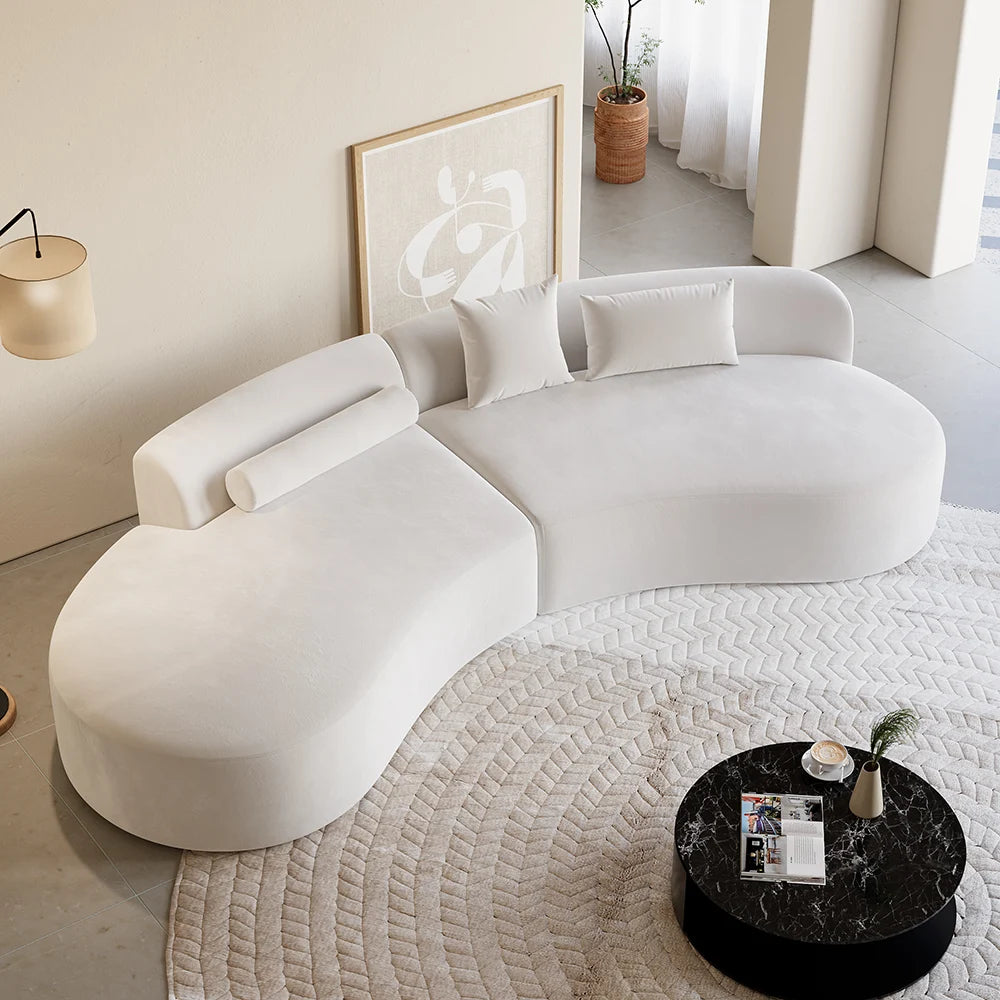
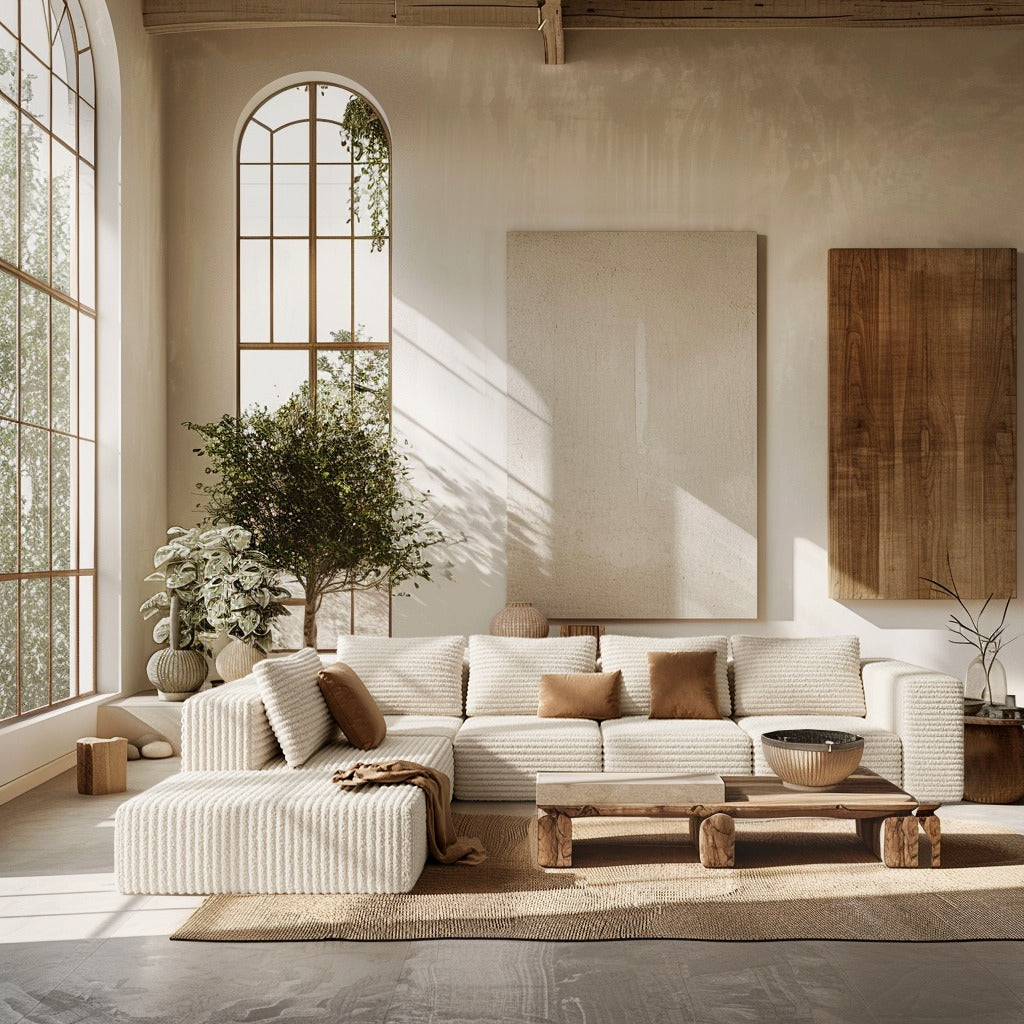
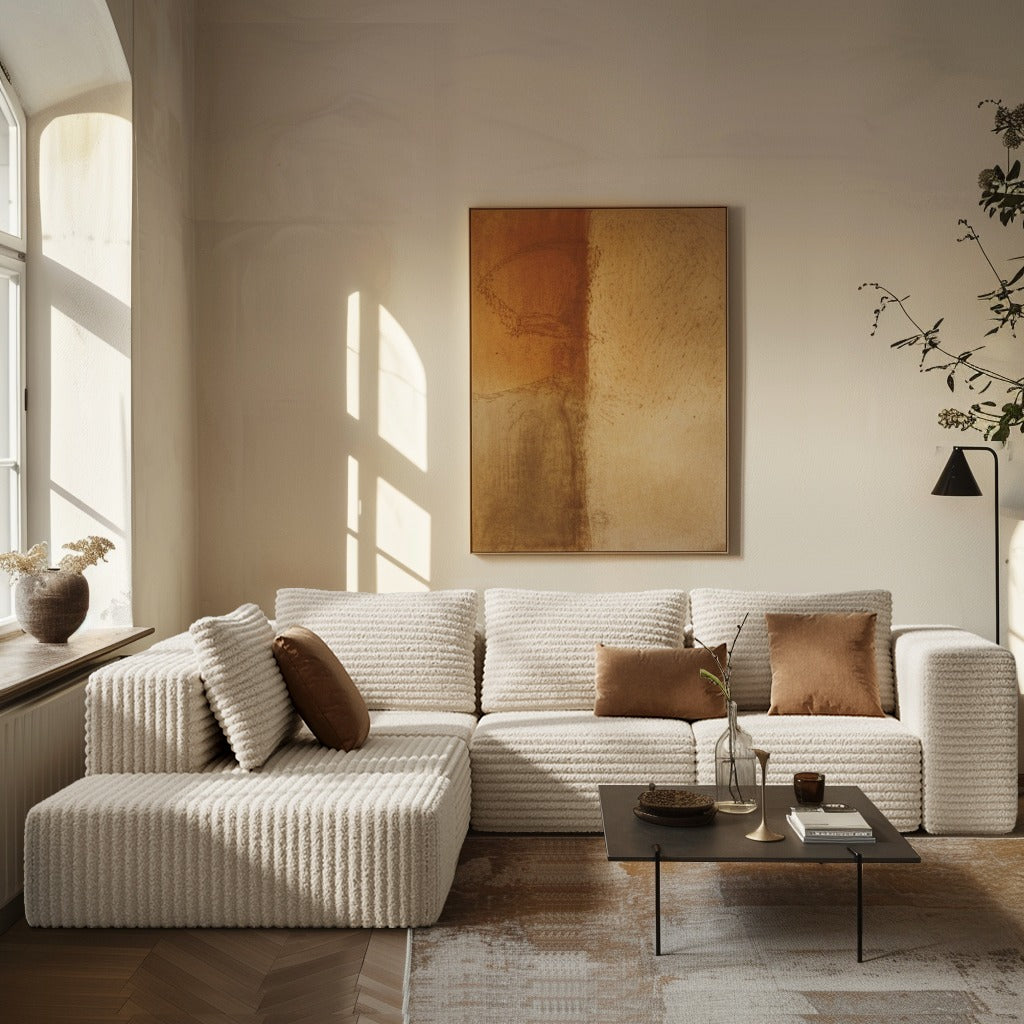
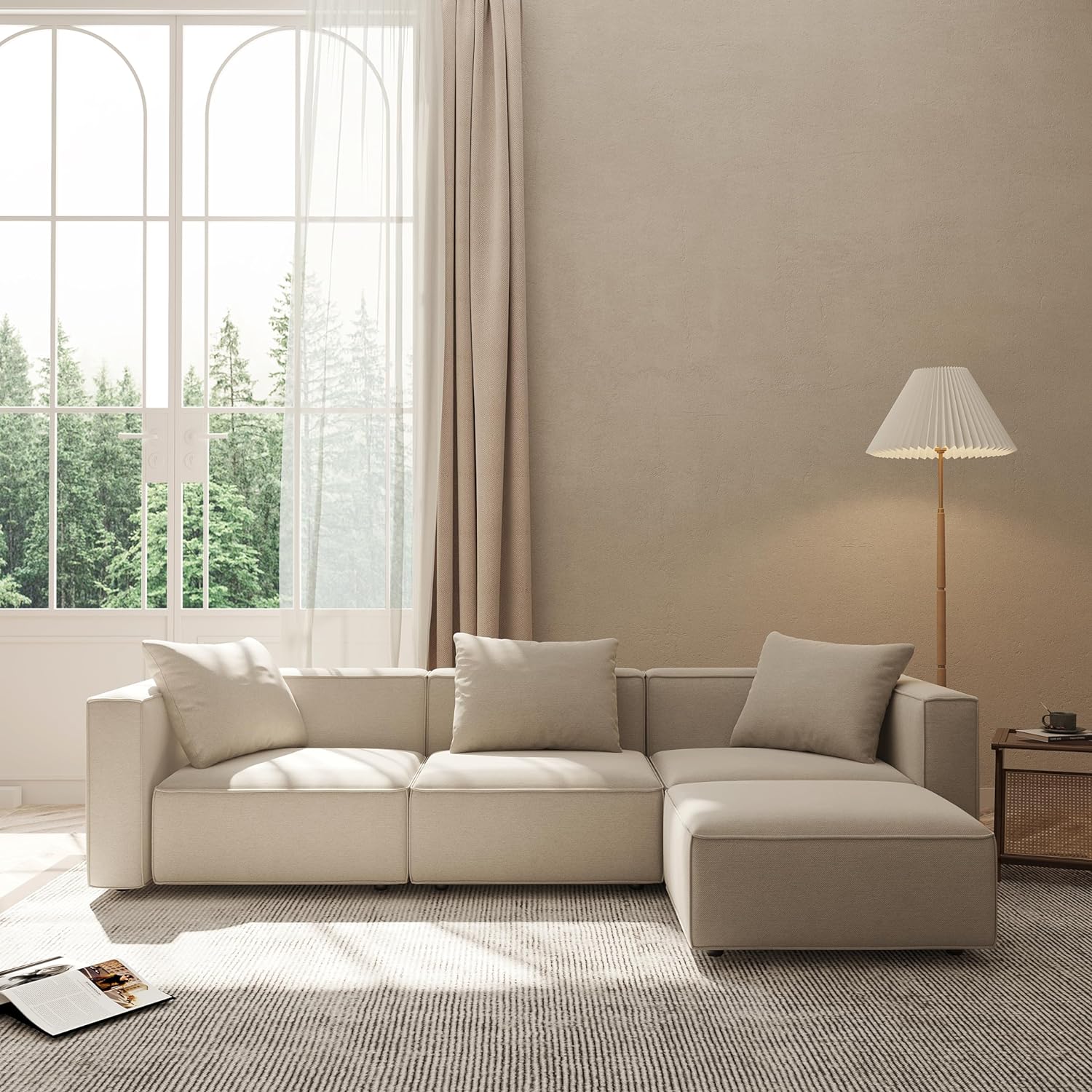
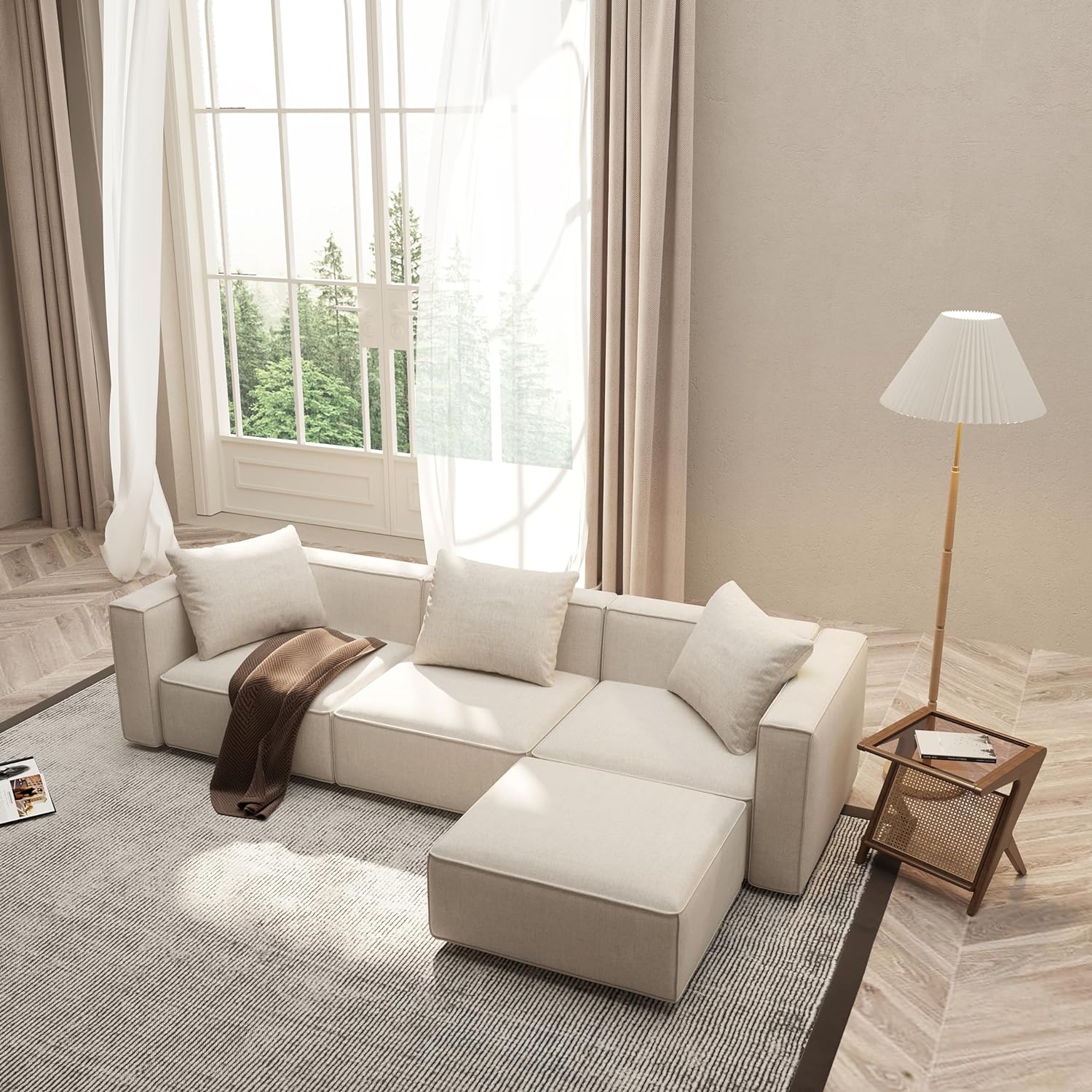
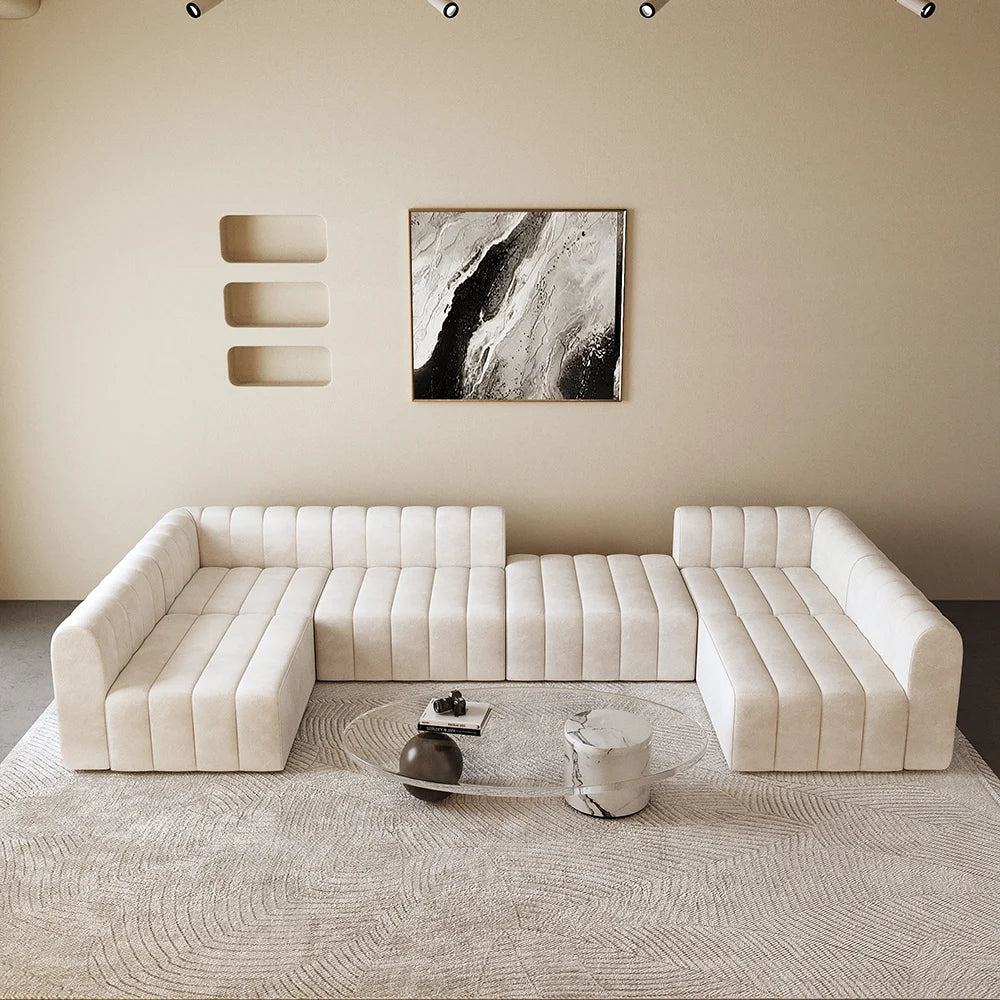
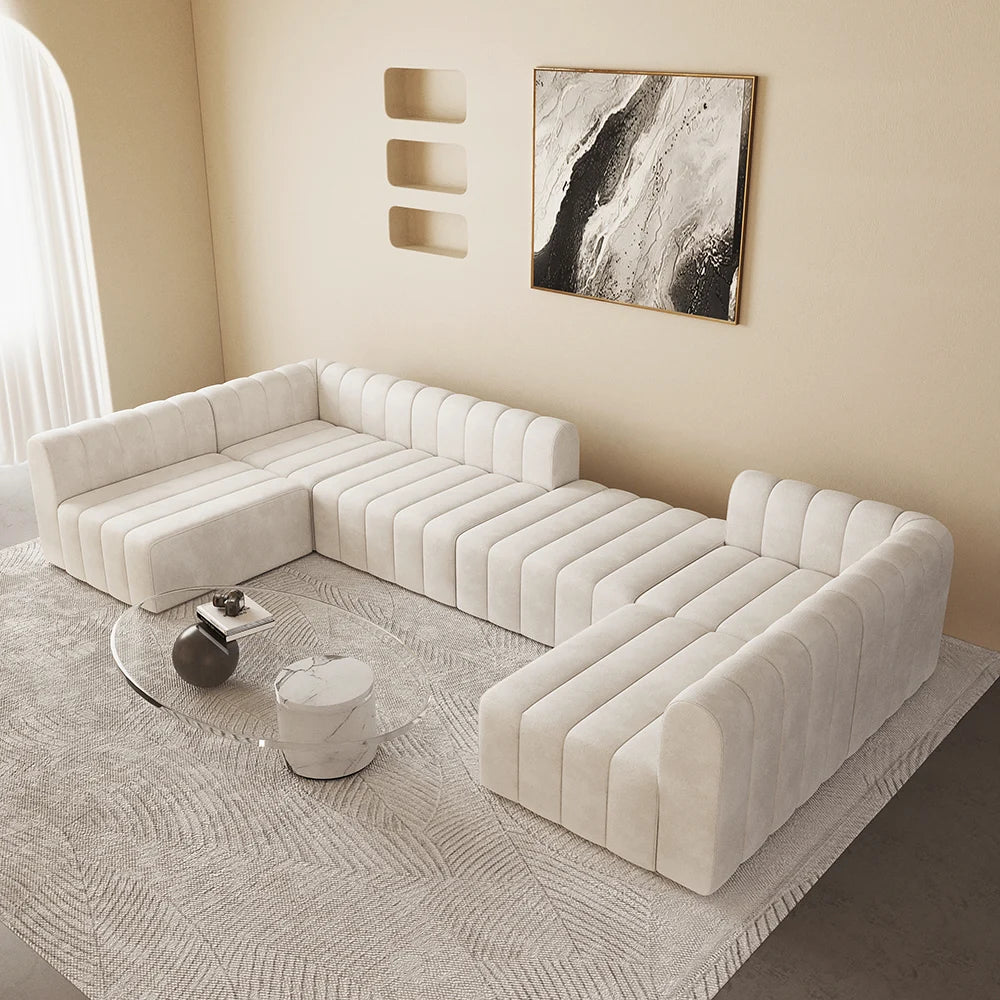
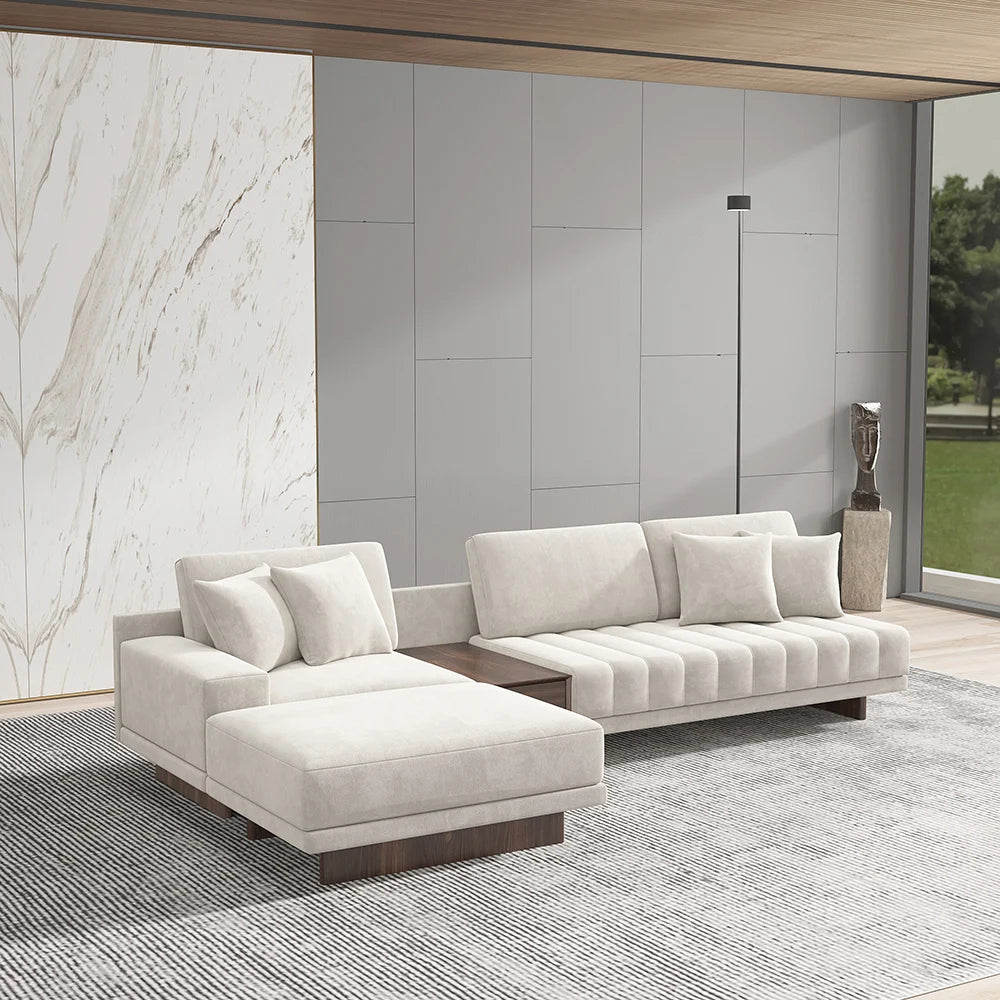
A Japandi sectional sofa suits families and open-plan spaces, in L-shape, U-shape or corner layouts. A modular sectional can be rearranged as your needs change. A sleeper sofa adds a guest bed without breaking the clean look.
How to choose your Japandi sofa?
Start with measurements. Note the wall length, then check doorways, stairs and hallways for delivery. Partner pages list full dimensions, including seat depth and height. A seat depth around 21 to 24 inches suits upright sitting, while deeper seats invite lounging. Next, choose the material. A wood frame sofa built from solid wood is usually sturdier than one made only from manufactured wood. Linen breathes but wrinkles, which is part of its charm. Bouclé feels soft but can snag on pet claws. Polyester blends are easier to spot-clean. If you have kids or pets, look for removable covers.
What to pair a Japandi sofa with?
Ground the seating area with a low Japandi coffee table in oak, walnut or stone. Add a flatweave or jute Japandi rug to soften the floor. A wooden Japandi armchair gives guests a second seat with the same calm lines. Keep accessories few: linen cushions, one ceramic vase, a paper lamp. The look also suits Scandinavian, organic modern and wabi-sabi rooms.
A word from the store
Japandistore lists only Japandi-style pieces. We hand-pick each sofa from established partner stores: Wayfair, Homary, Acanva, Castlery, Soka Home and Hernest. Before listing, we compare materials, dimensions, real buyer reviews and partner warranty and return terms. Most sofas here range from about $900 to $7,300. Prices, stock, shipping and returns are set by each partner and shown on its site.
FAQ — Japandi sofa
What color sofa is best for a Japandi living room?
Soft neutrals work best: ivory, oatmeal, sand, taupe and warm gray. Muted earth tones like sage or olive also fit when the room stays quiet. Charcoal can anchor a light space. Avoid bright colors and bold patterns.
Is a boucle sofa Japandi?
Yes, when the shape stays simple and the color muted. Its looped texture echoes the style's love of tactile, natural-looking materials. Keep in mind that bouclé can snag on pet claws and wear on armrests over time.
Is a Japandi couch comfortable for everyday use?
It can be, if the proportions suit you. Very low seats are harder to get out of, especially for older family members. Compare seat height and depth with a sofa you already find comfortable before you buy.