

A Japandi mirror adds light and depth to a room while keeping its calm, natural mood. It's a simple way to brighten an entry, bedroom or living room and make a small space feel more open. Frames favor natural materials: rubberwood, mango, pine, ash with waxed leather, and even travertine. Shapes stay soft and organic, from round and oval to free-form and scalloped outlines. Floor and arch mirrors suit dressing areas, while wall mirrors work above consoles and dressers. Browse the collection below to find the shape and size that suit your wall.
Filters
11 products

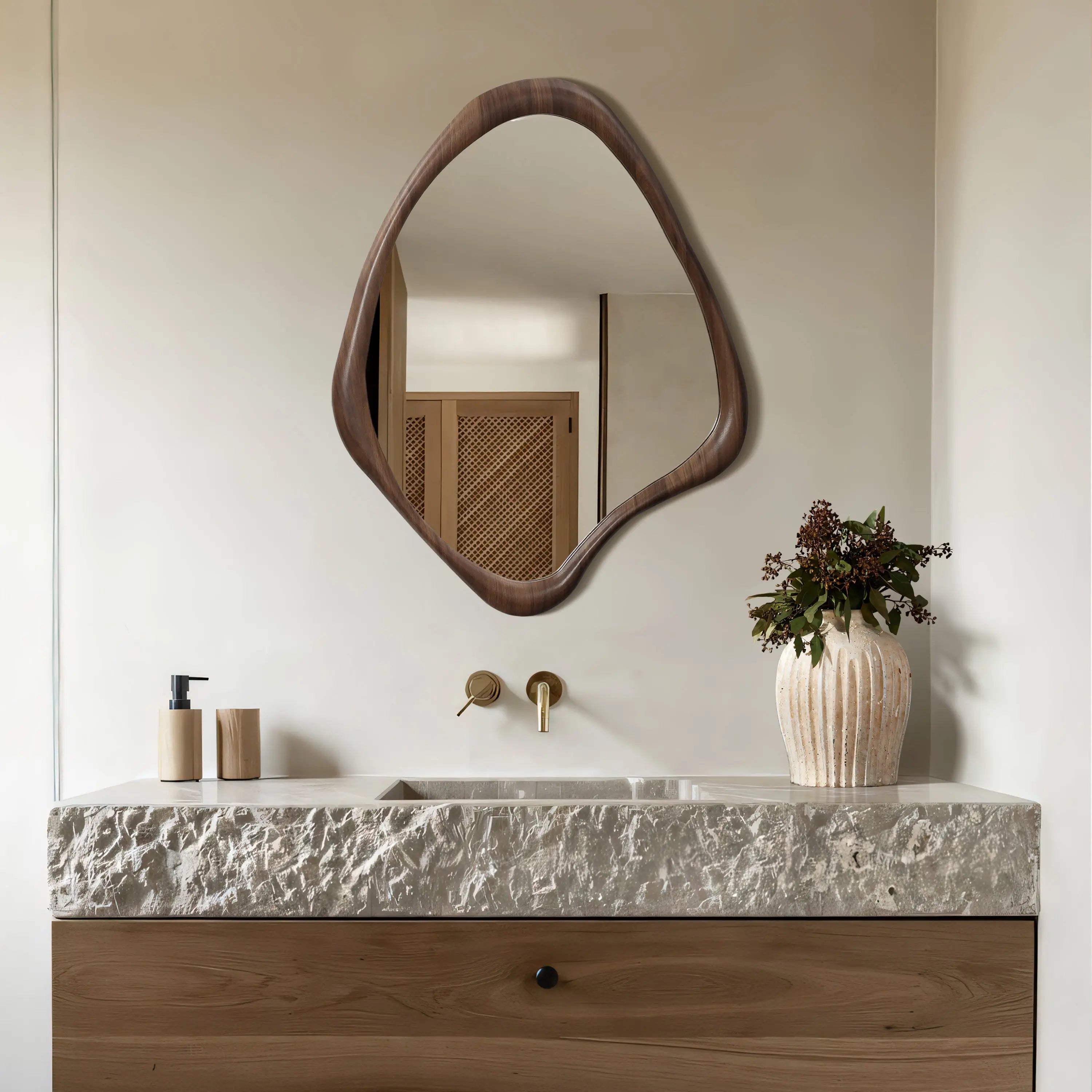
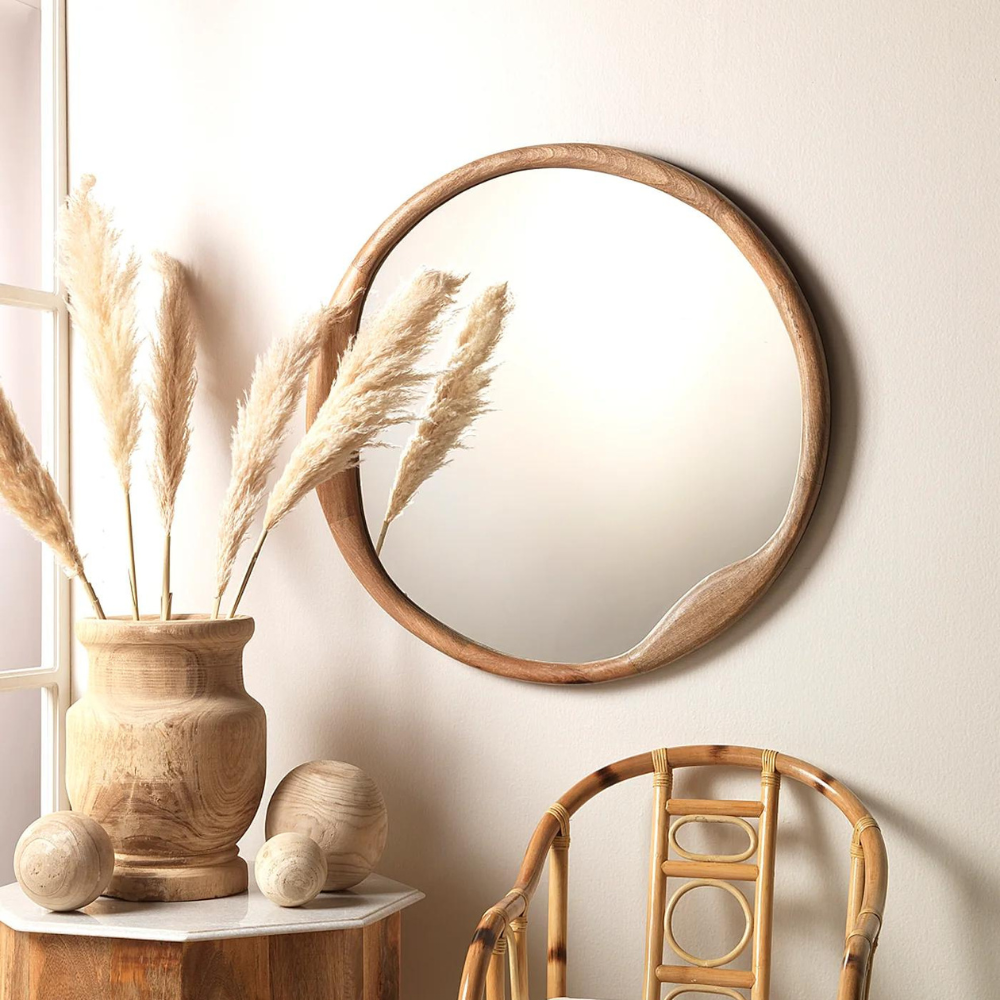
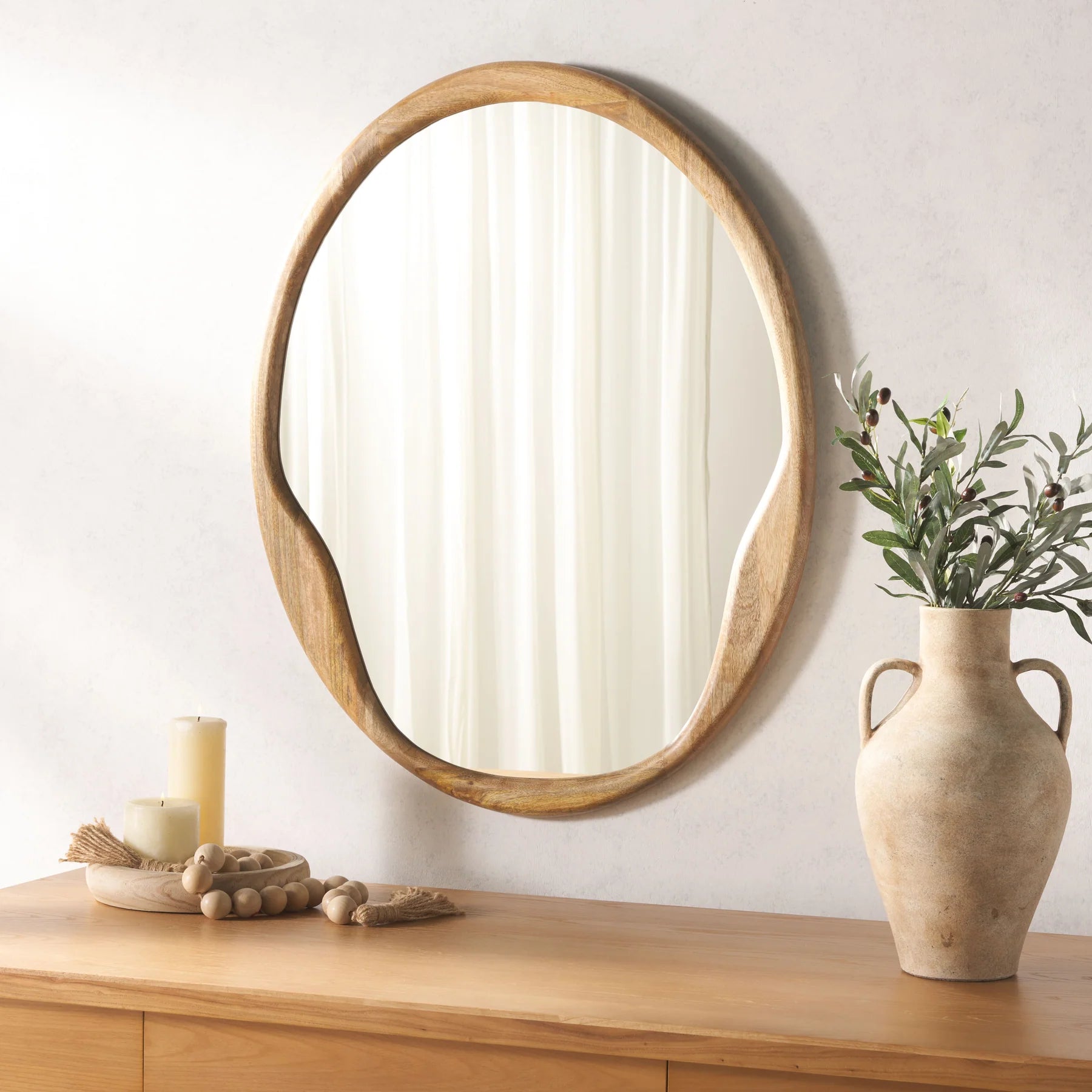


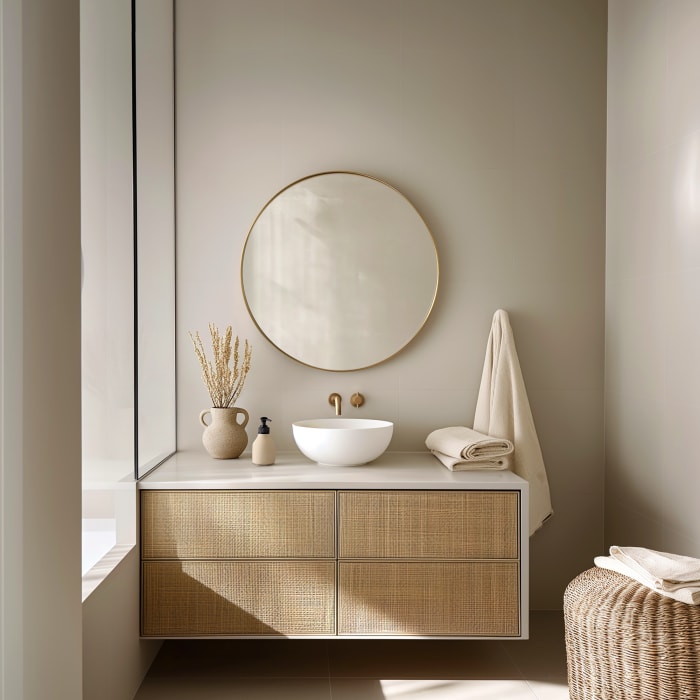
What is a Japandi mirror?
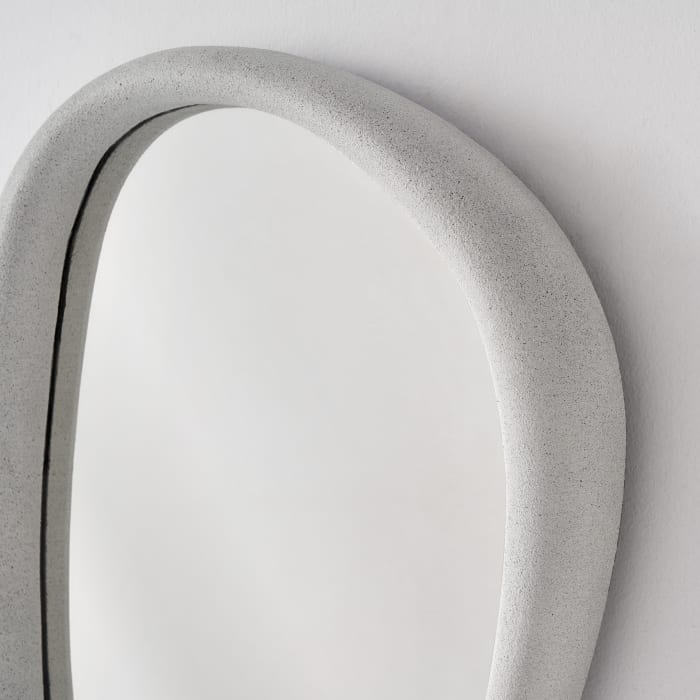
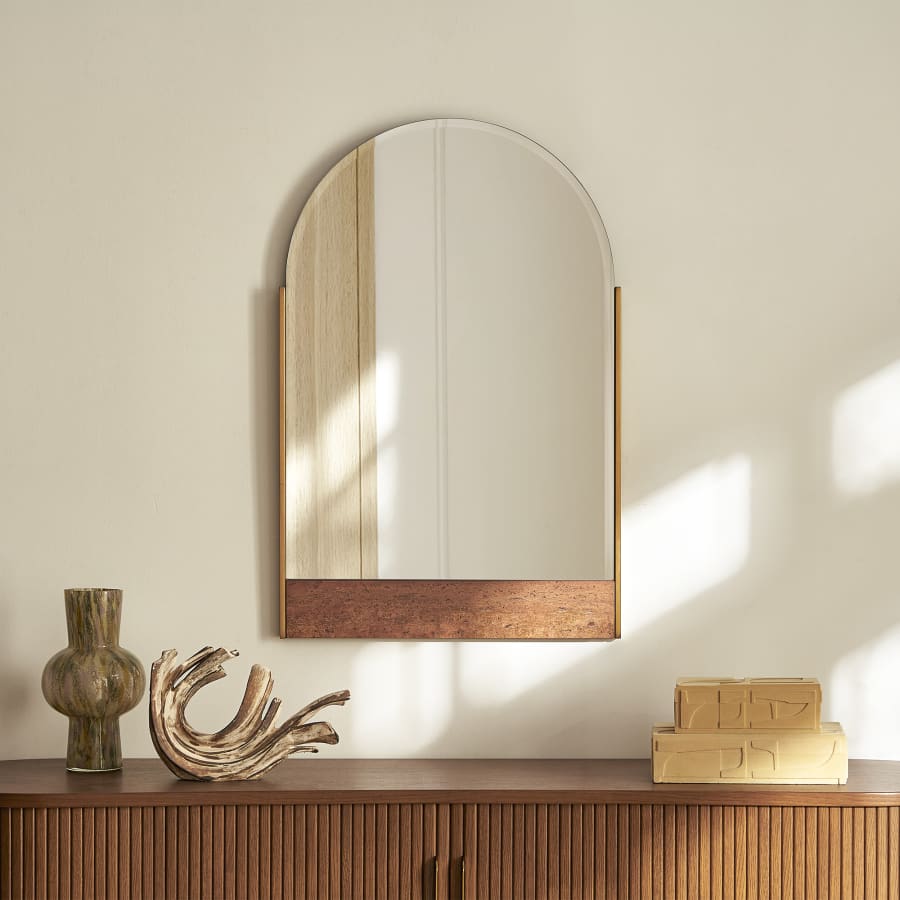
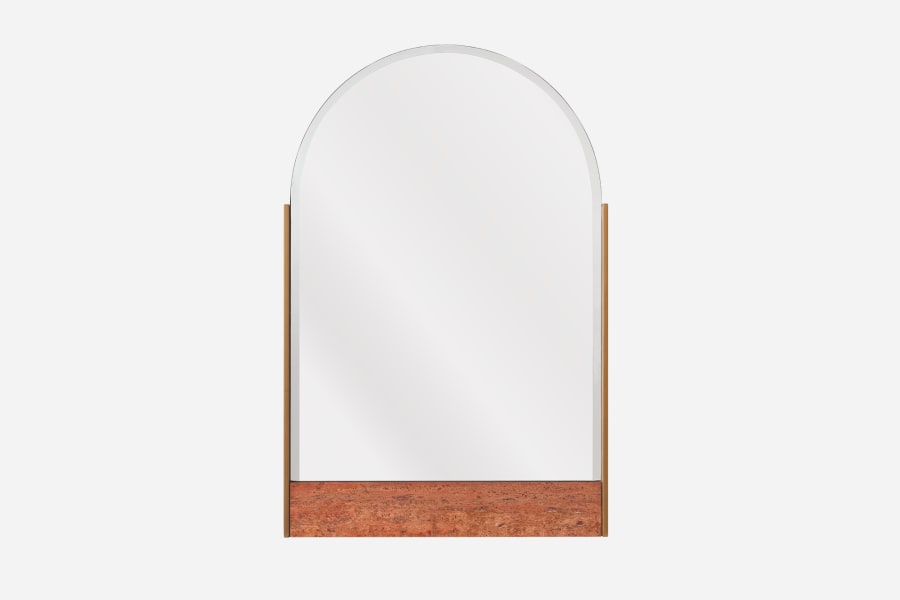
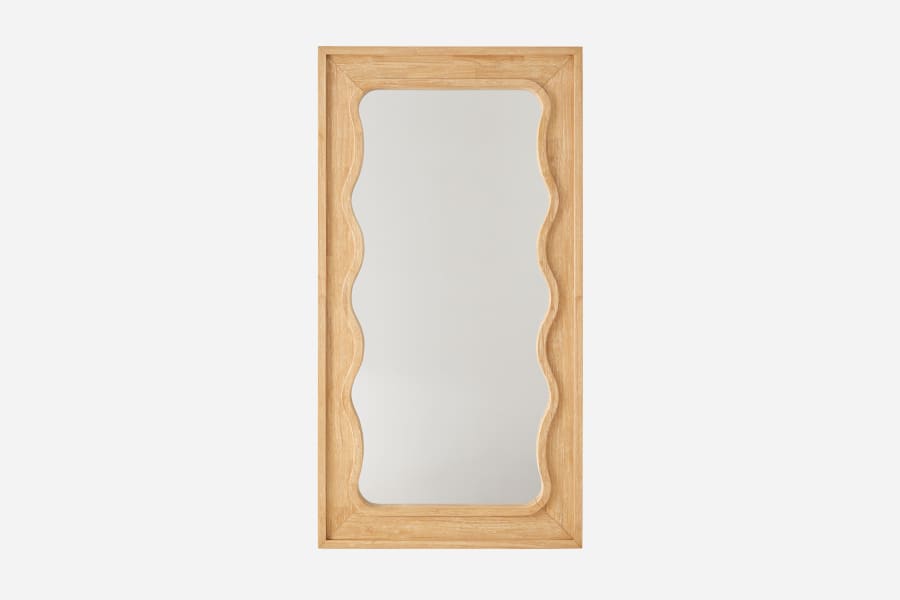
A Japandi mirror is framed in natural materials with a simple or organic outline. You can recognize one by its calm shape and matte, tactile frame. Wood is the most common choice, in light, whitewashed or brown finishes. Some frames use travertine, leather straps, fabric or slim stainless steel. Shapes are round, oval, arched or gently irregular, rather than ornate. The glass itself is usually plain. The frame adds warmth and texture without stealing attention from the room.
Why buy a Japandi mirror?
Japanese aesthetics value light, space and natural forms, as in wabi-sabi. Scandinavian design uses light carefully, since daylight is scarce for much of the year. A mirror serves both ideals. It bounces daylight deeper into a room and makes compact spaces feel larger. Organic frames bring the softness of nature indoors. A simple mirror also stays relevant as your style evolves. Each one is sold and shipped by a partner under its own return and warranty terms.
Styles and variations of Japandi mirrors
Round and oval wooden mirrors
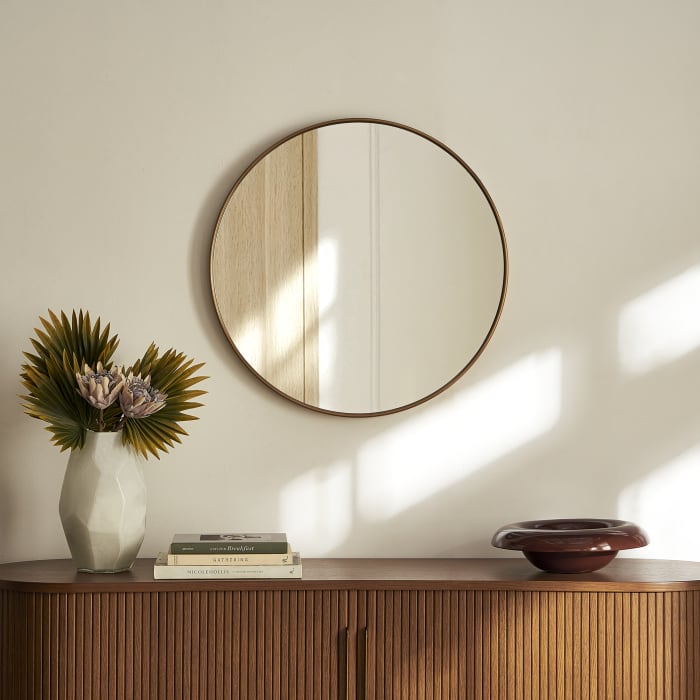
A round wood mirror softens the hard lines of doors, shelves and cabinets. Oval designs in natural rubberwood add height to narrow walls. A wooden wall mirror works well above a dresser, console or entry bench.
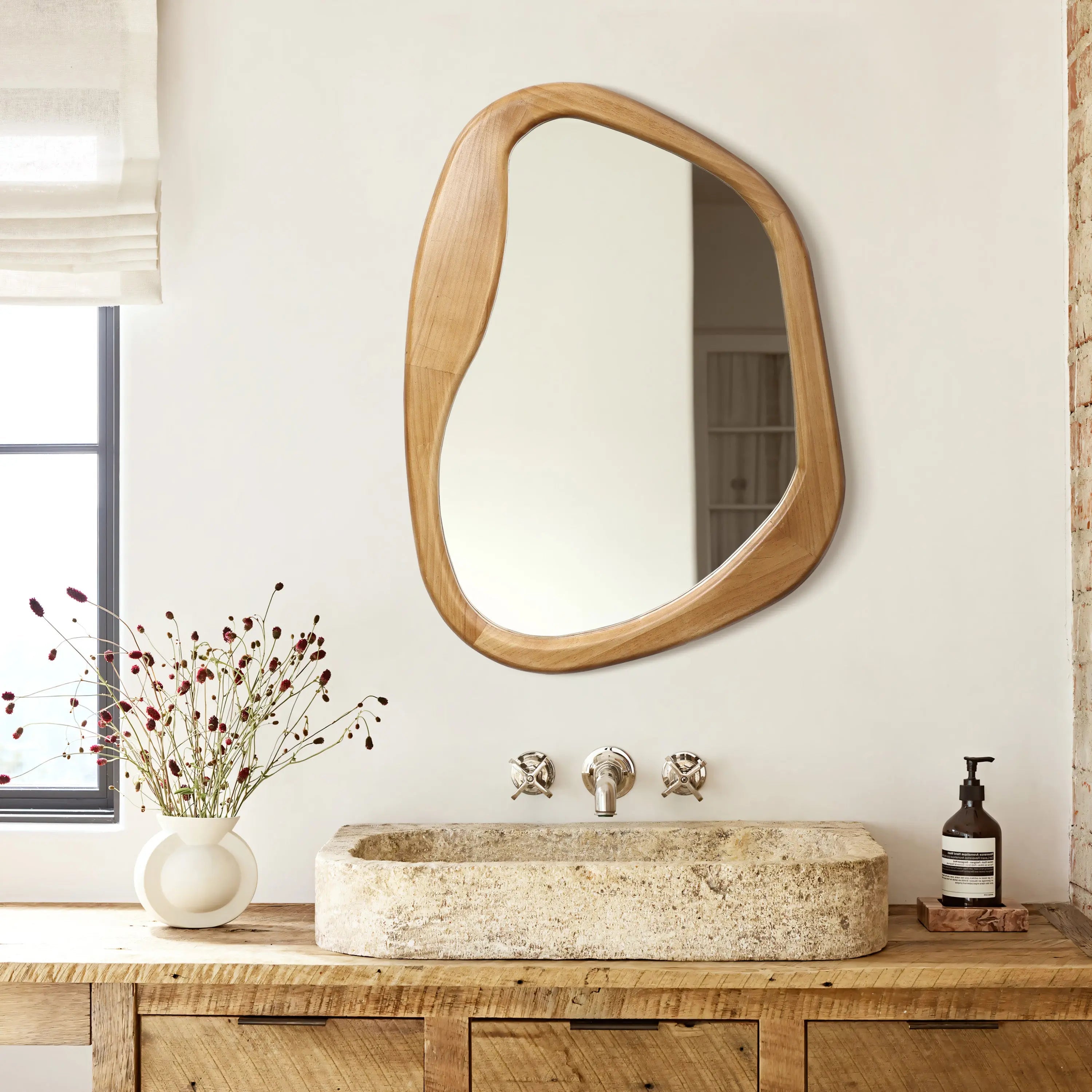
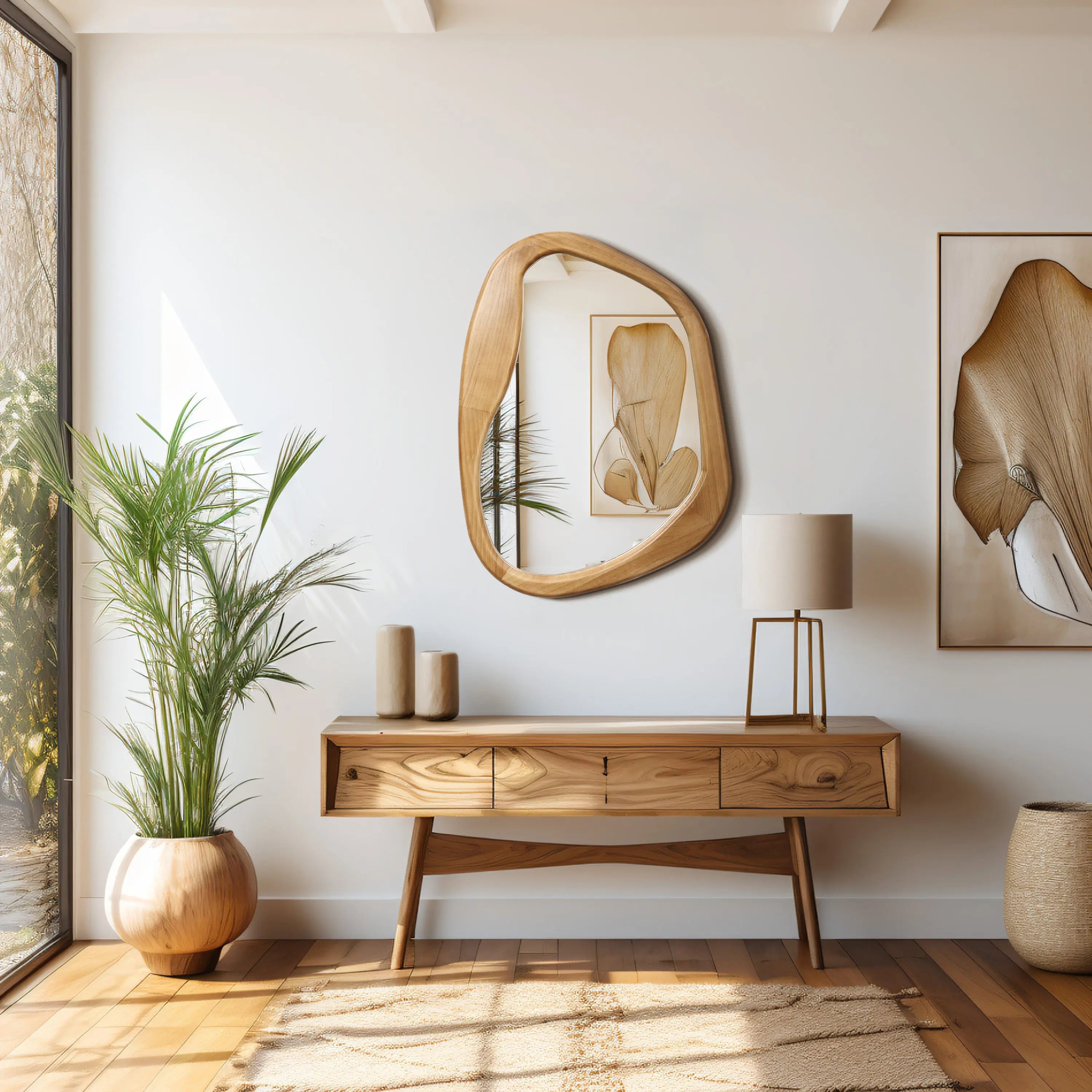
Irregular and organic mirrors
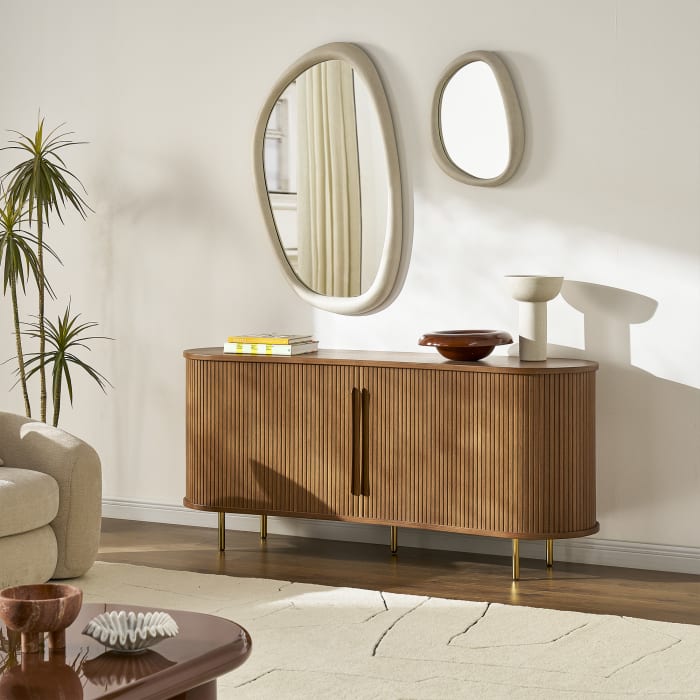
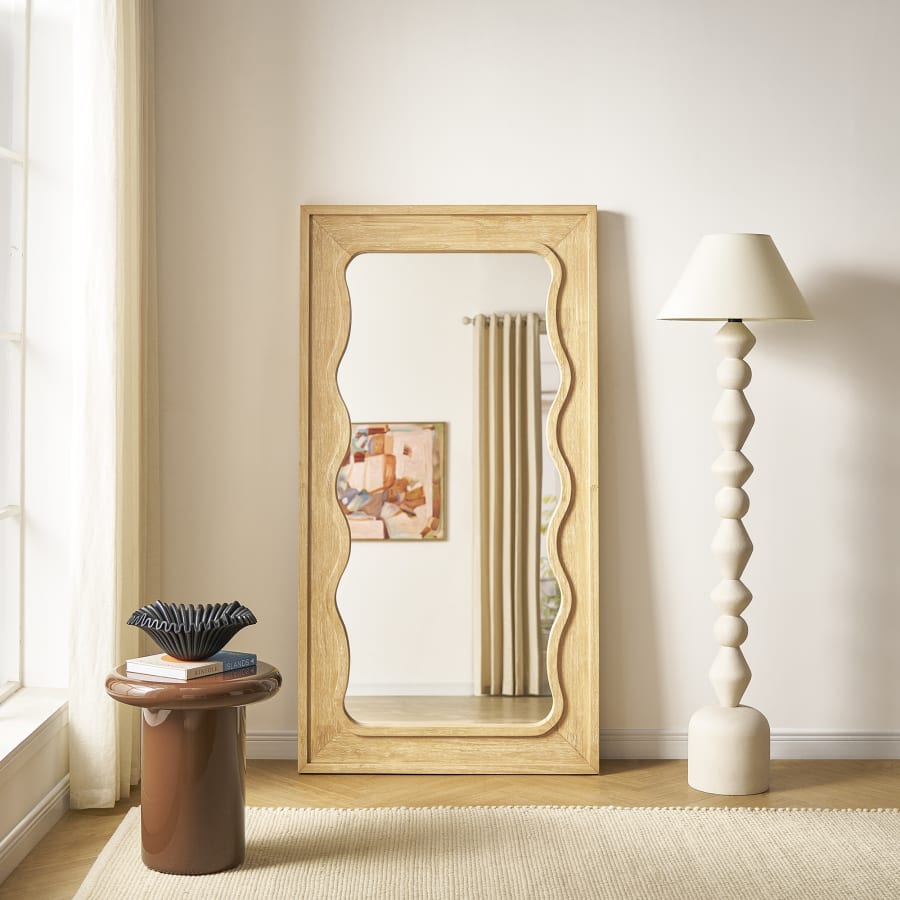
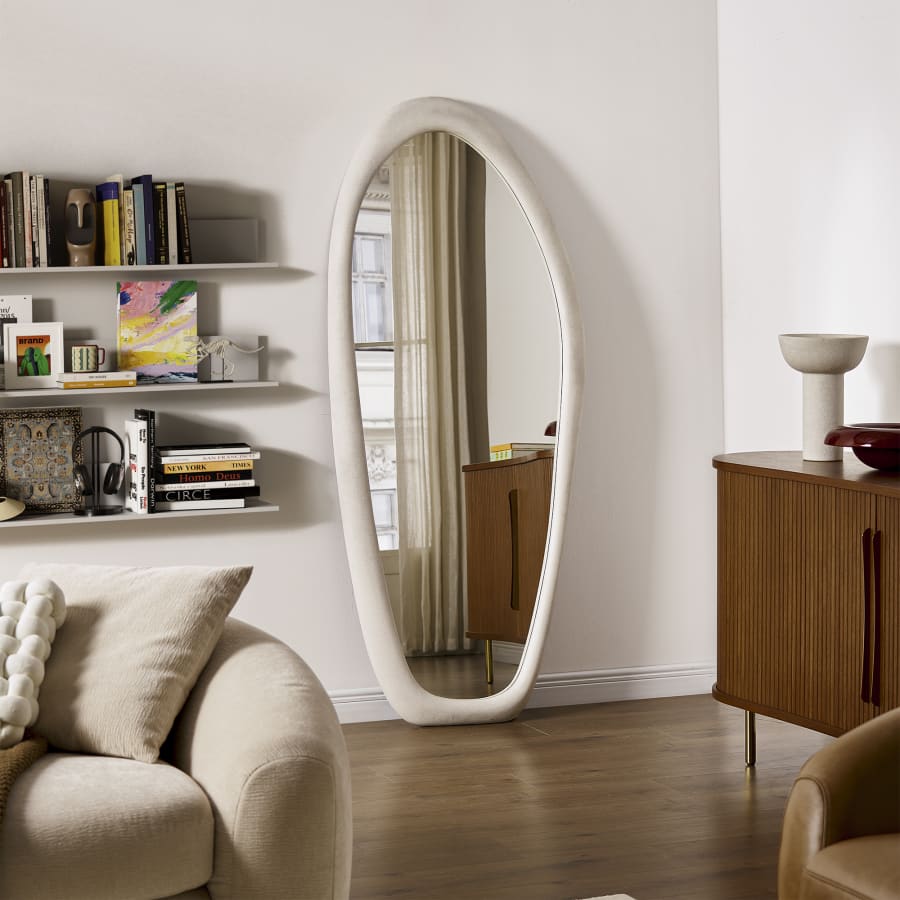
An irregular wall mirror brings a sculptural, wabi-sabi feel. Options here include whitewashed wood, pine and fabric, plus a travertine mirror. An organic shape mirror looks best alone on a quiet wall, where its outline can stand out.
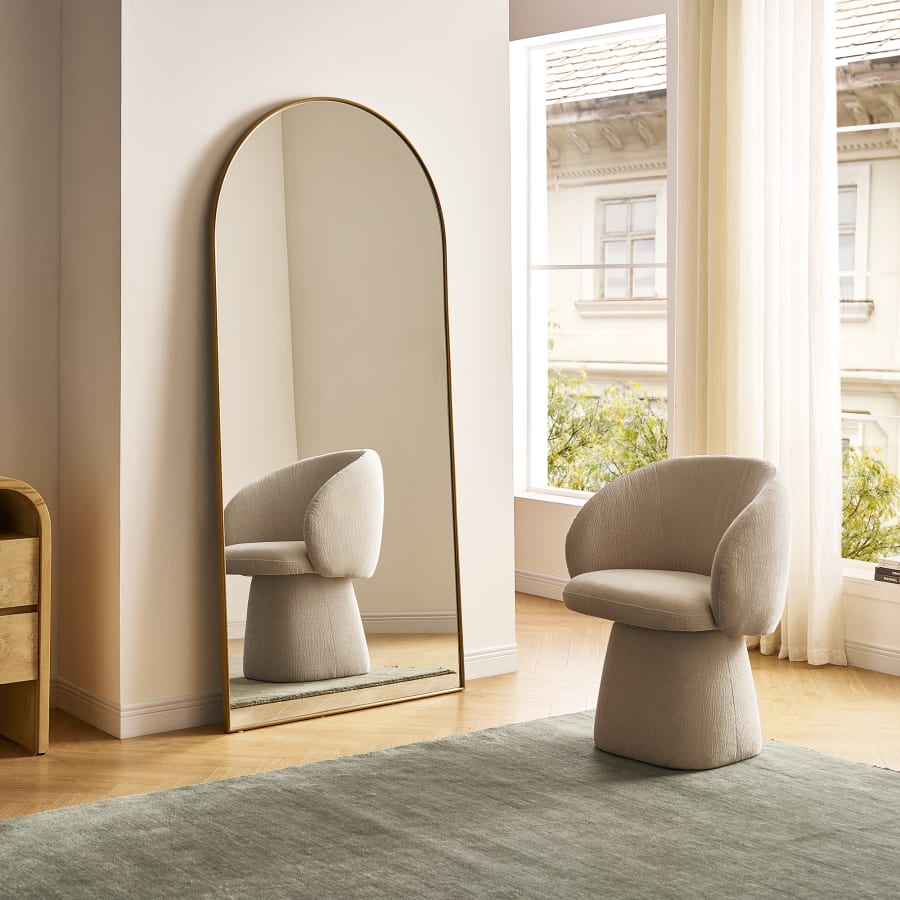
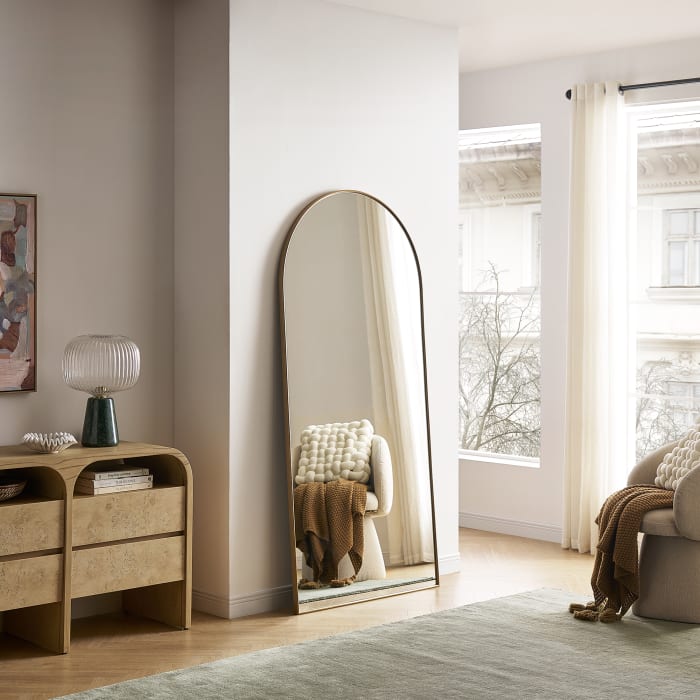
Floor and arch mirrors
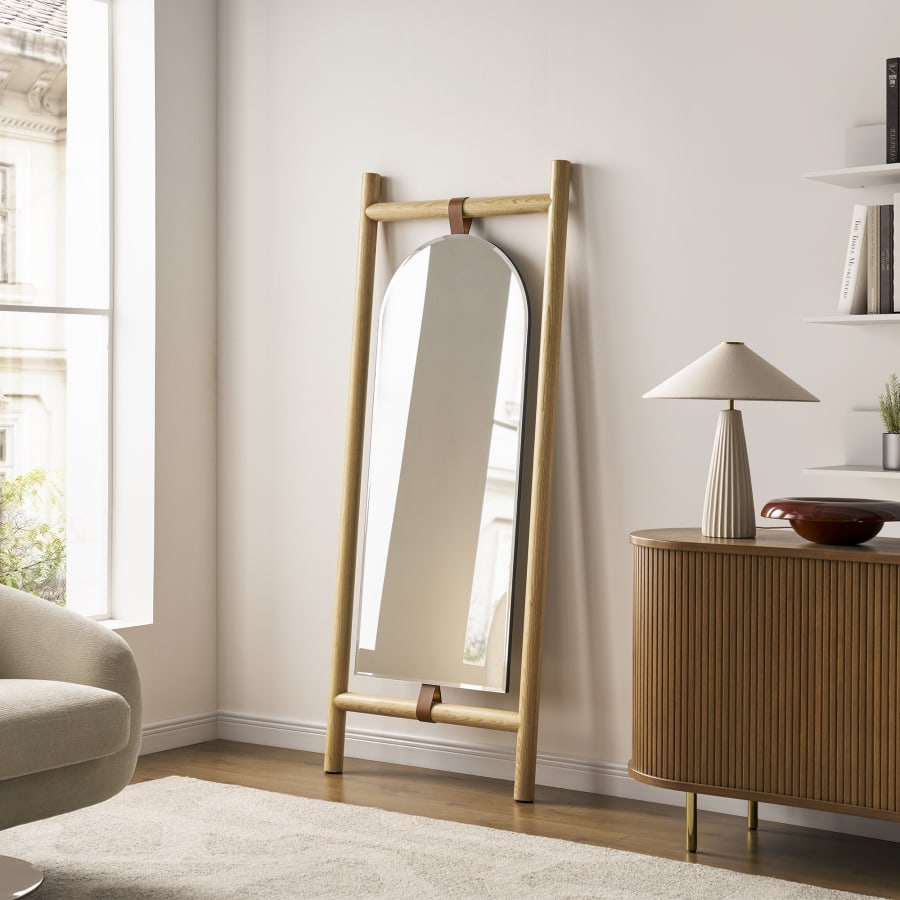
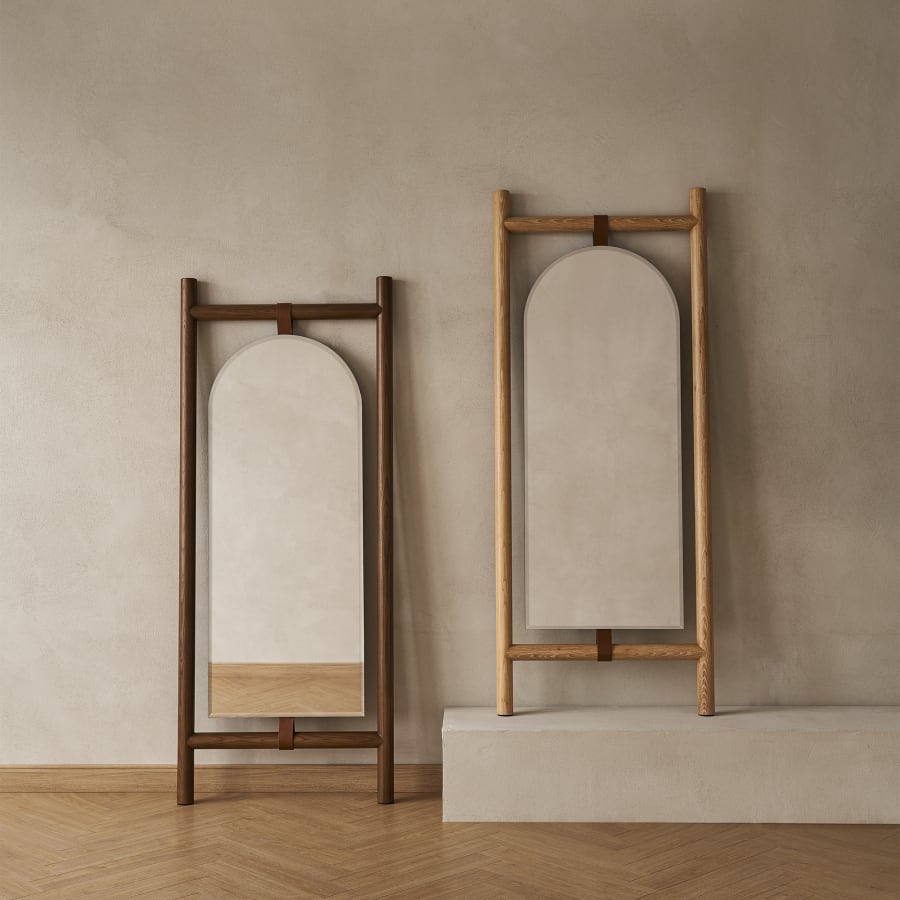
An arch floor mirror or full-length floor mirror suits bedrooms and entryways. Leaning one against the wall feels relaxed. Large wooden frames add warmth to plain walls. Always anchor tall mirrors, especially with kids or pets.
How to choose your Japandi mirror?
Start with the wall. Above a console or dresser, choose a mirror about two-thirds to three-quarters the width of the furniture. Leave around 6 to 10 inches between the furniture top and the mirror's bottom edge. For an entryway mirror, hang its center near 57 to 60 inches from the floor. Next, consider the frame material. Solid wood and leather age gracefully over time. Resin and engineered wood are lighter and easier to hang. Check the weight and use wall anchors rated for it. For care, clean the glass with a soft cloth and keep sprays off wood frames.
What to pair a Japandi mirror with?
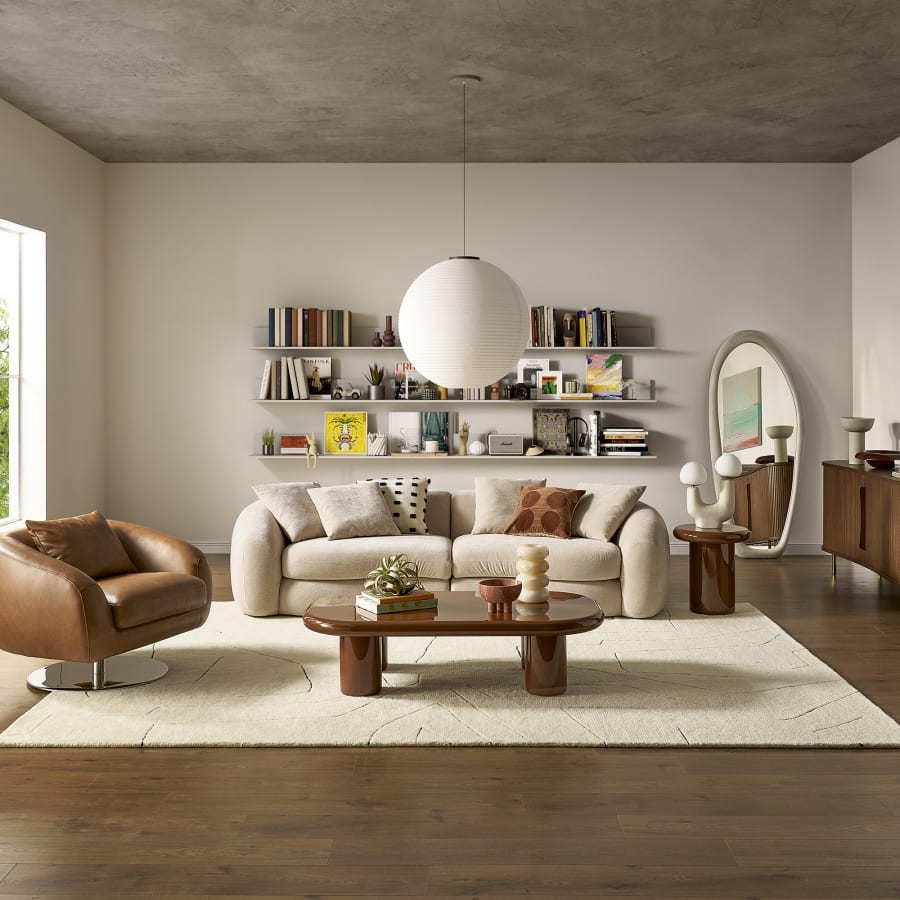
Hang a round or oval mirror above a slim Japandi console table to create a calm entry. Add a Japandi wall sconce on each side for soft, flattering light. In the bedroom, place a large mirror over a wide Japandi dresser. Repeat the frame's wood tone in nearby furniture. These mirrors also suit Scandinavian and organic modern interiors.
A word from the store
Japandistore lists only Japandi-style pieces. We hand-pick each mirror from established partner stores, including Castlery, Wayfair and Homary. Before listing, we compare materials, dimensions, real buyer reviews and partner warranty and return terms. Most mirrors here range from about $90 to $700. Prices, stock, shipping and returns are set by each partner. Check its page for weight and hanging hardware.
FAQ — Japandi mirror
Where should I hang a mirror in a Japandi living room?
Hang it where it can reflect light or a calm view, such as beside a window. Above a sofa, console or sideboard is also classic. Avoid reflecting clutter, a TV or a busy doorway.
What shape mirror is Japandi?
Round, oval, arched and soft irregular shapes fit best. These organic outlines echo pebbles and water. Rectangular mirrors can still work with a natural wood frame and soft edges. Avoid ornate, gilded or heavily beveled designs.
How do you secure a floor mirror?
Lean it at a slight angle against a solid wall, then attach an anti-tip strap or bracket to the frame. This matters with children and pets. A felt pad or grip under the base stops sliding on wood floors.