

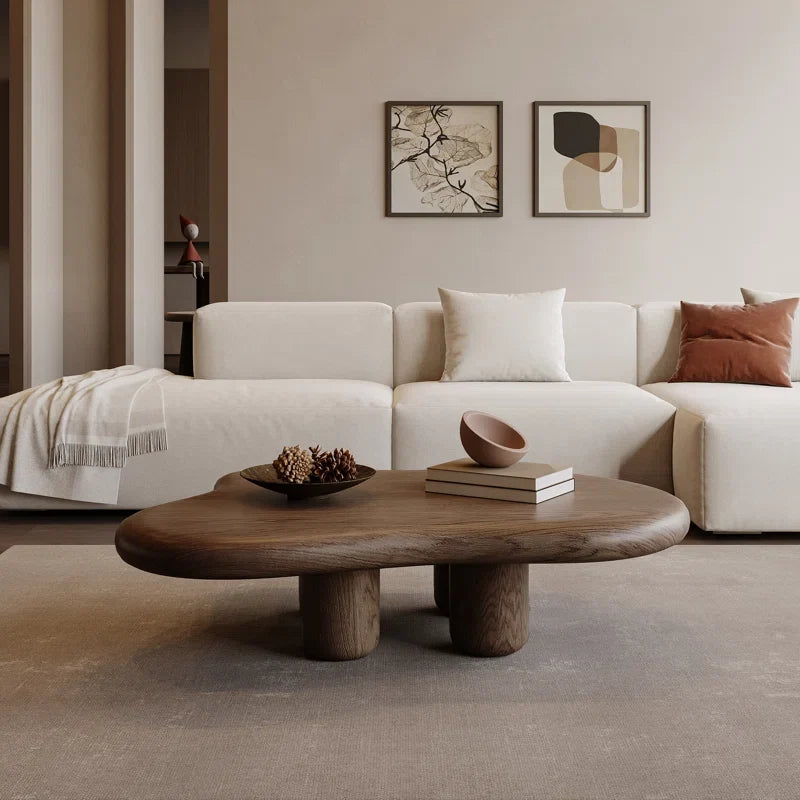
A good Japandi coffee table is low, made of a natural material, and simple enough that the room stays calm around it. The three rules that matter: keep the top within an inch or two of your sofa seat, match the shape to your sofa (round or cloud for a sectional, rectangular for a straight sofa), and pick a wood or stone that already lives in the room. Below we explain each rule, then show the 10 tables from our collection we would actually buy, trade-offs included.
What makes a coffee table Japandi
Japandi mixes Japanese minimalism with Scandinavian warmth. The Japanese side gives the table its low height, plain surface and respect for the material (visible grain, stone that is allowed to look like stone). The Scandinavian side adds rounded edges, light or mid-tone wood and a bit of practicality like a shelf. A table reads as Japandi when it has most of these traits:
- Low profile: most of the tables in our collection sit between 12 and 16 inches high, lower than a standard 18-inch coffee table.
- Honest materials: oak, ash, walnut, rubberwood, travertine or concrete, in a matte finish. No gloss, no chrome.
- Soft geometry: rounded corners, a pebble or cloud outline, or a plain rectangle with no ornament.
- Muted color: natural wood, beige, warm brown, charcoal or black. One table, one color, maybe two.
- Nothing extra: no metal frames, no glass and brass, no visible hardware.
The trap is a table that looks right in a photo but fights the room. A dark walnut pebble table next to a pale oak media console will look like two different stores. Match the wood tone first, then worry about the shape.
Shape: round, oval and cloud vs. rectangular
Round, oval and cloud shapes
Organic shapes are the most popular tables in our collection. A round or pebble-shaped table has no corners to walk into, which matters in a small room or a home with kids, and it softens a room full of straight lines: boxy sofa, flat TV, rectangular rug. Cloud and rock shapes (an oval with a slightly irregular outline) give you a sculptural centerpiece without adding a single decorative object.
Round shapes work best with sectionals and with two sofas facing each other, because everyone can reach the table. The trade-off: a round top gives less usable surface than a rectangle of the same width, and a cloud shape needs room to breathe.
Rectangular and square shapes
A low rectangle is the classic Japanese form and the most practical one. It gives the most usable surface, lines up with a straight three-seater and is the easiest shape to find with storage. Choose it when the sofa is long and against a wall, or when you eat in front of the TV. A square table suits one sofa plus two armchairs, where the table sits in the middle of a square seating group; in a narrow room its corners end up in the walkway.
Quick rule: sectional, go round or oval; straight sofa, go rectangular; square seating group, go square.
Wood vs. stone and travertine vs. mixed
Wood (oak, ash, walnut, rubberwood)
Wood is the safest Japandi choice: warm, lighter to move, and small scratches blend into the grain. Light woods (ash, pine, white oak) keep the room airy and suit a pale rug and linen sofa. Walnut brings depth and pairs well with charcoal or clay upholstery. One honest note: many tables at this price use a wood veneer over engineered wood rather than solid planks. Veneer looks the same and is stable, but it can chip at the edges and dislikes water rings, so use coasters. Solid wood costs more, except small tables in rubberwood.
Stone, travertine and concrete
Travertine is the material of the moment: a creamy beige stone with small natural pits that give it texture. It makes a whole room look more considered. The downsides are real, though. Stone tables are heavy (two people to move one), the surface stains if you leave a wine glass or a lemon on it, and the lighter ones use a thin stone layer over a wood backing, which is fine as long as you know it. Concrete and slate-look finishes give the same mineral calm in a darker tone and resist stains better.
Mixed materials
A stone or concrete top on wooden legs is the sweet spot for many rooms: the sculptural top, warmth underneath, and less weight than all-stone. Just check that the legs match the other wood in the room.
Height and size rules
The numbers we use when customers ask whether a table will fit.
- Height: level with your sofa seat cushion, or up to 2 inches lower. Japandi sofas are low (15 to 18 inch seats are common), so a 13 to 16 inch table is usually right. An 18 inch table next to a low sofa looks top-heavy.
- Length: about two-thirds of the sofa. For an 84-inch sofa that is roughly 55 inches, or 40 to 48 inches if you want more walking space. For a loveseat, 36 to 40 inches is plenty.
- Distance from the sofa: 14 to 18 inches. Closer and you cannot cross your legs; further and you lean to put a cup down.
- Walking space: at least 30 inches between the table and anything you walk past (TV stand, armchair, doorway). This is where round tables win in small rooms.
- Rug: the table should sit fully on the rug, with rug showing on every side.
Storage or not?
Japandi rooms stay calm because everything has a place, and the coffee table is where remotes and magazines collect. If you have a media console with drawers, a plain table with nothing underneath is the purest option. If you do not, choose a hidden compartment, open cubbies or a lower shelf, and accept that a shelf needs a basket or a stack of two books to look intentional. Lift-tops and drawers add mechanisms that can fail; open shelves have nothing to break.
Our 10 Japandi coffee table picks
Ordered roughly by how often they sell, with two newer budget options at the end. All are sold by partner stores (Wayfair and Homary), so check the current price and delivery on the product page.
Japandi Cloud Shape Coffee Table

Our best seller, and the table most people picture when they search for a Japandi coffee table. The undulating top shows the grain, the cylindrical legs keep it light, and it sits low. Solid and manufactured wood in a warm brown finish, around $550, from Wayfair. Best for a sectional or a room that needs one soft shape among straight lines. See details
Japandi Rock Shape Coffee Table - Matte

The river-stone look without a glossy marble top: a soft oval with a gently curved surface and a matte, lightly textured beige finish (the listing names the material as slate). It reads as a sculpture when kept bare, so it suits people who are disciplined about clutter. Around $650, from Wayfair. Pair it with warm wood so the room does not feel cold. See details
Japandi Stone Tabletop Coffee Table - Masiyah

The mixed-material option: a cloud-shaped travertine top with subtle veining on cylindrical wooden legs. You get the beige stone everyone wants, the warmth of wood underneath and less weight than all-stone. Around $540, from Wayfair. Check that the light legs match your other wood, and use coasters on the stone. See details
Japandi Round Walnut Wood Coffee Table

A round walnut table from Homary with a lower shelf for books and rattan panels on the legs that add texture without adding color. Rounded edges and an open shelf make it one of the friendliest tables for a family room. Around $440. Best with charcoal, clay or oatmeal sofas. See details
Round Japandi Coffee Table with Storage

For people who want a clean round top and somewhere to hide the remotes. The compartments are built into the body, and the recessed legs give the drum a floating look. Solid and manufactured wood in warm brown, around $590, from Wayfair. See details
Japandi Square Wood Coffee Table

A natural pine top on a black base, the two-tone contrast Japandi rooms use instead of pattern. The square shape is right for a sofa with two chairs, or two sofas facing each other. Around $600, from Homary. Pine is softer than oak or walnut, so expect a dent or two over the years. See details
Japandi Folding Coffee Table

The small-apartment solution. In ash wood with rattan accents, it is a low coffee table day to day, the smaller pieces nest underneath, and it unfolds into a dining surface when friends come over. Around $800, from Homary: a lot for a coffee table, reasonable if it replaces a dining table. See details
Swivel Modern Wood Coffee Table - Dusan

Three organically shaped tiers in walnut, soft white and black that swivel, so you can fan them out for guests and tuck them together for a compact footprint. The statement piece of this list, around $990 from Wayfair. Buy it if the table will be the one sculptural object in a plain room; skip it if you already have a sculptural lamp or an organic-shaped rug. See details
Japandi Solid Wood Coffee Table - Driskill

The table we recommend when someone asks for Japandi, solid wood and not expensive. A kidney-shaped slab of kiln-dried rubberwood in walnut brown, 15 inches high, 48 wide and 23 deep, under 10 pounds so you can move it to vacuum. More than 700 buyers rate it 4.4 stars for the sturdy build and quick assembly. Around $170 from Wayfair. No shelf or storage: a pure display table. See details
Japandi Walnut Coffee Table with Storage - Bria

The rectangular pick for a straight sofa, and the best value with storage. The 39-inch top hides remotes and magazines in two open cubbies, the tapered solid wood legs match most Japandi sofas, and it sits at 15 inches, right at a low sofa's seat height. More than 1,400 buyers rate it 4.6 stars. Around $200 from Wayfair, in walnut, brown or black. The top is veneer over manufactured wood and can scratch, so use coasters. See details
More Japandi coffee tables worth a look
 Japandi Rectangular Box Coffee Table
 Japandi Travertine Coffee Table
 Japandi Round Walnut Coffee Table
 Round Black Japandi Coffee Table
Frequently asked questions
What height should a Japandi coffee table be?
Level with your sofa seat or up to 2 inches lower. Because Japandi sofas sit low, that usually means 13 to 16 inches; several tables above are 15 inches.
Round or rectangular for a sectional?
Round or oval. A sectional wraps around the table, so a round top is reachable from every seat and has no corner pointing at the chaise. Keep 14 to 18 inches between the table and the long side of the sofa.
What is the best wood for a Japandi coffee table?
White oak and ash for a light, airy room; walnut for warmth and depth. Rubberwood is the budget solid-wood option and holds up well. Whatever you choose, match it to the wood already in the room rather than mixing three tones.
Complete your Japandi living room
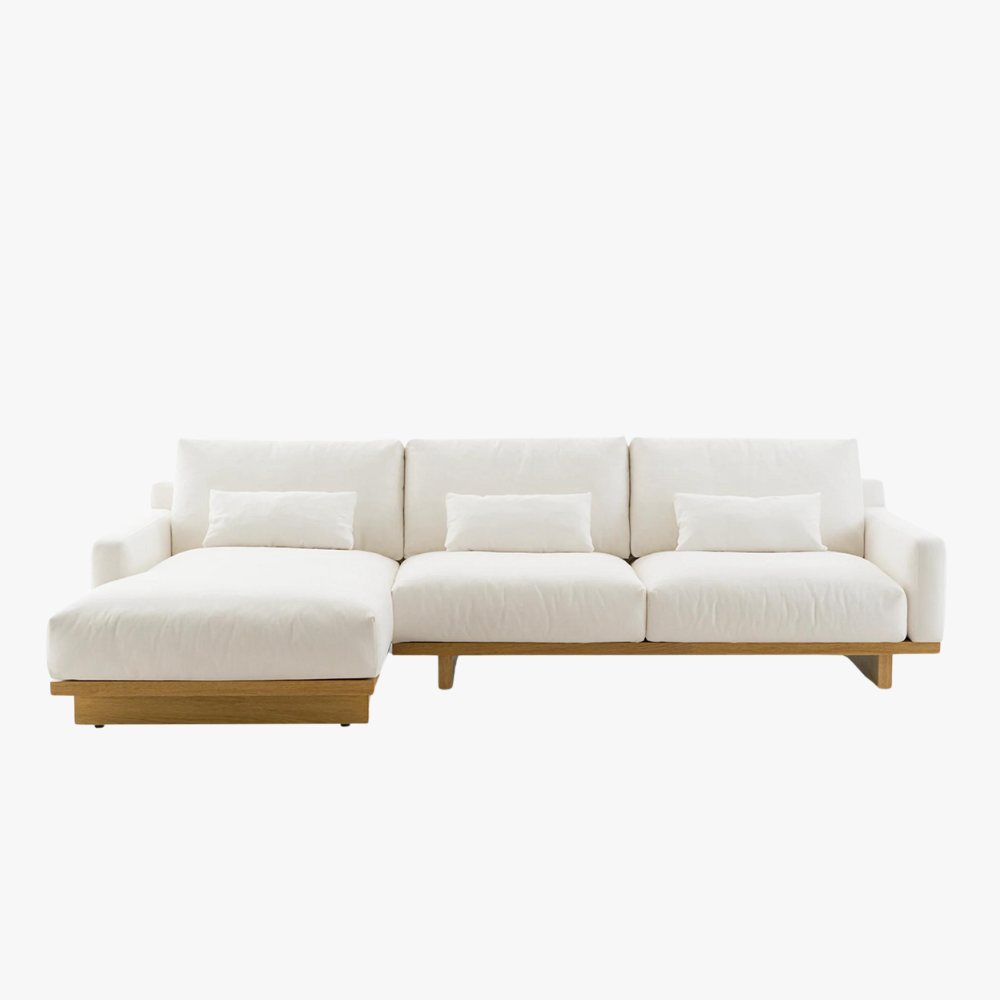
- Japandi sofas: low seats and slim arms that set the height for the table.
- Japandi rugs: wool and jute rugs large enough to sit fully under the table.
- Japandi side tables: a small companion in the same wood or stone.
Pick the shape for your sofa, the material for your room and the height for your seat, and the Japandi coffee table you choose will look like it was always there.
Keep reading
- The Best Japandi Sofas: Low, Warm and Built to Last
- Japandi Small Apartment Ideas: Calm, Light and Clutter-Free
Japandistore selects products from partner stores and may earn a commission when you buy through our links. Prices are set by the stores and can change.

Leave a comment
This site is protected by hCaptcha and the hCaptcha Privacy Policy and Terms of Service apply.