

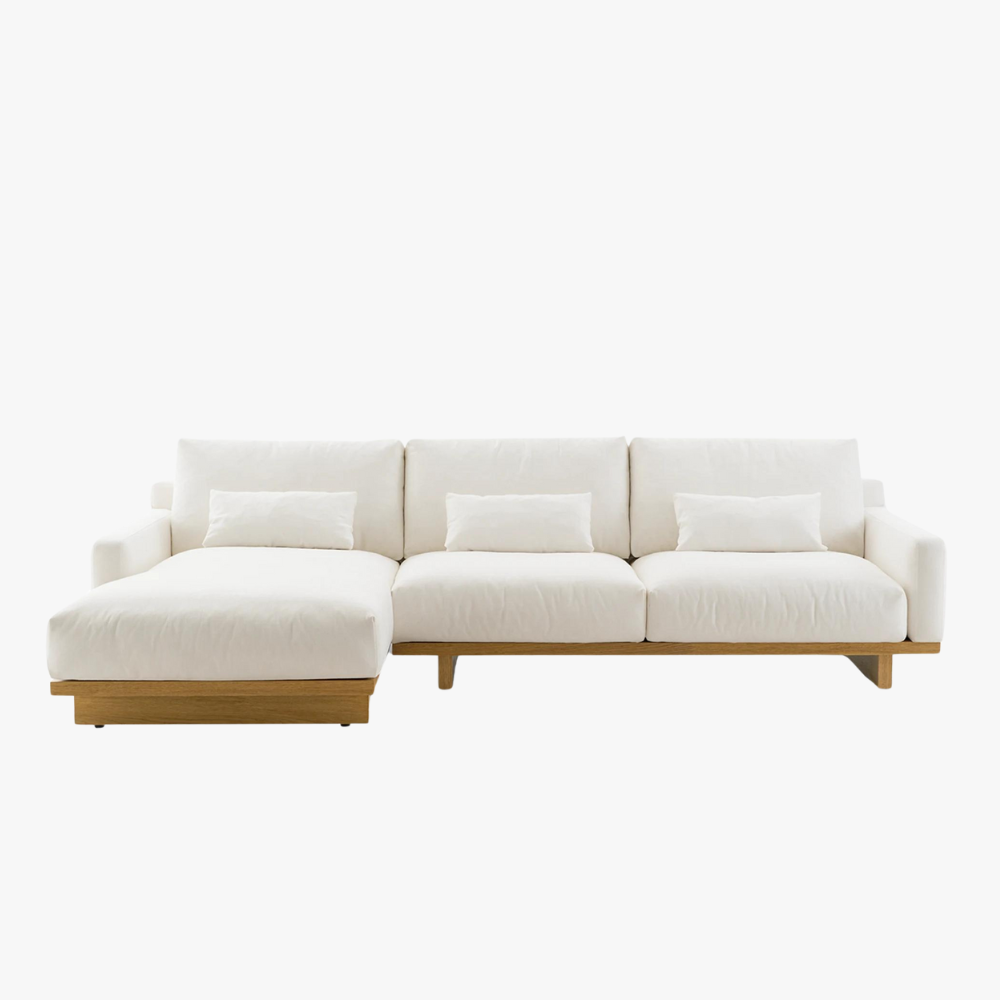
The best Japandi sofa sits low, shows a little wood, and wears a calm, natural-looking fabric or a warm brown leather. In short: a low-profile three-seater or chaise sectional on an exposed wood base, in oatmeal, sand, cream or caramel, is what makes a living room read as Japandi. Below we explain what to look for, compare fabric, leather and bouclé, help you size it for your room, and share our 10 favorite Japandi sofas, with honest notes on comfort and trade-offs.
What makes a sofa Japandi
Japandi mixes Japanese minimalism with Scandinavian coziness. In a sofa, that means four things:
- Low profile. Japanese interiors keep the eye line low, so a Japandi sofa usually has a seat height around 16 to 18 inches and a back that does not tower over the room.
- A wood base or wooden frame. Exposed oak, walnut or ash legs, a wooden platform the cushions seem to float on, or wooden arms. The wood keeps the sofa from looking like a generic beige block.
- Neutral, natural-looking upholstery. Linen and linen-look weaves, cotton, bouclé, sometimes leather, in colors taken from nature: oatmeal, sand, cream, clay, warm taupe, caramel.
- Clean lines. Slim or square arms, simple cushions, no tufting, no nailheads, no chrome legs. Curves are fine if they are soft and organic, not puffy.
Fabric, leather or bouclé?
The answer depends on your household and on how much texture you want. (Velvet can work too, in a matte beige or ivory on a simple frame, but avoid anything shiny.)
Linen and linen-look fabrics
The classic choice. Linen has a slightly irregular weave that catches the light and looks natural. Pure linen wrinkles and can be delicate; a performance linen blend (polyester with some viscose and linen) keeps the look while resisting spills. With kids or pets, look for removable covers.
Leather
Leather can feel heavy in a minimalist room, so choose a warm, matte tone such as caramel or tan and a low, simple frame. Done right, a brown leather Japandi sofa adds warmth, ages beautifully and is the easiest to wipe clean. The trade-off is price: good top-grain leather costs considerably more than fabric.
Bouclé
Bouclé is a looped, nubby fabric that reads as cozy and tactile, the Scandinavian half of Japandi in one material. It looks wonderful in cream and ivory, but light bouclé shows dirt and the loops can catch on pet claws. Spill-resistant bouclé or machine-washable slipcovers solve most of that.
Size and room layout: three-seater, sectional or modular
A sofa that is the wrong size will never look calm. Measure your wall and your walkway before you fall in love with a piece.
- Three-seater (about 85 to 100 inches wide). The safest choice for most living rooms and apartments. It leaves room for a side chair and a floor lamp.
- Chaise or L-shape sectional (roughly 100 to 135 inches on the long side). For when you want to stretch out and the sofa is the main seating. Put the chaise on the side away from the door so it does not block the path, and float it on a big rug rather than pushing it into a corner.
- Modular sofa. Separate seats and ottomans you can rearrange: a long couch for guests, a pit for movie night, a guest bed in a pinch. Great for open-plan rooms. The downside is that most modular sofas sit very low and have no real arms to lean on.
- U-shape. Only for large rooms; in a small space it closes the room off.
Leave at least 30 inches of walkway around the sofa and 14 to 18 inches between seat and coffee table.
Choosing the color
Japandi palettes are warm neutrals drawn from wood, stone, clay and linen. On a sofa, these work best:
- Oatmeal, sand and beige. The default Japandi sofa color. Forgiving, warm, pairs with every wood tone.
- Cream and ivory. Brighter and more Scandinavian. Beautiful with light oak and daylight; think twice if you have a dog that likes the couch.
- Brown leather and caramel. The warmest option and where Japandi is heading in 2026, toward mocha and chocolate tones. Looks best against walnut and warm white walls.
- Warm taupe, clay and greige. Slightly darker, hides wear, still soft.
Skip pure white, cool gray and anything saturated. If you want color, bring it in with a rug, a throw or a plant, not the sofa.
The 10 best Japandi sofas
Picked from our Japandi sofa collection, starting with the ones our visitors buy most. Prices are approximate and set by the partner stores.
Japandi Fabric & Wood Chaise Sectional Sofa

If we had to show one sofa to explain Japandi, it would be this one. The cushions sit on a low wooden platform that seems to float, in natural or walnut finish, and the linen-look performance fabric comes in white or sand. Seats are filled with pocket springs, feather and fiber, 27.6 inches deep, and extend to over 50 inches when you push the cushions back. The fabric is spill-resistant and the covers come off for cleaning. Around $3,800 for the chaise sectional, in 16 configurations including L and U shapes. It is heavy (about 247 lb), so plan the placement before delivery. See details
Japandi Brown Leather Sofa

Our best-selling sofa, and the best leather Japandi sofa we know. The caramel top-grain leather is warm and matte, the seat is low (about 16 inches) and the lines are simple enough that the leather reads as natural, not bulky. Foam, fiber and pocket springs in the seat; buyers say it is comfortable even with back problems and holds up with kids and pets. 17 configurations, from a chaise sofa to L and U shapes, in Caramel or Warm Taupe, with a 10-year frame warranty. Around $4,300, which is the main trade-off; one buyer also found the low seat a little hard to get up from. See details
Japandi Cozy Sofa

A straightforward three-seater with clean lines, generous cushions and a spill-resistant bouclé fabric, which makes it one of the few cozy-looking sofas we would recommend to a family with small children. Neutral tone, simple shape, nothing to argue with. Around $1,800, good value for a bouclé sofa. See details
Japandi Rattan Sofa

For people who want more wood and more texture. The frame is solid rubber wood with natural cane panels in a white-washed finish, and the polyester-linen cushions come off for cleaning. It brings an airy lightness to a bright room with plants. Cane is more delicate than full upholstery, so it suits calm households better than a busy playroom. Around $1,700. See details
Japandi Wooden Sofa

The exposed walnut frame is what makes this sofa so Japandi: the arms and base show the wood instead of hiding it under fabric, so the piece feels crafted and light. High-density foam cushions with detachable cotton-linen covers in beige; at about 97 inches wide it seats three without taking over the room. Around $1,560, the best price here for a real wood-frame sofa. Expect a firmer, more upright seat than a deep lounge sofa. See details
Japandi Modular Sectional Sofa

Floor-level seating is a classic Japanese idea, and this modular set brings it to a modern living room. Armless seats plus ottomans (3+3 or 4+4) work as armrests, footrests or extra seats, so the layout can be a long couch, an L or a deep pit. The slipcovers are removable and machine-washable, rare for bouclé. Around $4,000 for the large layout, about 164 inches wide. It sits very low, about 25 inches high overall, so skip it if you prefer a high seat. See details
Japandi L-Shape Sectional Sofa

A clean, angular L-shape in beige linen with high-density foam cushions. Look here if you want a sectional without the price of the first two picks: at around $1,600 it is the most affordable sectional in our collection, and the look is simple and quiet. Measure your wall first; L-shapes take more floor than they seem to in photos. See details
Japandi Boucle Curved Sofa

A softly curved sofa in cream bouclé for anyone who finds square sofas too severe. The curve adds an organic touch without becoming a puffy "cloud" sofa, and the nubby texture gives a pale room warmth. Around $1,900. A curved sofa is harder to place against a wall; it works best floating in the room with a round coffee table. See details
Japandi Sofa with Ottoman

A cream sofa with a matching ottoman you can push up to the seat to make a chaise, use as a footrest, or pull away as extra seating. The fabric is a soft polyester-acrylic blend. Around $2,600 for the set. A smart alternative to a fixed chaise sectional in an apartment, because you can change your mind about the layout. See details
Japandi Curved Sofa

A gently curved sofa with a supportive back and plush cushions, in a performance polyester fabric in a soft oyster tone. The curve is subtle enough to still read as minimalist. Around $2,400. Compared with the bouclé curved sofa above, this one is smoother and more tailored; choose it if you prefer a flat weave over a looped texture. See details
More Japandi sofas worth a look
 Japandi Velvet Sofa
 Japandi Modular Sofa
 Japandi U-Shape Sectional Sofa
 Japandi 3 Seater Couch
How to style a Japandi sofa
The sofa is the anchor, but the pieces around it decide whether the room feels finished.
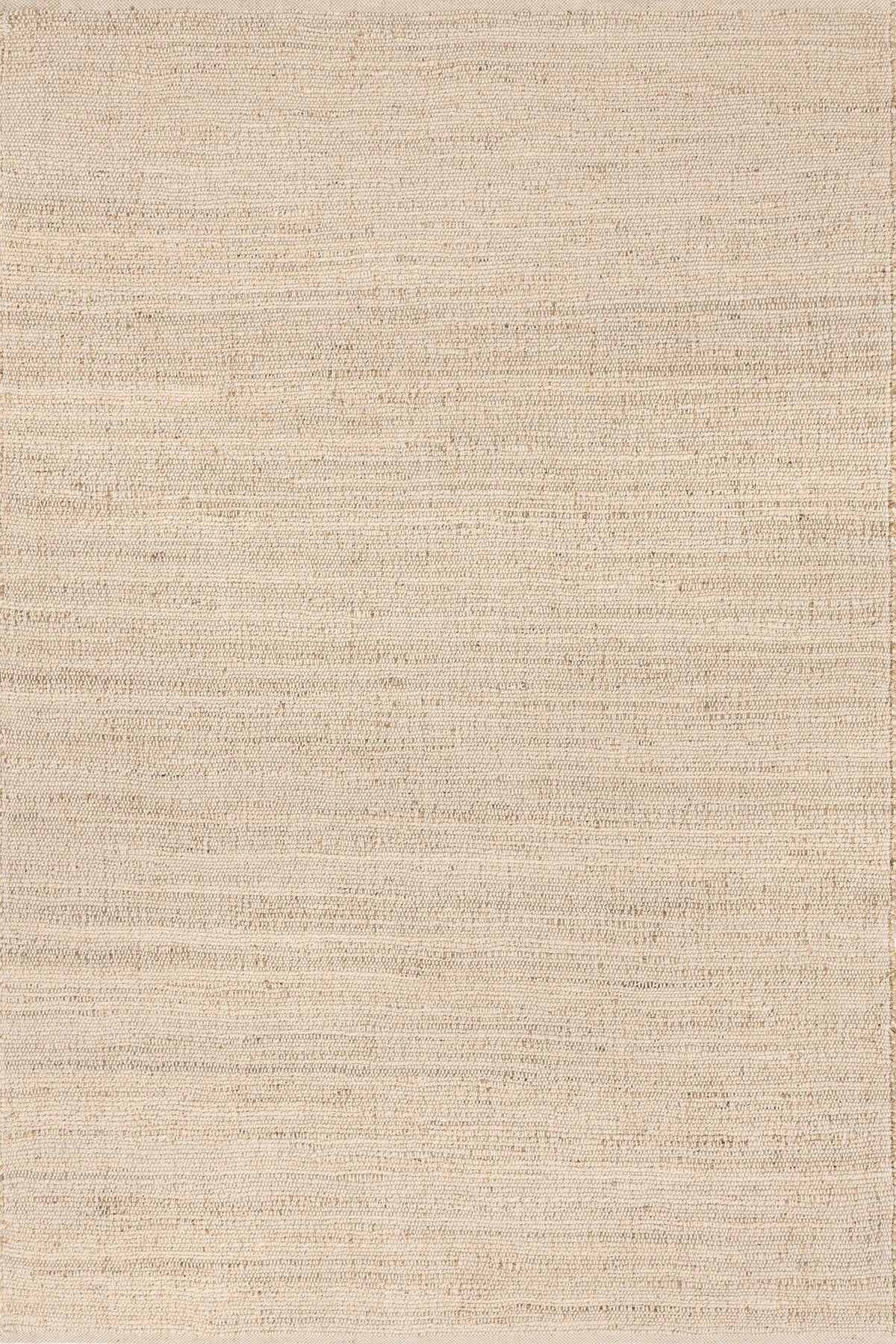
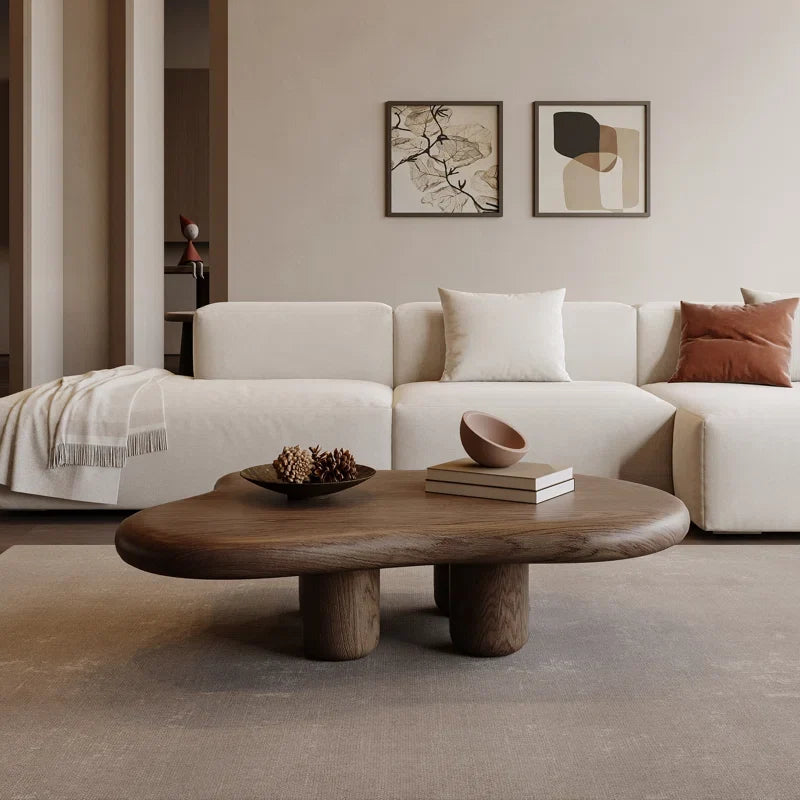
- Rug. Go bigger than you think: the front legs of the sofa (or the whole sofa, if it floats) should sit on the rug. A wool or jute rug in ivory, oatmeal or taupe adds the texture layer Japandi needs. Browse our Japandi rugs.
- Coffee table. Keep it low, level with or slightly below the seat cushion. Light oak or ash next to a beige or cream sofa; walnut or dark stone next to brown leather. A round or oval table softens a sectional. See our Japandi coffee tables.
- Floor lamp. Place it behind one end of the sofa, slightly to the side, with a warm 2700K bulb. A paper lantern or a linen shade on a wood or black stem is the classic choice. Our Japandi floor lamps collection has both.
- Pillows, a throw, one plant. Two or three linen or wool pillows, a throw folded over one arm, and a tall olive tree or a single branch in a ceramic vase. Then stop.
Frequently asked questions
What color sofa is best for a Japandi living room?
Warm neutrals: oatmeal, sand, beige, cream or caramel leather. They sit comfortably next to wood, stone and plants and let the textures do the talking. If you want something deeper, choose warm taupe or brown leather rather than gray or black.
Leather or fabric for a Japandi sofa?
Fabric (linen, linen blends, bouclé) is the more typical choice and usually costs less. Leather in a warm matte tone works beautifully, is easier to clean and lasts longer, but needs a simple low frame to avoid looking heavy. With pets, leather or washable fabric covers will save you a lot of worry.
Are low sofas comfortable?
For lounging, yes: a low seat with a deep cushion is very relaxing, and most people adjust within days. The honest trade-off is getting up. If you have knee or back issues, look for a seat height of 17 inches or more and firmer cushions, and skip floor-level modular sets.
Complete your Japandi living room
- Japandi coffee tables: low oak, walnut and stone tables.
- Japandi rugs: wool and jute rugs in ivory, oatmeal and taupe.
- Japandi floor lamps: paper lantern and linen-shade lamps for warm light.
- All Japandi sofas: the full collection, including loveseats and sleepers.
Whichever you choose, the best Japandi sofa is the one that sits low, shows some honest wood and fits your room with space to breathe around it. Get those three things right and the rest falls into place.
Keep reading
- Japandi Small Apartment Ideas: Calm, Light and Clutter-Free
- Japandi vs Scandinavian: What's the Difference and Which Is for You
- Japandi Coffee Tables: How to Pick the Right One (Shape, Wood, Height)
Japandistore selects products from partner stores and may earn a commission when you buy through our links. Prices are set by the stores and can change.

Leave a comment
This site is protected by hCaptcha and the hCaptcha Privacy Policy and Terms of Service apply.