

Japandi vs Scandinavian comes down to one sentence: Japandi takes the Scandinavian base (function first, light wood, cozy textiles) and adds Japanese restraint, darker contrasts, natural imperfection and lower furniture. A Scandinavian room is bright, white and friendly; a Japandi room is calmer, warmer and a little more grounded. Both are minimalist and both love natural materials. Below we explain where each style comes from, list the six differences you can actually see, help you decide which one suits you, and show ten pieces from our catalog that make the difference obvious.
Where each style comes from
Scandinavian design grew out of Denmark, Sweden, Norway and Finland in the middle of the 20th century. Long, dark winters pushed designers toward pale walls, light wood and big windows, and a culture that valued equality produced furniture that was simple, affordable and well made. The Danish idea of hygge, the feeling of warmth and togetherness on a cold evening, is still the emotional center of the style.
Japandi is much younger. Scandinavian and Japanese designers have admired each other for over a century, because both traditions value craft, simplicity and honest materials, but the word Japandi only appeared in the 2010s to describe rooms that mix the two on purpose. From Japan it takes low furniture, the wabi-sabi acceptance of age and imperfection, and a quieter, more deliberate way of placing objects. If you want the full picture of the style, our Japandi style guide covers it room by room.
Japandi vs Scandinavian: the 6 differences you can see
In a real room they feel different, and these six points are why.
- 1. Color palette. Scandinavian rooms start with white walls and stay light: white, pale gray, soft pastels, maybe one cheerful accent like mustard or dusty blue. Japandi starts warmer and goes deeper: cream and oatmeal walls, clay, mocha, olive and charcoal, with black used as a thin outline rather than a block. Japandi almost never uses bright primary colors.
- 2. Wood tones. Scandinavian design is built on pale woods: white oak, ash, birch, beech, often whitewashed. Japandi mixes those light woods with darker ones, walnut, smoked oak, stained ash or black-finished frames, and lets the two sit side by side in the same room.
- 3. Furniture height. This is the quickest tell. Scandinavian sofas, beds and tables sit at ordinary Western heights on slim tapered legs. Japandi furniture sits lower: platform beds a foot off the floor, sofas with low backs and seats, coffee tables you reach down to. A lower eye line makes ceilings feel higher and rooms feel calmer.
- 4. Decoration and texture. Scandinavian rooms are cozy and layered: sheepskins, knitted throws, candles, framed prints, a few plants, a stack of books. Japandi edits that down. Fewer objects, each one chosen, and the texture comes from the materials themselves: a slate tabletop, a rice-paper shade, a handwoven rug, a ceramic bowl with a visible glaze run.
- 5. Philosophy: hygge vs wabi-sabi. Hygge is about comfort and company, a room that invites you to stay and talk. Wabi-sabi is about finding beauty in things that are simple, imperfect and aging, a room that invites you to slow down and notice. Japandi keeps the comfort of hygge but swaps some of the coziness for stillness. We explain the Japanese side in more depth in our article on wabi-sabi design.
- 6. How the room feels. Walk into a Scandinavian living room and it feels bright, open and welcoming, like a sunny morning. Walk into a Japandi living room and it feels hushed and warm, like late afternoon. Neither is better; they just suit different people and different light.
Which one is for you?
See which of these three sounds like you.
You are Scandinavian if...
You want a home that feels bright and easy, you like white walls and light oak, you own more throw pillows than you need, and you want guests to feel at home the moment they sit down. Bouclé, wool and candles are your language.
You are Japandi if...
You find busy rooms tiring, you would rather own one good ceramic bowl than five decorative ones, and you like the look of walnut next to pale oak. You do not mind a low bed or a low sofa, and you are drawn to things that show their age: a stone top with a vein through it, a linen that creases, a paper shade. You want your home to feel quiet rather than cheerful.
You are in between if...
You love the Scandinavian light but your room already has a lot of pale beige and it reads a little flat. This is where most of our customers land. The fix is to keep the light base and add two or three Japandi moves: one dark wood piece, one lower piece of furniture and one lamp with a paper or fabric shade. You do not need to repaint anything.
10 pieces that show the difference
We picked five pieces that lean clearly Japanese and five that lean clearly Scandinavian. Put them side by side and the differences above stop being abstract. Prices are approximate and set by the partner stores.
Pieces that lean Japanese
Japandi Low Solid Wood Platform Bed - Amaryn

Furniture height, in one product. This frame is 12 inches high, solid wood with solid wood slats, no headboard, no box spring needed. A Scandinavian bed would sit higher on tapered legs; this one keeps the whole room low and lets the bedding do the talking. It comes in natural, cherry, white and espresso, and at around $240 it is one of the best-rated beds in our catalog. The trade-off: only about 6 inches of clearance, so no under-bed storage boxes. See details
Japandi Paper Pendant Light

The paper lantern is the most Japanese object you can hang in a room. This one has a cloud-like shape on a wrought iron frame, with a soft shade that diffuses the integrated LED into a warm, even glow, and the height is adjustable. Where a Scandinavian pendant is usually an opaque white dome that throws light down, a paper shade glows all over and softens the whole ceiling. Around $250, and it looks right over a dining table or a bed. See details
Japandi Rock Shape Coffee Table - Matte

Texture from the material, not from decoration. Inspired by a river stone, this oval table has a slate top with a textured matte finish and a gently curved surface, so it looks like something found rather than made. A Scandinavian coffee table would be pale wood on legs; this one is stone, low and sculptural. It is heavy and the surface is not perfectly smooth, which is the point, but keep a tray on it if you like a flat spot for drinks. Around $650. See details
Japandi Walnut Sliding Door Bookshelf

This is the dark wood contrast that Scandinavian rooms rarely have. Five tiers in a walnut veneer, straight lines, and fluted sliding doors that hide the clutter the way a Japanese screen would. Open shelves on top show a few chosen objects, closed storage below keeps the rest away. In a pale room, one piece like this anchors everything. Compare it with the natural bookshelf further down and you will see the two styles in one glance. Around $760. See details
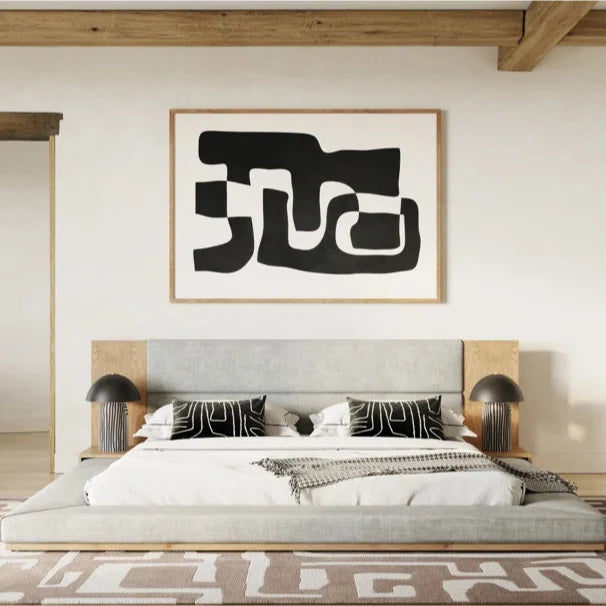
Japandi Tatami Bed

If the Amaryn bed is Japanese by subtraction, this one is Japanese by design. It sits close to the floor like a traditional tatami frame, and the side panels extend past the headboard to work as two built-in nightstands. The padded headboard with vertical channels is the Scandinavian comfort half of the mix. Rubberwood frame, slat kit included, in natural oak, walnut or gray; queen to California king. Full assembly is required and it weighs about 250 pounds, so plan for two people; a few buyers find the low height harder to get in and out of. Around $2,100. See details
Pieces that lean Scandinavian
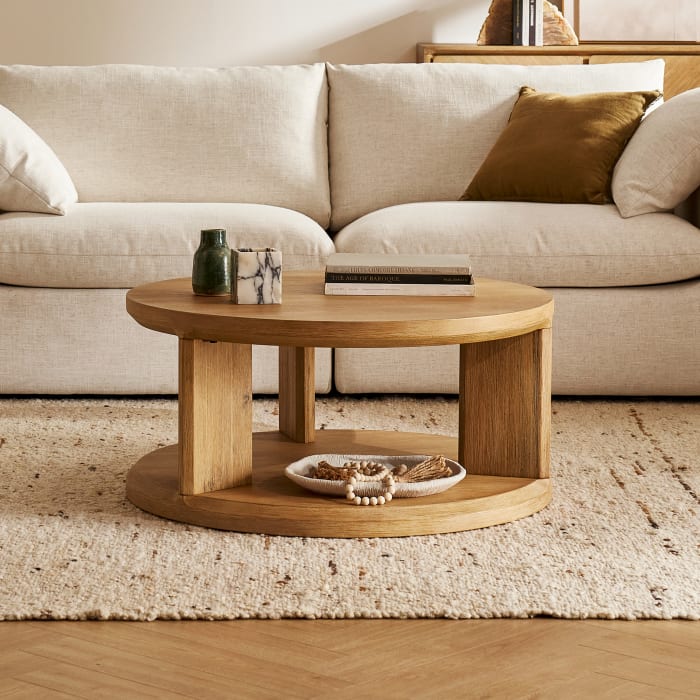
Japandi Round Wood Coffee Table

Light wood, round, simple: this is the Scandinavian coffee table. The body is engineered wood with a natural acacia veneer on solid acacia legs, and the rounded shape keeps it friendly in a room with kids or a small walkway. Next to the slate rock table above, it is warmer and brighter but less grounded. Around $600. See details
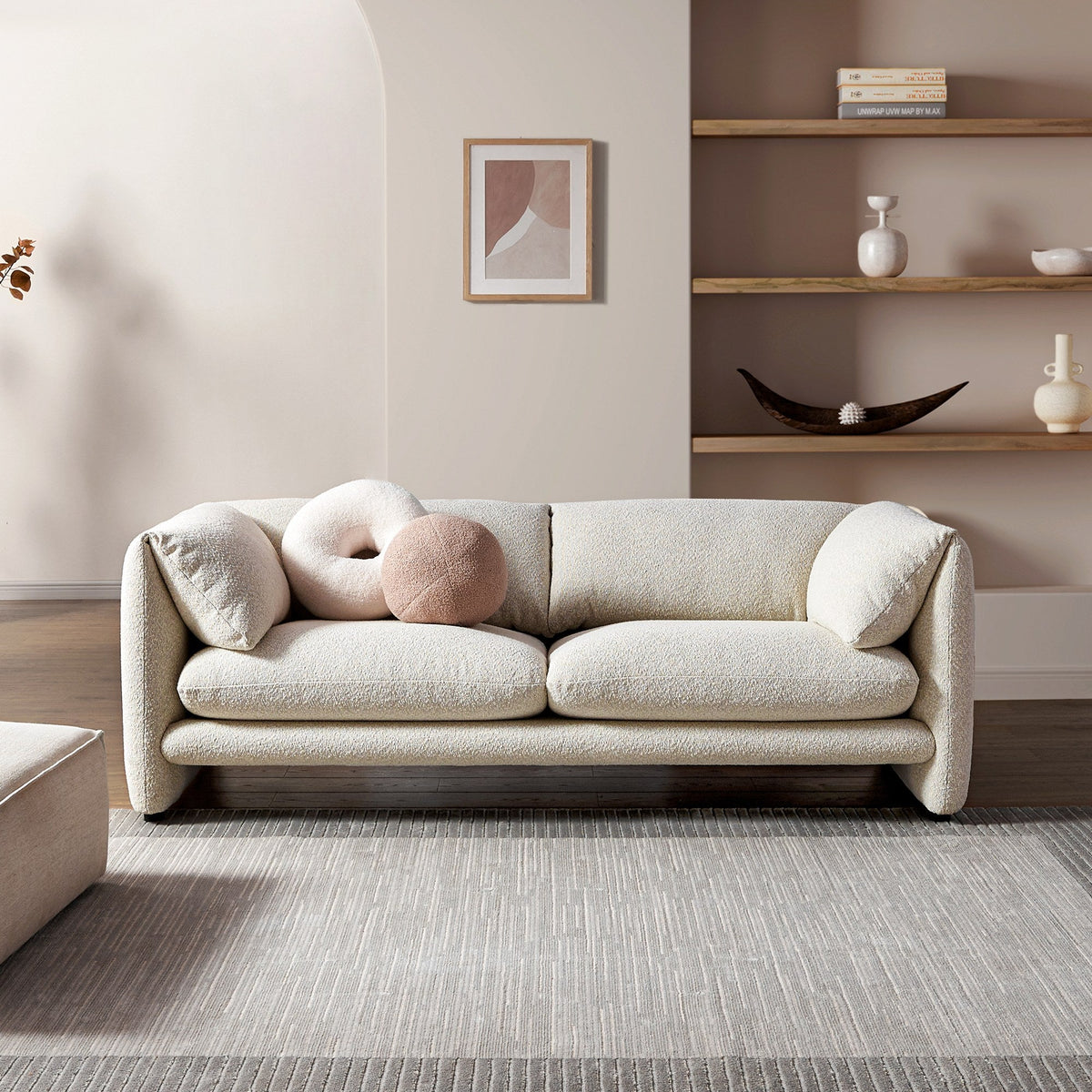
Japandi Cozy Sofa

Bouclé is hygge in fabric form: looped, nubby, soft to touch and very cozy to look at. This three-seater has clean lines and generous cushions, and the bouclé is spill-resistant, which matters with a light fabric. It is the sofa for someone who wants the room to feel welcoming first and minimalist second. The trade-off with any pale bouclé is that it shows dirt and pet claws can catch the loops. Around $1,800. See details
Japandi Beige Wool Tasseled Rug

Wool underfoot is the Nordic answer to cold floors. This rug is 100% wool in a warm beige with tasseled edges, soft and plush enough to sit on. A Japandi purist might choose a flat jute weave instead; a Scandinavian room wants exactly this kind of softness. Around $130 in the smallest size. See details
Oval Japandi Pendant Light

Compare this with the paper lantern above. Both are white and both are soft, but this oval shade is smooth metal and acrylic with a clean, modern outline, the kind of pendant you see over a Danish dining table. It diffuses light gently without the handmade, slightly irregular look of paper. Choose it if you want tidy rather than organic. Around $260. See details
Japandi Natural Bookshelf with Drawer and Cabinet

The light-wood twin of the walnut bookshelf above. Natural wood finish, open shelves on top for books and plants, a drawer and a two-door cabinet below, and an adjustable shelf for baskets. It is practical, light and unfussy, which is the Scandinavian brief in one piece. Put the two bookshelves next to each other and you have the whole Japandi vs Scandinavian debate in furniture: same function, different mood. Around $730. See details
Shop the look: sofas for both camps
 Japandi Fabric & Wood Chaise Sectional Sofa
 Japandi Wooden Sofa
 Japandi Boucle Curved Sofa
 Japandi Brown Leather Sofa
FAQ
Can you mix Japandi and Scandinavian?
Yes, and in practice most Japandi rooms are exactly that mix. Keep the Scandinavian base you already have (white walls, light oak, a soft sofa) and add Japandi in layers: one dark wood piece, one low piece of furniture, a paper or fabric lamp, and fewer objects on every surface. The result reads as Japandi without you replacing anything big.
Is Japandi darker than Scandinavian?
A little, but not dark. Japandi walls are usually warm cream or oatmeal rather than pure white, and the room uses more contrast: walnut next to oak, a charcoal rug, a black lamp frame. The overall effect is warmer and more grounded, not gloomy. With little natural light, keep the walls pale and bring the darkness in through furniture only.
Is Japandi still in style in 2026?
Yes. What has changed is the temperature: Japandi in 2026 is warmer than the gray-and-white version of a few years ago, with mocha and clay tones, more layered textiles and more visible wood grain. Because it is built on natural materials and simple shapes rather than a trend color, it ages well.
Complete your Japandi look
Whichever side of Japandi vs Scandinavian you land on, start with the big pieces and let the details follow. These collections cover the items that make the biggest difference:
- Japandi sofas: low profiles, wood bases and bouclé or linen fabrics
- Japandi beds: platform, tatami and upholstered frames
- Japandi pendant lights: paper, fabric and white shades
- Japandi rugs: wool, jute and flatweaves
Japandistore selects products from partner stores and may earn a commission when you buy through our links. Prices are set by the stores and can change.

Leave a comment
This site is protected by hCaptcha and the hCaptcha Privacy Policy and Terms of Service apply.